
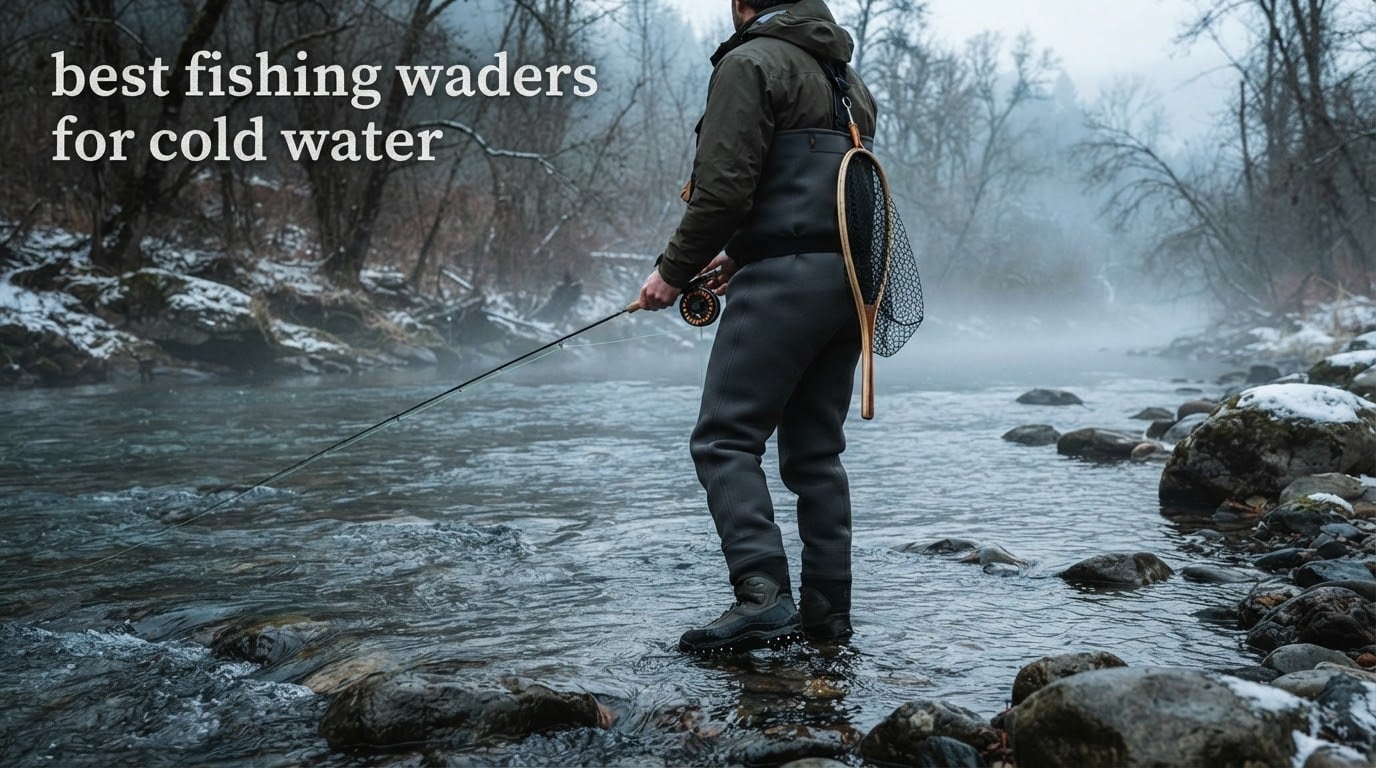
Cold-water rated waders are chest waders built for water below 50F: either 3.5mm to 5mm neoprene with insulated rubber boots, or a breathable waterproof shell worn over heavy thermal layers. The right pick comes down to one question, and that is whether you stand still in the current or walk all day. Water pulls heat from your body roughly 25 times faster than air, so standing in 40F water chills you far quicker than 40F air does.
I have spent enough winters standing in icy rivers to know that the difference between a good wader and a bad one is almost never the brand name. It is the millimetres of neoprene, the gram weight of the boot insulation, and whether the seams are bonded or merely stitched. Get those three right and the cold stops being a problem.
In this guide we compare ten cold water fishing waders across neoprene bootfoot models, breathable stockingfoot models and a fleece-lined mid option. I break down the specs that actually matter in winter, where each pair fails, and how to size them so your feet stay warm. If you also need eye protection for long days on the water, my best sunglasses for fishing picks cover low-light and polarized options. And if you are shooting the rivers you wade, my long exposure waterfall guide covers the tripod and shutter work that goes with a cold morning on the water.
Top 3 Best Cold Water Fishing Wader Picks for 2026
Those three carry the load for anyone standing still in genuinely cold water. The Foxelli has the deepest owner history in the group, the HISEA pairs neoprene with 600-gram Thinsulate boots at a hard-to-argue cost, and the TIDEWE adds the thickest insulation in the roundup for the coldest water on the list.
All 10 Cold Water Fishing Waders Compared in October
| Product | Specifications | Action |
|---|---|---|
 Foxelli 4mm Neoprene Chest Waders with Boots Foxelli 4mm Neoprene Chest Waders with Boots |
|
Check Latest Price |
 HISEA 600G Insulated Neoprene Chest Wader HISEA 600G Insulated Neoprene Chest Wader |
|
Check Latest Price |
 TIDEWE 4mm Neoprene Bootfoot Chest Waders TIDEWE 4mm Neoprene Bootfoot Chest Waders |
|
Check Latest Price |
 FROGG TOGGS Amphib Neoprene Bootfoot Wader FROGG TOGGS Amphib Neoprene Bootfoot Wader |
|
Check Latest Price |
 HISEA Neoprene Bootfoot Wader with 200G Boots HISEA Neoprene Bootfoot Wader with 200G Boots |
|
Check Latest Price |
 Trudave Waterproof Neoprene Waders with Boots Trudave Waterproof Neoprene Waders with Boots |
|
Check Latest Price |
 8 Fans 5mm Neoprene Waders with 1000G Boots 8 Fans 5mm Neoprene Waders with 1000G Boots |
|
Check Latest Price |
 FROGG TOGGS Hellbender Breathable Stockingfoot Waders FROGG TOGGS Hellbender Breathable Stockingfoot Waders |
|
Check Latest Price |
 Simms Tributary Breathable Stockingfoot Waders Simms Tributary Breathable Stockingfoot Waders |
|
Check Latest Price |
 Orvis Clearwater 4-Layer Chest Waders Orvis Clearwater 4-Layer Chest Waders |
|
Check Latest Price |
Water Temperature to Wader Decision: 32-40F, 40-50F, 50-60F
No competitor in this category maps water temperature to a specific construction, and that is the first question I get asked. Here is how I match temperature to build.
32F to 40F: maximum insulation, minimum breathability
At these temperatures you are standing in water that will strip heat fast, and you are not moving much. Go as thick as you can stand: 5mm neoprene or 4.5mm with 1000-gram or heavier boot insulation. The TIDEWE and the 8 Fans pair are the two builds I trust most in this band. Add a mid-weight fleece under the shell and take deliberate movement breaks on the bank.
40F to 50F: the widest useful range
This is where most winter trout and steelhead fishing happens, and 4mm to 4.5mm neoprene with 600-gram Thinsulate boots handles it comfortably. The Foxelli and the HISEA 600G sit squarely here, and both have thousands of owners confirming the same result. If you wade for hours without much walking, this band is the sweet spot for value and warmth balance.
50F to 60F: breathable shells start to make sense
Once the water is above 50F, the risk shifts from cold to sweat. Neoprene stops being an asset because you cannot vent it, and forum anglers consistently report damp trousers by the end of the day with no leak in sight. A breathable shell worn over a heavy thermal base layer handles this band far better, and it stays wearable when the afternoon climbs into the 60s.
Neoprene vs Breathable Waders for Cold Water
This is the most argued question in the category, and the honest answer is that the two camps are solving different problems. Neoprene traps a thin layer of warmed water against your body, which is why thick neoprene keeps you warm while you stand still. Breathable membranes push sweat and condensation outward, which is why a shell keeps you dry inside when you move all day.
Forum consensus on theflyfishingforum runs toward 5mm neoprene for genuinely cold conditions, and that is the right read for stationary deep wading. The counter-argument comes from guides who wade constantly, and it holds up in practice: a breathable shell over insulated layers keeps you drier, and damp insulation is the thing that actually ends a winter day badly.
My rule is simple. Standing still in water below 45F, neoprene wins. Moving constantly through water between 45F and 60F, a breathable shell wins. Working both in the same week, most anglers end up owning one of each, which is also why a single pair so rarely works from January to July.
1. Foxelli 4mm Neoprene Chest Waders: Best Overall for Cold Water
Foxelli Chest Waders, Waterproof 4mm Neoprene Hunting & Fishing Waders for Men & Women with Boots
Pros
- 4mm neoprene holds warmth in cold water and freezing air
- Sealed seams have stayed leak-free across many sessions
- Reinforced knees take on brush and roots
- Adjustable elastic suspenders
- Generous pocket and D-ring storage
Cons
- Stiff boot collars rub the legs without knee-high socks
- Boot sizing runs tight so size up
- Long torso on shorter wearers
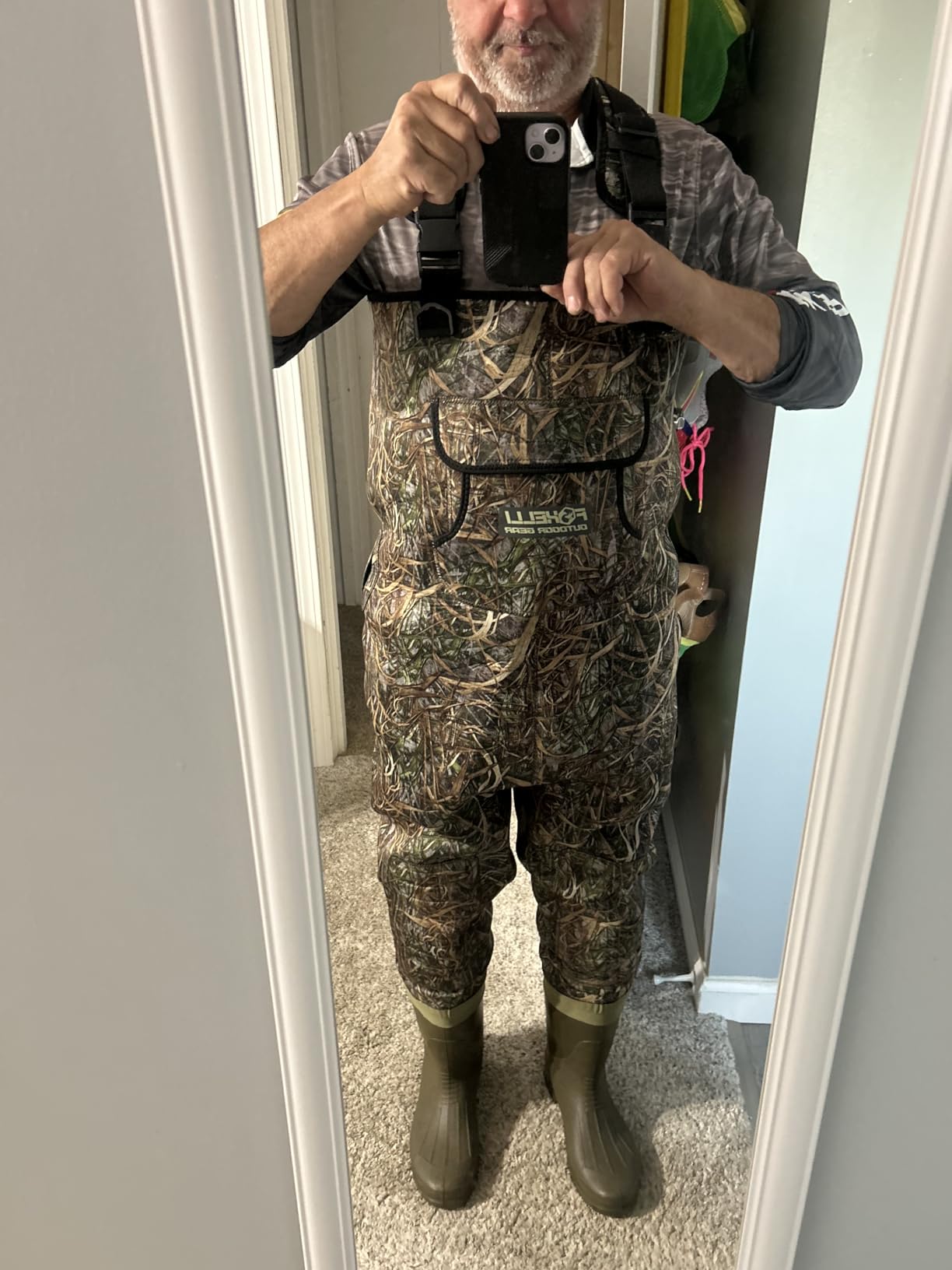
The Foxelli is the pair I reach for first, and the reason is simple: it has the deepest owner history in this roundup, with well over four thousand reviews averaging 4.5 stars. Owners across cold-water fishing, duck hunting and marsh work describe the same outcome, which is warm legs and dry trousers through a full day.
The 4mm neoprene sits in the band that handles most winter water without turning into a sauna, and the double-stitched, taped and sealed seams are the construction detail that decides whether a wader survives a season. At 8.4 pounds the pair is not ultralight, but it packs down reasonably and the reinforced knee pads take the punishment that ruins cheaper models.
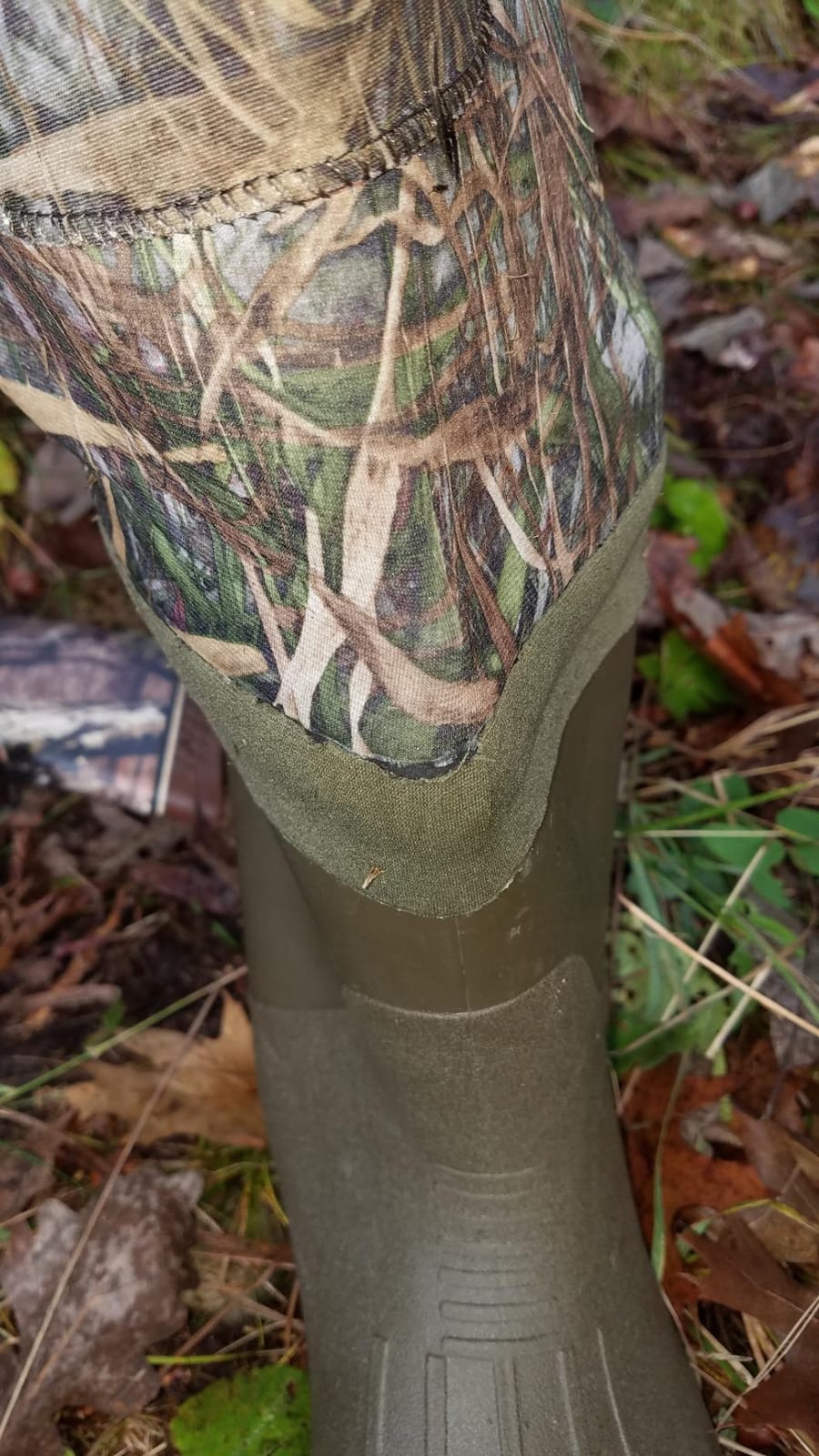
Storage is unusually good for this class. You get a chest hand-warmer pocket, an interior mesh pocket, D-ring attachments and a phone pouch, plus a nylon belt and carabiners in the bag. The adjustable elastic suspenders with quick-release buckles spread the load well across the shoulders, which matters when you are hauling gear up a bank at the end of a long day.
The recurring complaint from owners is at the boot, not the body. Several reviewers recommend sizing up a full size because the boot runs tight, and the stiff collar can rub the inside of the legs on long walks if you are not wearing knee-high wading socks. A minority of shorter wearers also find the torso runs long, leaving extra material around the midsection.
When this pair makes sense
It suits the angler who stands in 40F to 50F water for hours and wants proven sealing without a premium tier. It also works well for waterfowl hunters working shorelines and shallow water, because the reinforced knees handle the kneeling that duck hunting demands. For anyone moving between cold and mild conditions, the 4mm thickness is forgiving enough to wear outside winter.
When it will disappoint you
It is the wrong call for long walks on technical banks, where the stiff boot collar and light PVC boots leave you feeling every rock. It is also the wrong call for sub-freezing water if your feet are your weak point, since the PVC boot carries far less insulation than the 600-gram and 1000-gram rubber boots in this list. Sizing is the other trap, so order a full size up in the boot.
2. HISEA 600G Insulated Neoprene Chest Wader: Top Rated for Ice-Cold Water
Pros
- 4.5mm neoprene with 600g boots handled 40F water and sub-zero air
- Sealed seams stayed dry after breaking thin ice
- Cleated rubber soles grip slick rock and mud
- Eight shell holders and a zippered inner pocket
- Lifetime warranty honored on a seam failure
Cons
- Plastic suspender buckles crack under tension
- Some seam leak reports at the crotch
- Included nylon belt sits low
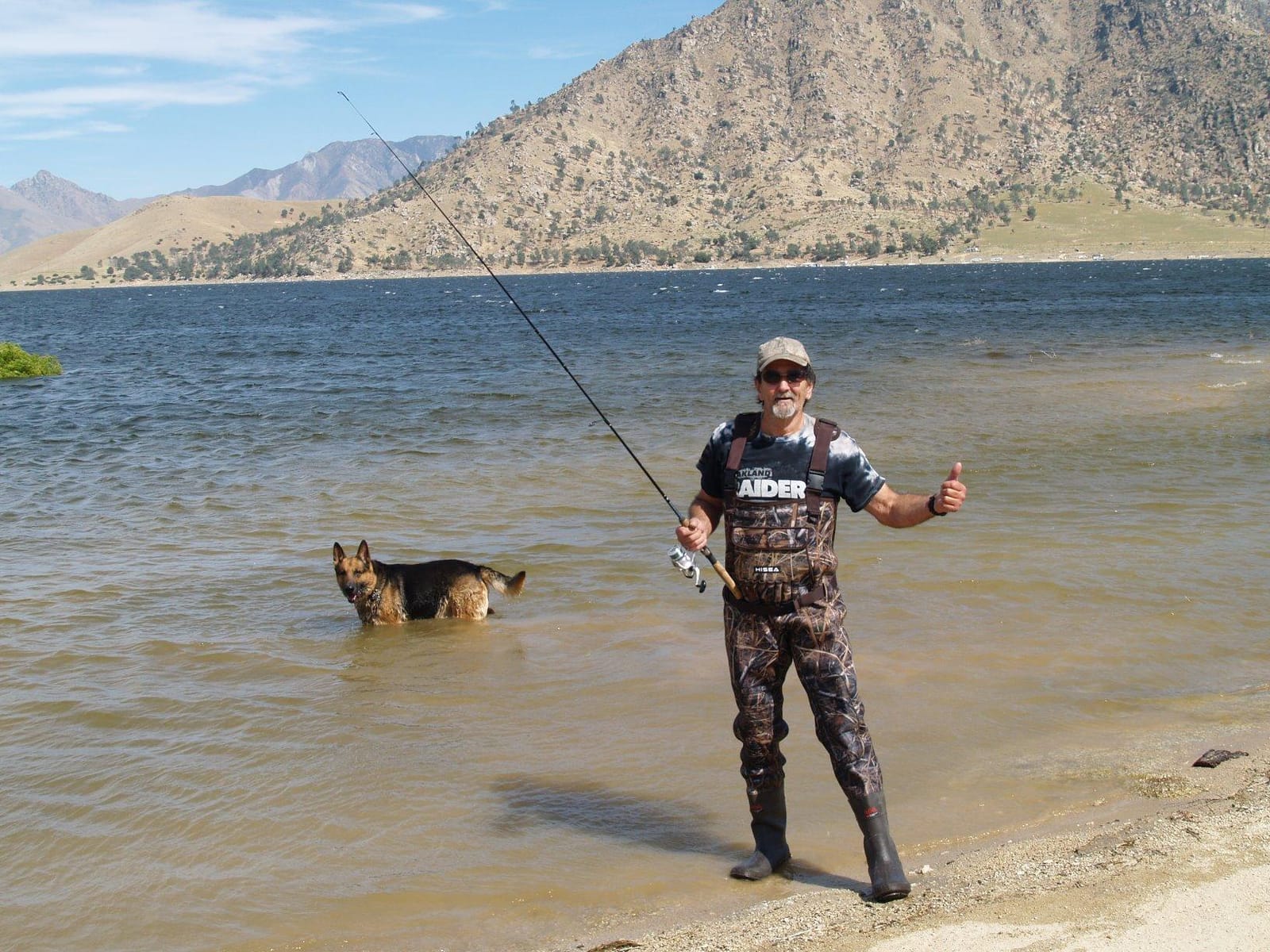
If you want the highest warmth-per-spend in this roundup, this is the pair. The 4.5mm neoprene is laminated to a nylon jersey and stretch liner, and the boots carry 600 grams of 3M Thinsulate Ultra insulation inside a rubber shell. That combination is what owners credit for staying warm standing in 40F water and in sub-zero air.
The armor weld double-stitched, bonded and taped seams are a step above what most waders at this level offer, and reviewers report those seams stayed leak-free even after breaking through quarter-inch ice. The cleated rubber soles matter more than they sound, because wet river rock is where a smooth outsole turns an ankle.
Storage is well thought out for an angler who actually fishes. Eight shell holders on the front hand-warmer pocket keep fly line organized, and a zippered inner chest pocket holds a phone or a spare layer. The adjustable suspenders use quick-release buckles, which is the detail you will thank after a long day of stripping wet line.
The honest weaknesses are hardware. The plastic suspender buckles are a recurring complaint, with owners reporting cracks after a season of tension. A smaller group reports seam leaks at the groin area with light use, and the included nylon belt sits low enough that most people replace it. One reviewer also received a used, leaky unit, which is a packaging problem rather than a design one.
When this pair makes sense
It is built for the angler who stands in genuinely cold water and does not want to think about it. Ice-adjacent early-season fishing, winter steelhead runs and cold waterfowl work all suit it. The lifetime warranty reportedly got honored when a seam failed, which is unusual at this price and cuts the effective cost of a bad unit to nearly nothing.
When it will disappoint you
It is a heavy, non-breathable build, so a day that turns mild will leave you soaked from the inside. The plastic buckles are the first thing to fail, so if you wade a lot, inspect them before each trip. The crotch seam reports are concentrated in a small group, but if you are buying for deep wading that is where you will find out quickly.
3. TIDEWE 4mm Neoprene Bootfoot Chest Waders: Thickest Insulation in the Roundup
Pros
- Thickest neoprene and boot insulation in the list
- Seams stayed dry across a full season
- Cross-hatch facing resists brush and timber
- Rugged tread grips mud and submerged timber
- 12 shell loops and multiple front compartments
Cons
- Runs large in the boot so size down
- Straps too long on smaller frames
- Stiff at the ankle join
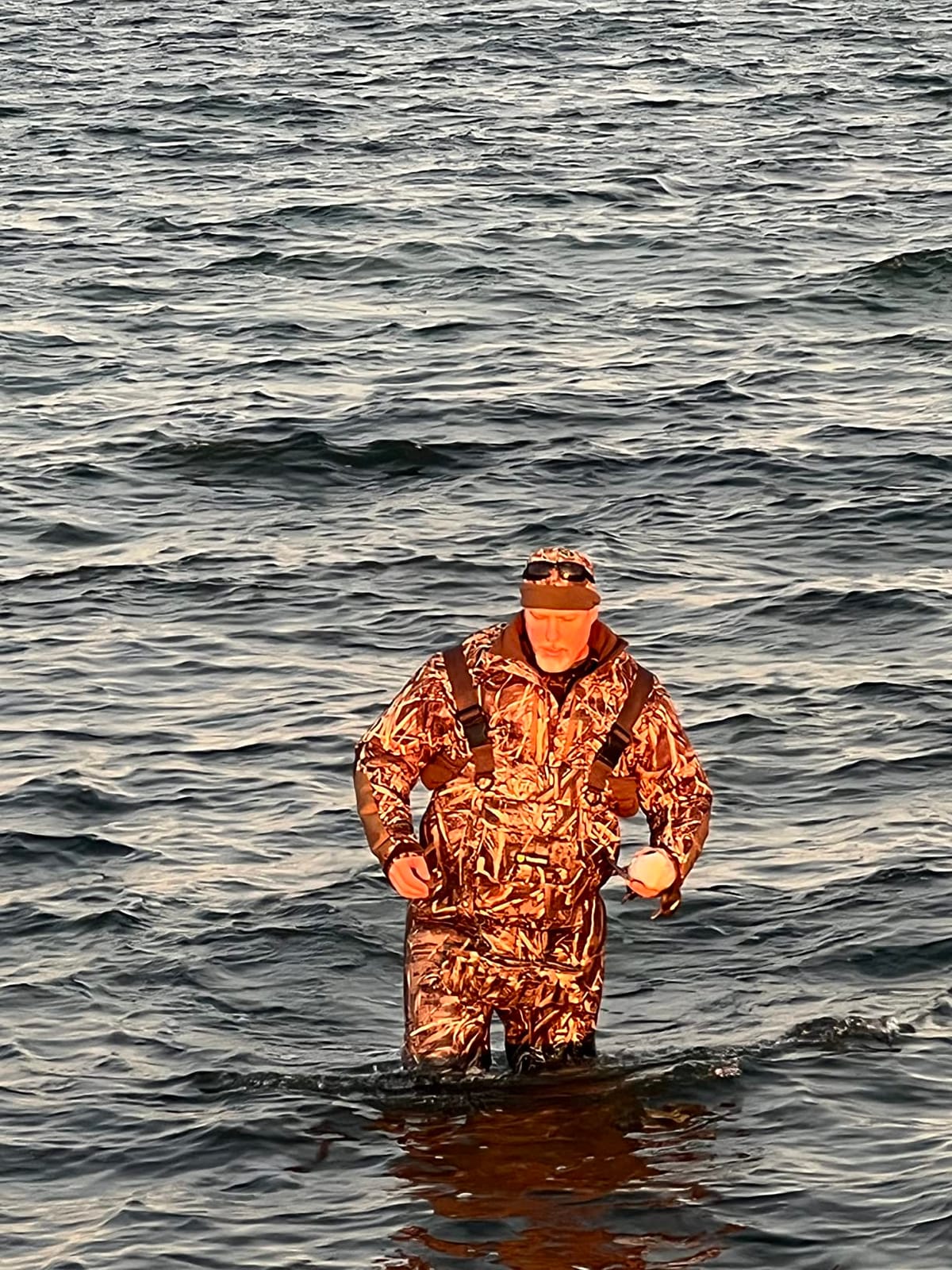
This is the most aggressively insulated cold water fishing wader in the group, with 5mm neoprene and boot insulation options at 1400 and 1600 grams of Thinsulate. For anyone standing in the coldest water on this list, nothing else here carries that much thermal mass. Buyers hunting late-season water and cold waterfowl report it holds warmth through conditions where lighter pairs quit.
The construction details are aimed at abuse. Armor weld double-stitched and sealed seams handled a full season without leaks for most owners, polyurethane-coated leggings guard the lower leg where brush and rock do the most damage, and a super tough cross-hatch facing adds abrasion resistance in timber and undergrowth. The rugged boot tread pattern grips slick mud and submerged timber.
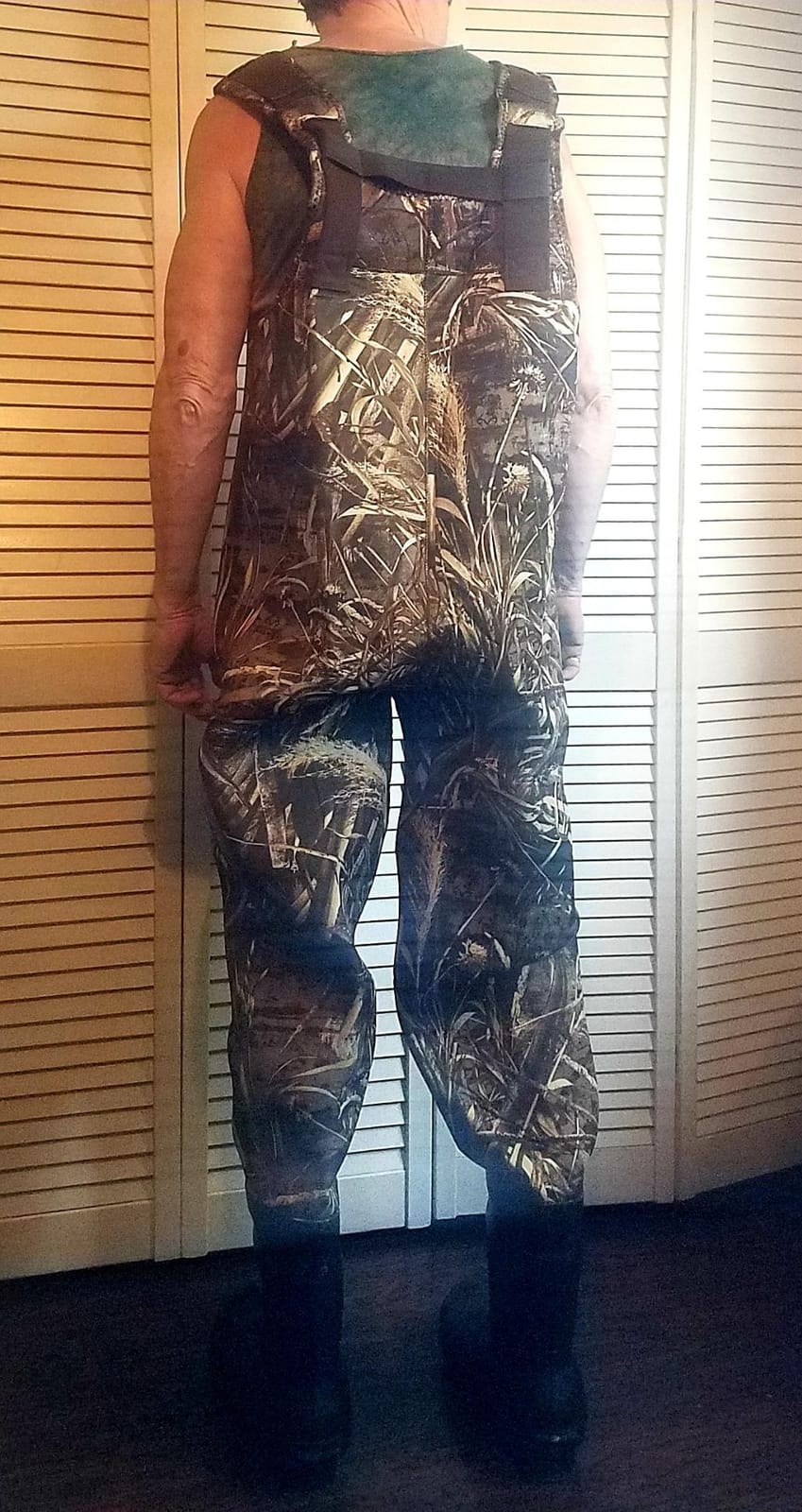
Storage is the best organized here. The quick-detach shell pouch carries 12 shell loops, the fleece-lined pass-through handwarmer pocket has its own heat-pack pocket, and a storm-flapped top-entry storage pouch sits above three front compartments. For long days that is the difference between fishing and digging through a wet pocket.
Sizing is the main thing to get right. The boot runs large, so most buyers size down a full size, and the shoulder straps can be too long even fully cinched on smaller frames, which lets the chest and shell pouch sag. Boots are warmer than some buyers expected and stiff at the ankle join, and a minority report knee or crotch seam leaks within a season.
When this pair makes sense
It is the right call for sub-freezing water, ice-adjacent work and late-season hunting where the temperature, not the walking distance, is the problem. The coated legs and cross-hatch facing also make it a good choice for wooded shorelines and marsh work. If you tend to run cold, this is the pair that removes the argument from the equation.
When it will disappoint you
It is too warm for spring and summer, and there is no venting. The sizing complaints are the biggest practical hurdle, so read the boot size guidance carefully and expect to size down. The stiff ankle join will bother you if you cover a lot of ground on slippery banks, because that is where flexibility earns its keep.
4. FROGG TOGGS Amphib Neoprene Bootfoot Wader: Best Boot Comfort
FROGG TOGGS Amphib Neoprene Bootfoot Waterproof Fishing Camo Chest Wader for Fishing, Mossy Oak Bottomland, 10
Pros
- Kept feet and legs warm over multi-hour trips in 37F water
- Round tall boot openings do not bite the legs
- Flexible neoprene moves easily for long wades
- Internal shoulder strap keeps fly lines clear
- Multiple camo patterns
Cons
- Single-stitch seams can unravel at the knees
- Sizing runs large so size down
- Some early seam and knee leak reports
The Amphib is the most comfortable boot in this roundup, and comfort is the feature owners mention first. The 600-gram Thinsulate boots pair with a wool felt midsole and a cleated outsole, and the round, tall boot openings do not bite into the legs the way narrower boot collars do. A stretch band stops the boot from bunching at the knee.
Warmth is real rather than nominal. Owners report keeping feet and legs warm through multi-hour trips in 37F and 41F water, which is more serious cold than the model name suggests. The 3.5mm neoprene is the thinnest shell in the group, so the boot is doing a large share of the insulation work.
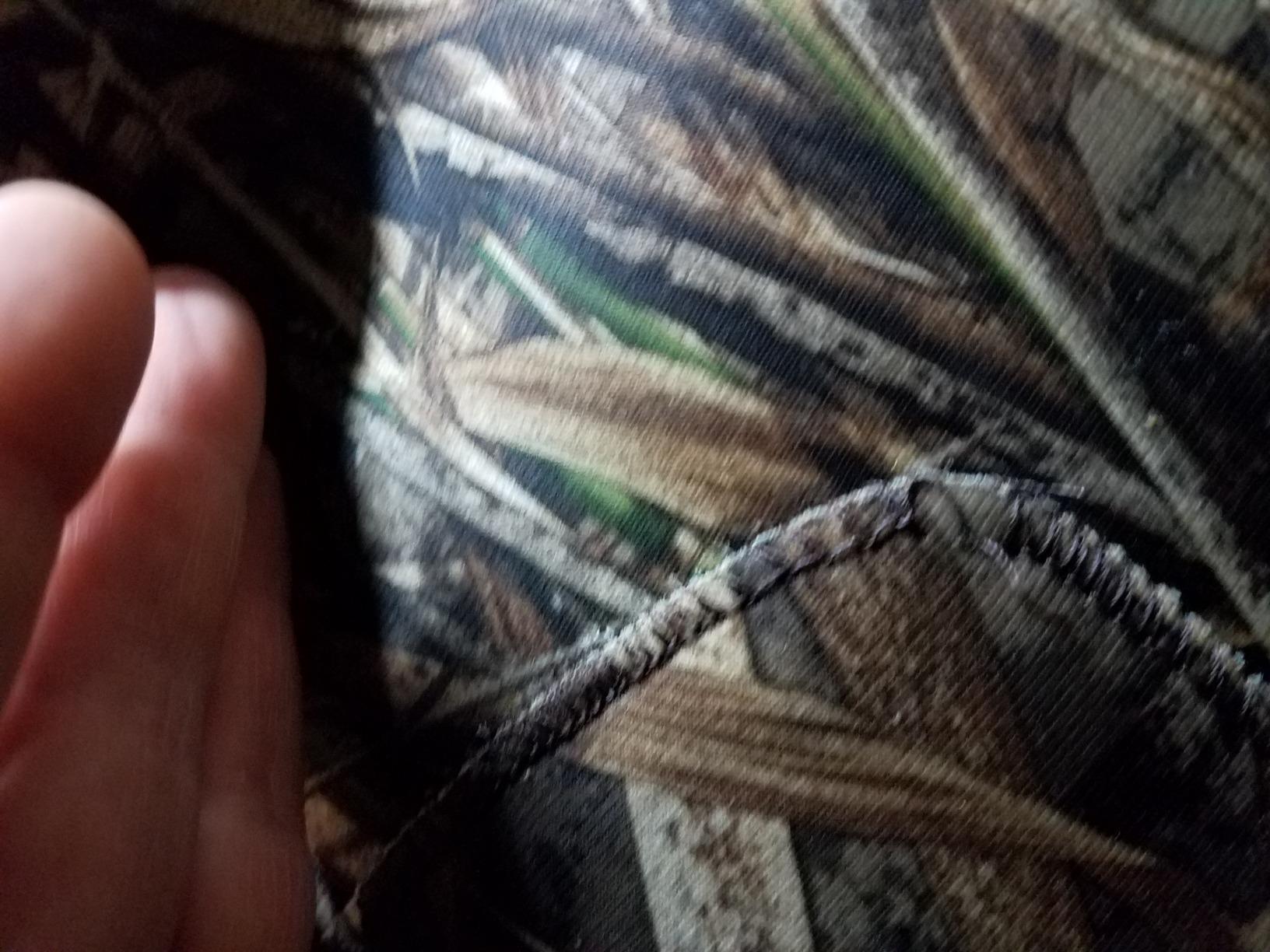
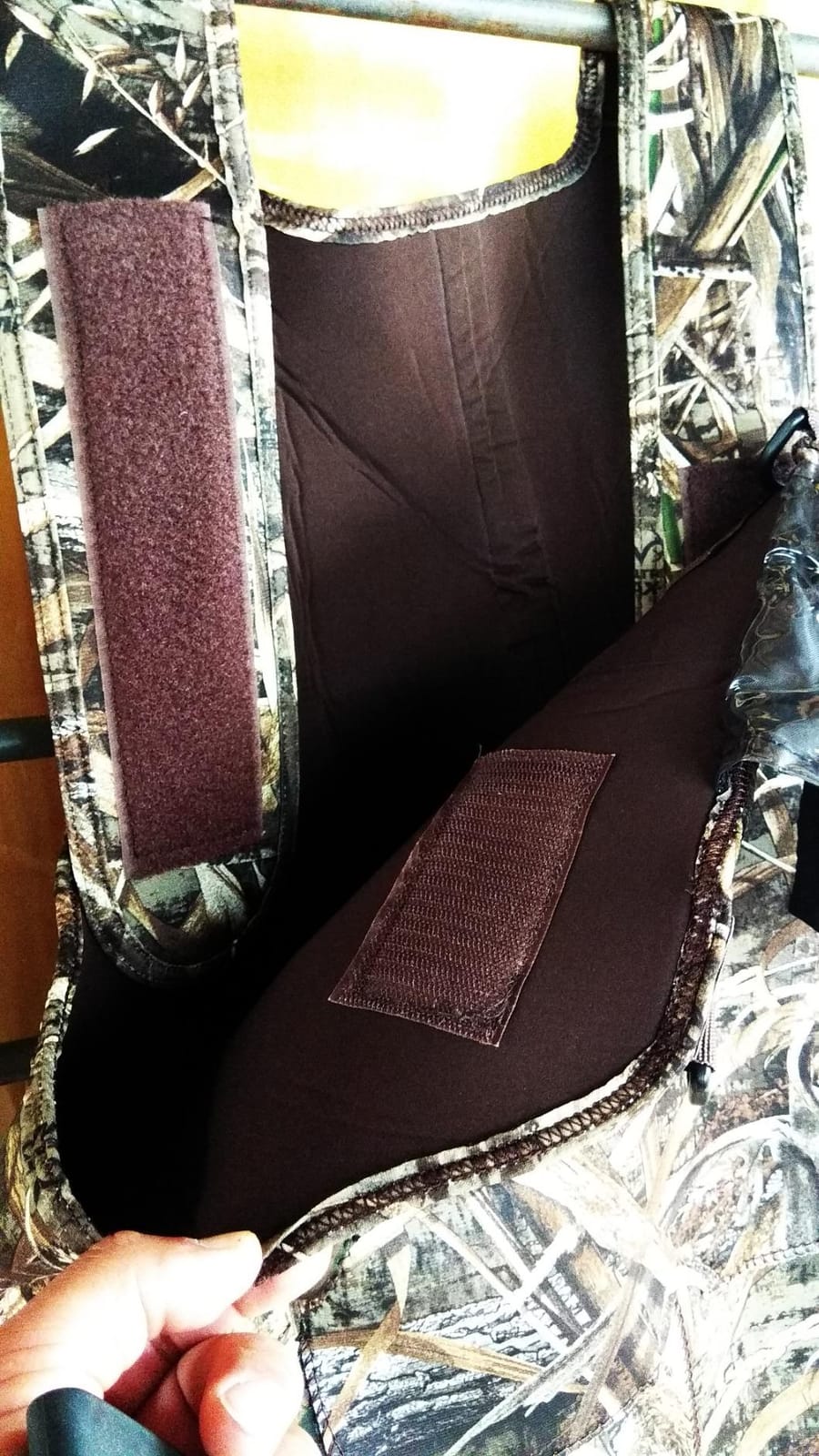
Two details set it apart for fly anglers. The high-back design is cut for deep water wading, and the internal shoulder strap attachment keeps fly lines from sagging when you cast, which is a small thing that stops being small after four hours of casting. Zippered flip-out security pockets, quick-drain hand warmer pockets and dual D-rings cover the rest of the storage question.
The durability feedback is the weak point. Stitching on this model is single-stitch, so a broken thread can unravel, and owners flag the knees specifically. Sizing runs large and a size down is often the better boot choice. There are also some reports of early seam and knee leaks and one of rapid delamination, so inspect the seams carefully in the first few trips.
When this pair makes sense
It suits the angler who spends a full day wading and hates anything that pinches. Deep pools, long days and fly casting all play to its strengths. It also works well for surf and shoreline fishing where you walk a lot in cold air, since the flexible neoprene does not fight you on the sand.
When it will disappoint you
It is the wrong pick for someone who pushes through a season of brush and rock, because single-stitch seams are the first thing to fail. Sizing runs large, so ordering your normal size leaves a baggy boot and cold air around the ankle. If you stand in near-freezing water for hours with no walking, 3.5mm is thinner than you want.
5. HISEA Neoprene Bootfoot Wader with 200G Boots: Budget Pick for Variable Conditions
Pros
- 4.5mm neoprene shell holds body heat in early-season cold
- Runs true to size for most buyers
- Quick-release suspenders make dressing fast
- Cleated soles work on wet and muddy ground
- Eight shell holders plus a hand-warmer pocket
Cons
- 200g boot insulation is lighter than the 600g and 1000g options here
- Neoprene traps heat and feels warm in mild conditions
This HISEA is the lighter-insulation option in the group, with 200 grams of 3M Thinsulate Ultra in the rubber boots rather than the 600g and 1000g found elsewhere. The 4.5mm neoprene shell laminated to a nylon jersey and stretch liner still holds body heat well, so the leg is protected even when the foot is not.
What you get for that lighter boot is a pair that works across more of the calendar. Buyers rate the fit as true to size, which is rarer than it should be, and the adjustable neoprene suspenders with quick-release buckles make getting in and out fast. The cleated soles hold up on wet and muddy ground where smooth rubber would skid.
The eight shell holders on the front hand-warmer pocket system are genuinely useful, and the storage layout is simple enough that you can find fly line without emptying every pocket. The Truetimber Drt Camo pattern also does the practical job of not blinding you while you are trying to spot a fish.
Two limitations are worth stating plainly. The 200-gram boot insulation sits below the heavier options in this roundup, so it is not the pair for standing in near-freezing water. And like all neoprene, it does not breathe, so buyers who move between winter and mild conditions will find it warm when the temperature climbs.
When this pair makes sense
It fits an angler who wads through a range of temperatures in the same season and does not need maximum foot insulation. Early-season water, cool rivers and general cold-weather fishing are all reasonable targets. It is also a sensible entry point if you are buying your first pair of cold water fishing waders and want true-to-size fit on the first try.
When it will disappoint you
It is not the answer for 32F to 40F water, because 200 grams will not carry your feet there for hours. It is also the wrong choice for anyone sensitive to heat, since the non-breathable shell cannot be vented. If your main worry is numb feet, spend the extra money on a 600-gram or heavier boot instead.
6. Trudave Neoprene Waders with Fleece Lining: Best for Ice and Unisex Fit
Trudave Fishing Waders for Men, Chest Waders with Boots Waterproof for Men & Women, Neoprene Waders for Hunting & Fishing
Pros
- Fleece over 4mm neoprene worked on ice-covered lakes
- Fleece lining keeps owners warm on cold surf sessions
- Deep-tread soles grip slime and slippery rocks
- Firm flexible boots do not crimp the toes
- Runs generously with a detachable insole
- Patch kit included
Cons
- Neoprene is puncture-prone in brush and rocks
- Pockets hold water and dry slowly
- Stiff Velcro chest pouches
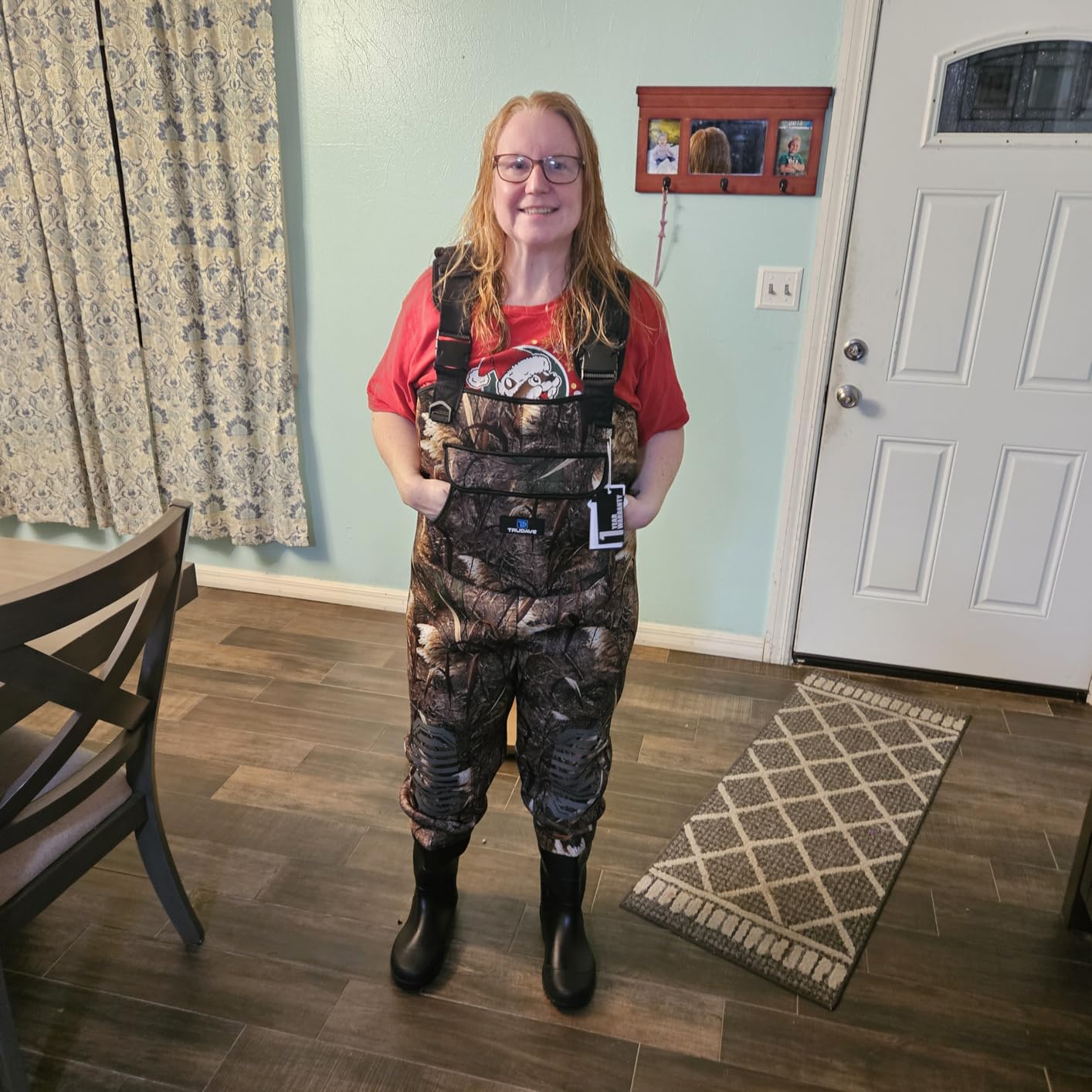
The Trudave is the only pair in the group with a fleece inner lining over 4mm neoprene, and that combination is why owners report warmth on ice-covered lakes and cold surf sessions. The fleece traps heat in a way neoprene alone cannot, and the PVC breathable lining underneath helps move moisture away from the skin.
The shell uses a 4mm neoprene body with triple-stitched seams, which is a solid sealing spec for the class. Deep-tread rubber soles with snake-resistant traction grip slime, mud and slippery rocks, and the boot material is firm but flexible enough that it does not crimp the top of the toes, a detail that matters for all-day comfort.
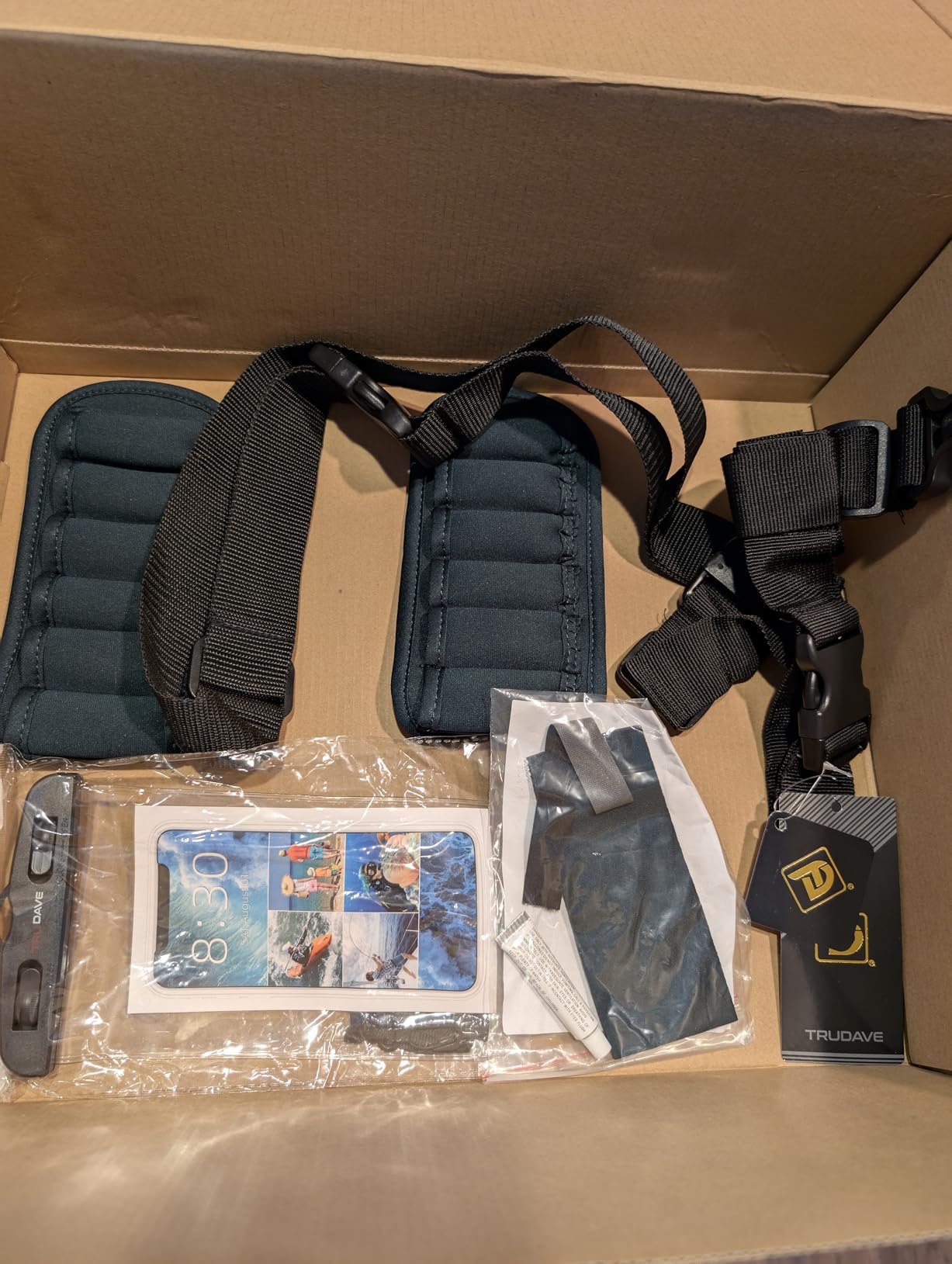
Two details make it friendlier to share or to fit unusually. It is a unisex adult pattern with a high waist style and adjustable shoulder straps with a reinforced waistband, and the run is generous, so owners with oversized feet can size down and use the detachable insole to dial in the fit. A patch kit is included for field repairs, which is more than most rivals offer.
The caution is about terrain. Neoprene at 4mm is puncture-prone, and one owner put a sharp branch straight through the material, so wooded shore fishing is not the strongest use. The chest and hand-warmer pockets are not drained, which means they hold water and dry slowly, and the Velcro chest pouches are stiff to open one-handed. One owner also reported the foot flooding after an unexpected dunking.
When this pair makes sense
It suits ice anglers, cold-water surf fishing and anyone wading in a place with no current to speak of. The generous unisex fit and adjustable straps make it a good shared or gift option. If you run cold but do not wade in heavy brush, the fleece layer is real insulation at a modest cost.
When it will disappoint you
It is the wrong tool for rocky, wooded shorelines, because thin neoprene punctures and the pockets trap water you will feel all day. Standing deep in current is also not its strength, since a 4mm shell with no boot insulation specification competes poorly with the 600-gram bootfoot models. Inspect the undrained pockets before you submerge.
7. 8 Fans 5mm Neoprene Waders with 1000G Boots: Best for 1000-Gram Insulation
8 Fans Hunting Waders, 1000G Insulated Rubber Boots, Neoprene Waterproof
Pros
- 1000g Thinsulate boots kept feet warm in freezing water
- 5mm neoprene is thick without feeling stiff
- No leaks reported after hours in deep water and mud
- Bootfoot tread grips slippery surfaces
- True to size with adjustable straps
Cons
- Included chest LED light does not work
- Some reports of seam separation after a few uses
- One report of a boot leaking near the foot
- Smallest review base in the roundup
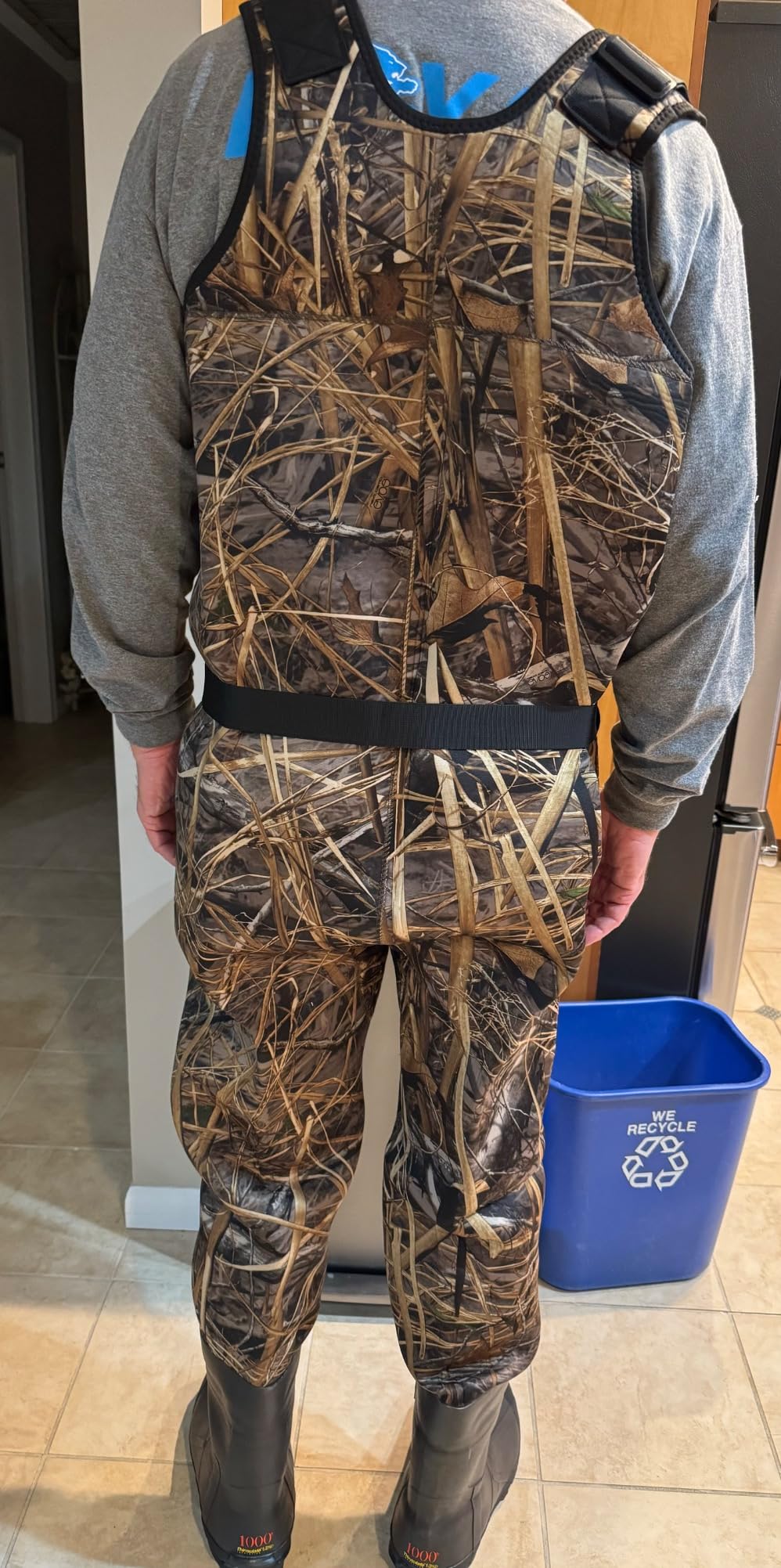
This pair is the middle ground between the 600-gram HISEA and the 1400-gram and 1600-gram TIDEWE, with 1000 grams of 3M Thinsulate Ultra in the rubber boot under a 5mm neoprene shell. Buyers credit that combination with keeping feet warm in freezing water while the neoprene stays flexible rather than stiff, which is a hard balance to hit.
Sealing is handled with bonded blind-stitch seams and heat-sealed strips under a polyurethane coating, and owners report no leaks after hours in deep water and mud. The reinforced shoe vamp is aimed squarely at puncture damage, the double-layer reinforced knee pads take the kneeling abuse, and the rugged tread holds on slippery surfaces.
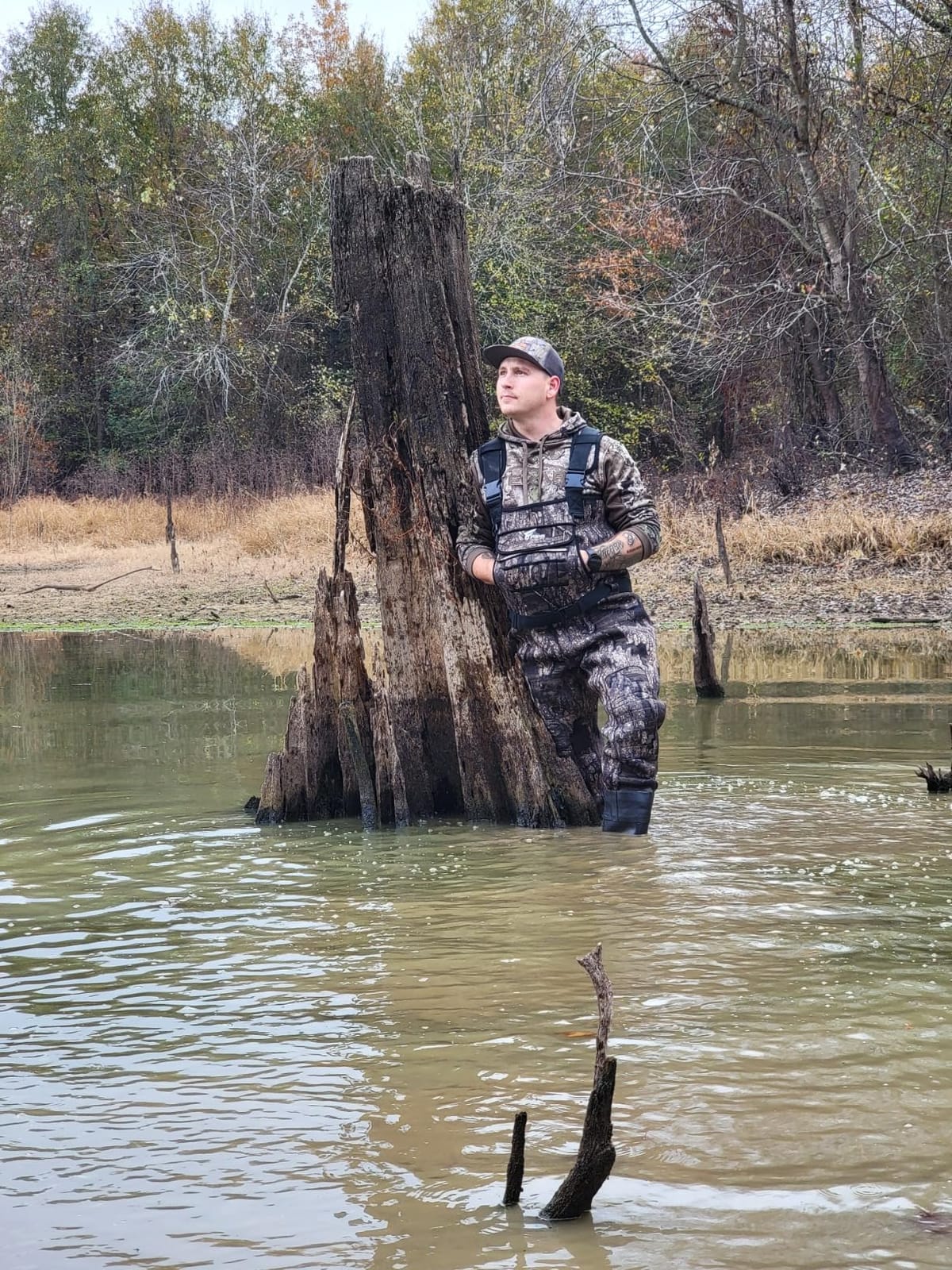
The fit hardware is simple and works. An adjustable chest belt with a quick-release buckle, a waist band and thickened flexible shoulder straps keep the pair in place, and the front ammunition pockets plus a zippered inner chest pocket cover storage. Several owners also note it fits both men and women on true-to-size ordering.
Two things keep this one lower in the ranking. The included chest LED light does not work, and its adhesive lets it fall off, which sounds trivial until you are trying to fish at dusk. More seriously, there are reports of seam separation after only a few uses and one report of a boot leaking near the foot, and the review base here is the smallest in the roundup, so the long-term picture is thinner.
When this pair makes sense
It is a good fit for freezing water, ice-adjacent wading and cold waterfowl work where 1000 grams is the sweet spot between bulk and heat. The reinforced vamp and knee pads suit anglers kneeling in mud or working shallow water edges. If you want serious foot insulation without the weight of a 1400-gram boot, this is the middle path.
When it will disappoint you
It is not the pick for a wader you expect to keep for many seasons, because the early seam separation reports are the main reason for the lower rating. Ignore the included LED light entirely; it does not work. If you wade in mild conditions the 5mm shell will be too hot, so it is strictly a winter tool.
8. FROGG TOGGS Hellbender Breathable Stockingfoot Waders: Best for Moving Water
FROGG TOGGS Hellbender Breathable Waterproof Stockingfoot Fishing Chest Wader for Fishing, Slate/Gray, Large
Pros
- Breathable fabric cuts condensation versus neoprene in cold water
- 4mm neoprene booties stay flexible inside wading boots
- Attached gravel guards keep sand and debris out
- Double-reinforced knees and abrasion-resistant nylon
- Stockingfoot design uses your own wading boots
Cons
- Only 4mm neoprene at the foot
- Requires separate stockingfoot wading boots
- Sizing runs small and the range tops out at XX-Large
The Hellbender is the breathable answer in this roundup, built on a 4-ply nylon upper with DRIPORE Gen 2 waterproof breathable material. That membrane is the whole point: it moves sweat and condensation outward, which is why anglers favor it over neoprene for long days where the internal dampness, not the cold, is the problem.
Inside, 4mm neoprene booties are double-seam taped and stay flexible inside wading boots, and the stockingfoot design means you use your own boots rather than the pair bolted to the wader. For an angler who already owns good stockingfoot boots, that is a real advantage in support and in the ability to swap footwear for different terrain.
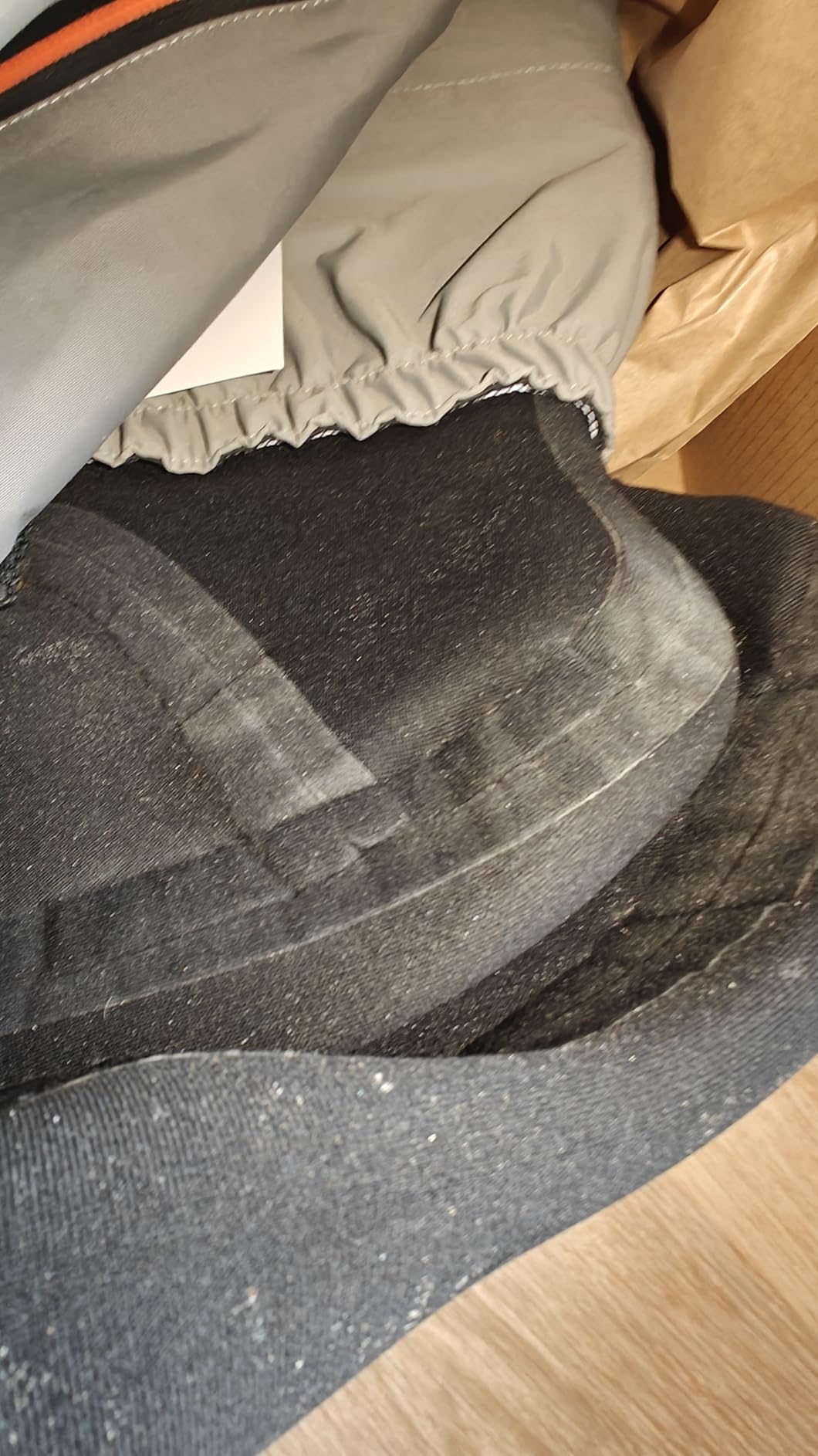
The attached gravel guards have a no-slip grip and an integral lace hook, which keeps sand and gravel out of your boots in moving water and on shallow gravel bars. Durability is handled with abrasion-resistant 4-ply nylon, double-reinforced knees and fully taped seams. Storage is generous, with an oversized multifunctional chest pocket, a zippered flip-out security chest pocket, zippered handwarmer pockets and horizontal zippered storage.
The trade-off is that 4mm neoprene at the foot is much less insulating than the 600-gram and 1000-gram bootfoot models in this list, and you still have to buy stockingfoot wading boots, which adds cost and setup to every cold trip. Sizing runs small across the chest and body, so read the chart closely, and the range tops out at XX-Large rather than offering extended inseams.
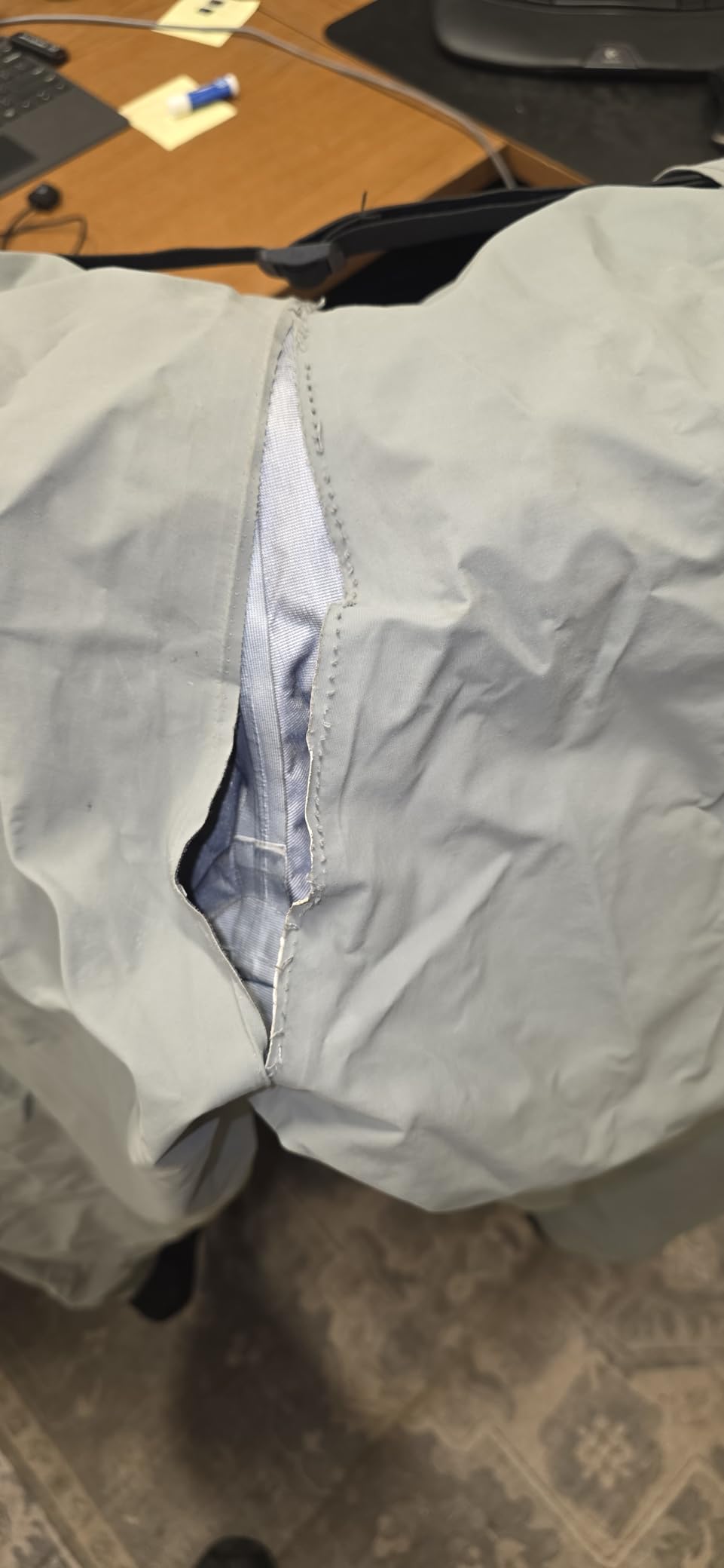
When this pair makes sense
It is the right tool for an angler who wades constantly through water above 45F and moves between cold mornings and mild afternoons. It also suits anyone who wants one pair of waders for more of the season instead of a strict winter-only pair. If you wade in gravel-bottomed water, the attached gravel guards are worth more than almost anything else here.
When it will disappoint you
It is a wrong choice for standing still in sub-freezing water, because a breathable shell gives you no raw insulation and 4mm neoprene booties will not carry your feet. It is also a poor fit for tall or broad anglers, since the range ends at XX-Large. Budget for the wading boots and insulated socks before you commit.
9. Simms Tributary Breathable Stockingfoot Waders: Best for Packing Light
Pros
- 3-layer upper with reinforced 4-layer lower stays dry on multi-day trips
- Extremely light and packs down small for travel and kayaking
- Ankle and foot room is more comfortable than budget alternatives
- Fleece-lined handwarmer pocket
- Short regular long and King inseams
Cons
- Supplied wading belt has only one rear loop
- Ankle section of the stockingfoot runs tight on some units
- Requires separate stockingfoot wading boots
The Tributary is the lightest cold water option here, and for anglers who wade hard and carry far it is the one I recommend without hesitation. Owners upgrading from budget pairs single out comfort, low weight and dryness as the big wins, and the 3-layer upper with a reinforced 4-layer lower stayed dry across multi-day trips.
Its strength is mobility. The pack-down size makes it a natural fit for travel and kayaking, and the anatomically engineered neoprene stockingfeet give noticeably more ankle and foot room inside wading boots than the budget alternatives in this roundup. That room is not a luxury, because cramped feet inside boots are a primary cause of cold feet.
Details are handled the way a premium brand should. Integrated gravel guards with elastic hems stop grit entering the boot, a fleece-lined reach-through handwarmer pocket keeps hand warmers usable on cold mornings, and a zippered stash pocket with an integrated fly patch covers small gear. The included 38mm non-stretch wading belt is a real belt, and the size range covers short, regular, long and King inseams.
The complaints are small and fixable. The supplied belt has only one rear loop, which is an annoyance when you want to attach a rear D-ring or a landing net, and some buyers find the ankle section of the stockingfoot too tight. You will also need to buy stockingfoot wading boots, and none of that is included.
When this pair makes sense
It suits the travelling angler, the kayak or paddle angler and anyone covering long distances in cold water where weight and pack size matter. The extended inseam options make it one of the better choices here for taller anglers. It also works well for wading in cold but not freezing conditions, worn over proper thermal layers.
When it will disappoint you
It is not a sub-freezing stationary wader, because a breathable shell has no raw insulation and needs heavy layers underneath to work. The tight ankle reported by some buyers is worth checking against your wading boots before committing. And the extra spend on boots and layers is part of the real cost, so price the whole setup, not just the wader.
10. Orvis Clearwater 4-Layer Chest Waders: Best for Long Inseam Options
Orvis Clearwater Chest Waders for Men – Waterproof Fly Fishing Waders with Neoprene Booties, External Storage Pocket, Sagebrush – X-Large
Pros
- Light and comfortable enough to wear all day without overheating
- 30K/8K breathable fabric handles 40F mornings to mid-70s afternoons
- Neoprene booties fit with an extra pair of socks
- Survived a fall on jagged rocks
- Extended inseam and King size options
Cons
- Premium price sits above the neoprene bootfoot models
- Breathable fabric gives less raw insulation than neoprene
- Not the full Orvis size range is carried on Amazon
The Clearwater is the temperature-regulating option in this roundup, and the 30K/8K breathability rating on its durable 4-layer fabric is the specification that matters. Reviewers describe it working from 40F mornings through mid-70F afternoons in the same pair, which is exactly the swing most anglers face on a spring day.
It is also the most comfortable for long hours. Owners report being light and comfortable enough to wear all day without overheating in mild conditions, and one detailed review documents surviving a fall on jagged rocks with no damage. The anatomical neoprene booties fit well with an extra pair of socks and work with stockingfoot wading shoes, which matters for anyone who runs cold.
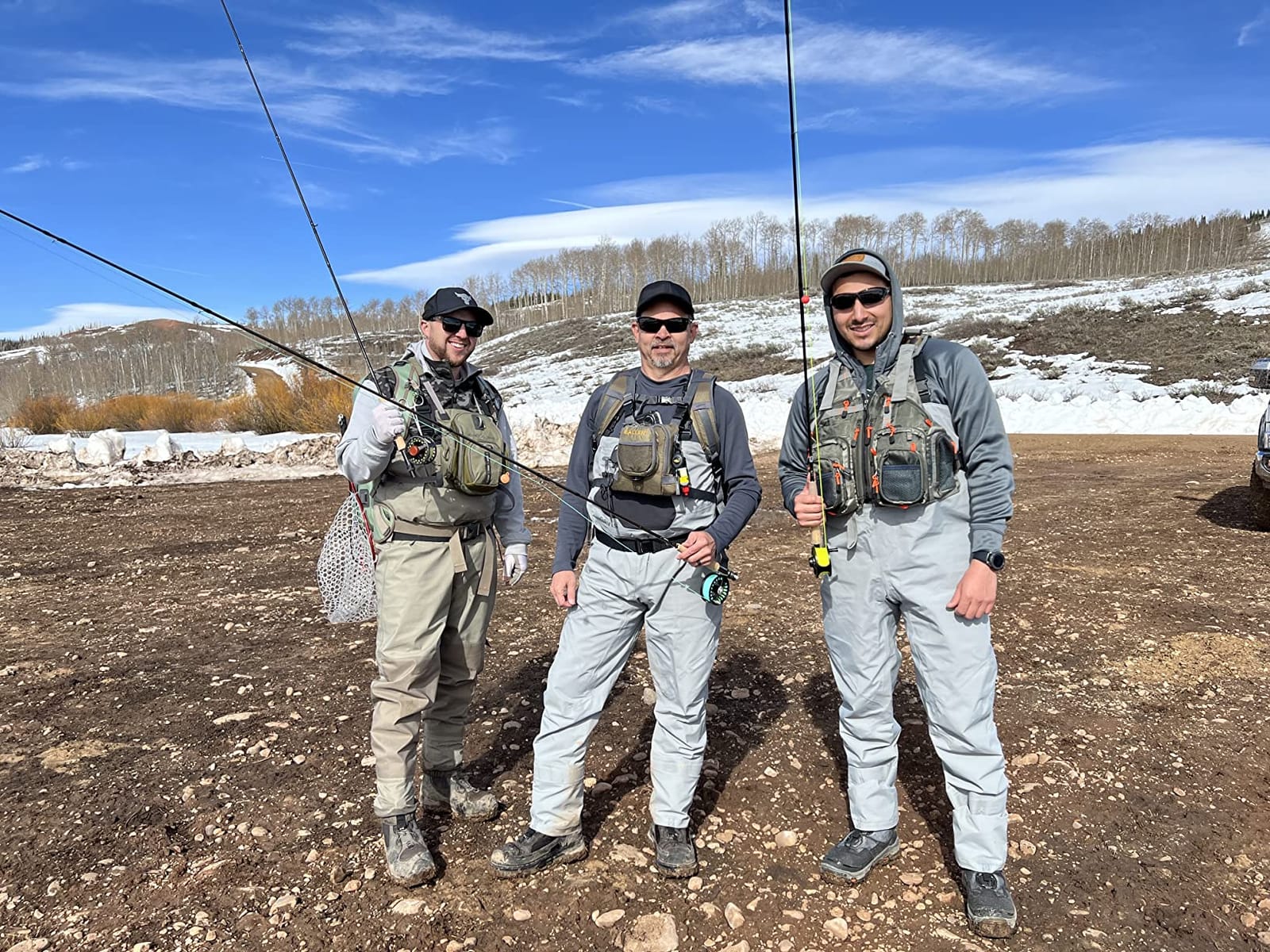
Two features separate it from the rest. The side-release buckles allow conversion from chest to waist height, so you can fish shallow water without the whole suit hanging, and the size range extends to extra-long inseams, which taller anglers rate specifically. Storage is straightforward with a chest pocket and handwarmer pocket, and the gravel guards come as part of the bootie system.
The honest drawback is that a breathable shell offers less raw insulation than neoprene when you are standing in near-freezing water. It also costs more than the neoprene bootfoot models in this list, and the full Orvis size range is not carried on Amazon, so some lengths have to come from the brand. One detailed review also documents a seam leak and difficulty getting support when the purchase was not made through Orvis directly.
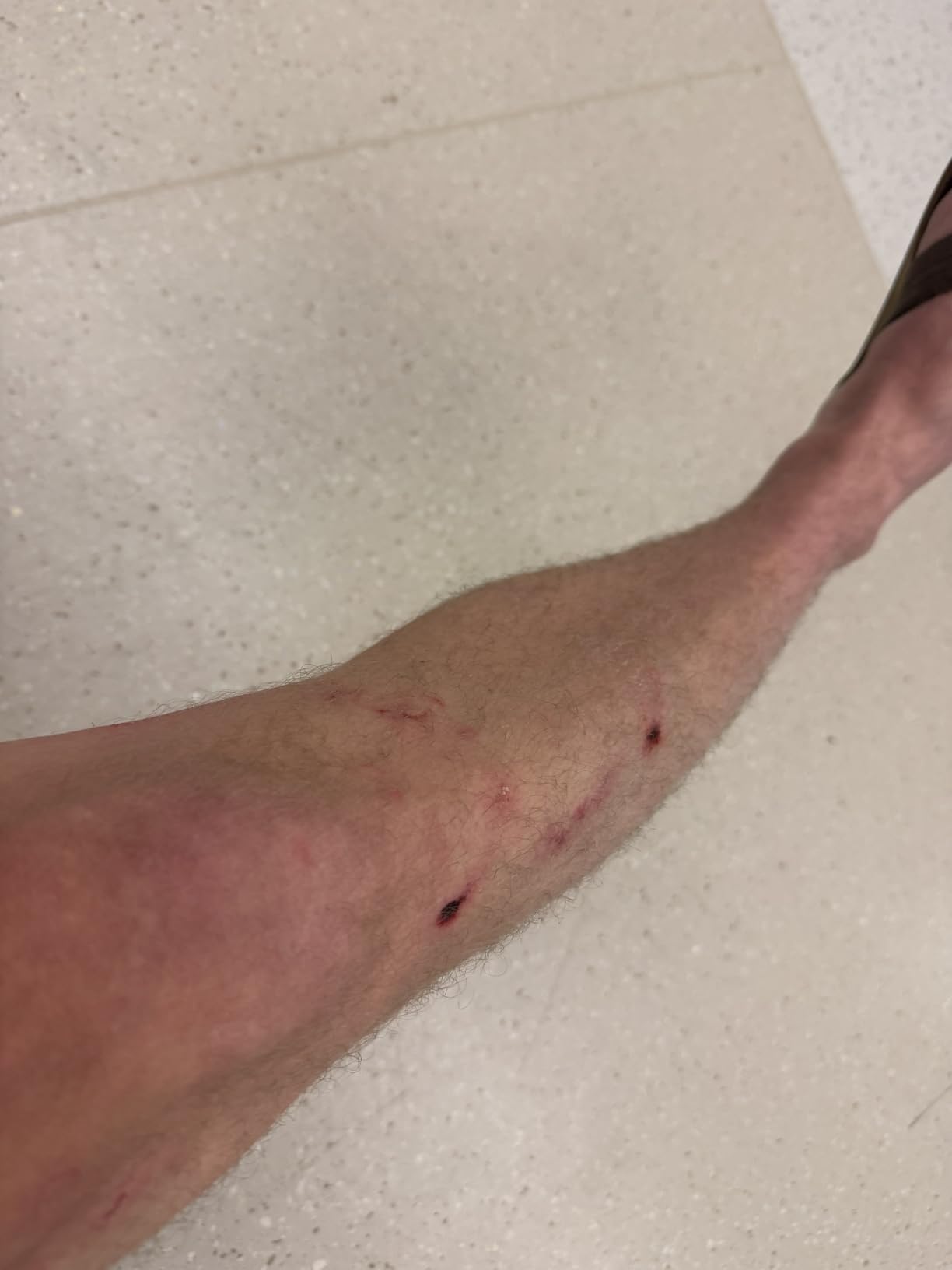
When this pair makes sense
It is the right call for anglers with long legs who struggle to find chest waders that fit, and the extra-long inseam options are the reason to shortlist it first. It also suits anyone whose season runs from cold water into mild water, because the convertible buckles and 4-layer fabric cover a much wider range than neoprene. Surf and sand beach fishing suit it well.
When it will disappoint you
It is a wrong pick for standing still in water below 40F, because a breathable shell cannot deliver the warmth a 5mm neoprene pair will. It is also the wrong pick for anyone who wants a single low-maintenance wader with a sealed boot and no extra purchases. Check the inseam availability for your size before ordering.
How to Choose Winter Fishing Waders That Actually Stay Warm
Most wader comparisons lead with brand, and that is the wrong place to start. These six criteria decide whether you stay warm, and once you know how to read them the marketing stops mattering.
Neoprene thickness in mm, and what the difference feels like
Thickness runs from 3.5mm to 5mm in this group, and the difference is not subtle. At 3.5mm you are relying on the boot for most of your warmth. At 4mm to 4.5mm you get a solid balance for most winter water. At 5mm you are choosing maximum insulation and giving up any hope of cooling off later in the day.
Insulation gram weight decoded
Boot insulation is measured in grams of Thinsulate, and higher is warmer. The 200-gram boot in this roundup handles cool water. The 600-gram boot is the winter standard. The 1000-gram boot is for freezing water, and the 1400-gram and 1600-gram boots are for standing still in near-freezing conditions. The boot is where your warmth is won or lost.
Waterproofing and seam construction
Seams are where cold water waders fail, and the hierarchy is clear. Best is bonded or welded and taped, as on the TIDEWE. Next is double-stitched and taped, as on the Foxelli. Then triple-stitched and glued and taped. Single-stitch is the weakest and is the reason the Amphib needs knee attention. Forum reports of seam failure on budget pairs after roughly four months of regular use are the durability benchmark to compare against.
Bootfoot or stockingfoot for winter
Bootfoot waders come with attached rubber boots, which means one less thing to buy and one less seam to leak. Stockingfoot waders let you use your own wading boots, which is better for support, terrain changes and dry feet between trips, but you must buy boots and insulated socks separately. For cold water, bootfoot with 600-gram or heavier insulation is the simpler, warmer default.
Sole traction in snow, mud and on slick rock
Felt soles gather wet snow and build height fast, which makes walking awkward and raises the ankle-twist risk on uneven ground, and felt is restricted in some states. Rubber with molded cleats is the safer all-round answer in winter, and it is what the HISEA, the TIDEWE and the Trudave use. Avoid narrow treads, which are the most common grip complaint on rocky riverbeds.
Fit, sizing and what to wear underneath
Sizing runs inconsistent across this whole category. The Foxelli boot runs tight, the TIDEWE and the Amphib run large, and the Hellbender runs small through the chest. Buy the body to fit comfortably over your layers, then adjust the boot, and do not fight it with extra socks. Over-tight boots restrict circulation, and restricted circulation is what actually makes feet cold.
Cold Water Wading Safety: Five Steps Before You Get In
No roundup in this category covers safety, and that is a gap worth closing. Water conducts heat away from your body roughly 25 times faster than air, so a wading mistake in cold water escalates far faster than the same mistake in summer.
First, tell someone your entry and exit points and your expected return time. Second, wear a personal flotation device on any cold water of unknown depth, and treat a wader failure as a swim rather than a walk. Third, check that every chest pocket is zipped before you submerge, because an open pocket fills the suit and drags you down.
Fourth, start with a short trip on a familiar bank and watch how your feet respond. Numbness that does not return to normal within a reasonable time after you get out is a stop signal, not something to push through, and forum anglers report losing sensation in their toes for months after repeated cold exposure. Fifth, get out before you are compromised, because judgement degrades before you notice it happening.
Care and Maintenance: Six Steps That Decide How Long a Pair Lasts
Waders fail from neglect far more often than from bad design, and a six-step routine will add seasons to any pair in this roundup.
First, rinse your waders in fresh water after every trip, focusing on the seams, zippers and suspender hardware. Second, hang them to air dry away from direct sun, because UV degrades membranes and fades camo patterns. Third, never store or pack a pair damp, since trapped moisture leads to mildew and to bacteria in the chest pocket fabric.
Fourth, check the seams and the boot-to-suit junction at the start of every season, and treat any separation early with the supplied patch kit. Fifth, reapply a durable water repellent finish to the outer fabric as it starts to wet out rather than waiting for it to fail completely. Sixth, wash by hand in cool water and let the neoprene dry naturally, since heat and harsh detergent attack the material.
If you are wading long distances and want a second layer of storage, our waterproof backpacks for water sports picks cover keeping dry gear separated from wet gear on long days out. The same rule applies to camera gear on cold shoots, which is the thinking behind our cold frames picks for keeping optics protected in winter conditions.
Frequently Asked Questions
Should I get neoprene or breathable waders for cold water?
Choose neoprene if you stand still in water below 45F, because the material traps warmed water against your body and 4.5mm to 5mm shells with 600-gram or heavier boots will hold heat for hours. Choose a breathable shell if you wade constantly through water between 45F and 60F, since a membrane like DRIPORE Gen 2 pushes sweat outward and prevents the damp-trousers problem. Most winter anglers end up owning one of each.
How cold can you wade in neoprene waders?
With 4.5mm to 5mm neoprene and 600-gram or heavier boot insulation, owners regularly report standing in 37F to 41F water for multiple hours. Below that, you want 1000-gram boots or heavier, such as the 1400-gram and 1600-gram options in this roundup. Water below 32F adds a real frostbite and mobility risk that no wader fully solves, so add thermal layers and take movement breaks on the bank.
What should I wear under waders in cold weather?
Start with a synthetic or merino base layer that moves moisture away from the skin, then add a mid-weight fleece or insulated mid layer. Avoid cotton, which holds water against your body. Sizing up one size in the wader is better than adding extra socks, because tight boots restrict circulation and make your feet colder, not warmer.
How do I keep my feet warm in stockingfoot waders?
Insulation has to come from the boot, not the wader, in a stockingfoot design. Use insulated wading boots, add a quality wool or neoprene sock that you can change on long days, and consider a heated insole for genuinely cold water. The 4mm neoprene booties on the Hellbender are sealed and flexible but carry far less heat than a 600-gram bootfoot model.
Are Patagonia waders better than Simms?
Both build premium breathable constructions rather than neoprene, so the honest answer depends on fit and inseam rather than a brand verdict. Simms tends to lead on multiple inseam lengths and packed-down weight, while Patagonia is widely matched to it on membrane quality. In this roundup the Simms Tributary scored 4.4 from 132 owners and includes short, regular, long and King inseams.
Do you stay dry in neoprene waders?
You stay dry as long as the seams hold, and the sealing spec matters more than the brand. Bonded, welded and taped seams are the strongest, double-stitched and taped comes next, and single-stitch is the weakest. The most common reports in this roundup are early leaks at the knees and crotch on lighter models, with a handful of owners citing seam separation after roughly four months of regular use.
Best Fishing Waders for Cold Water: Final Verdict
The best fishing waders for cold water in 2026 come down to how you fish. Standing still in the coldest water, take the Foxelli 4mm as the all-round pick, the HISEA 600G for the strongest warmth-to-cost balance, or the TIDEWE for genuinely freezing conditions. Moving constantly through cold water, the FROGG TOGGS Hellbender and the Simms Tributary are the breathable answers, with the Orvis Clearwater covering the widest temperature swing and the best long-inseam options.
Whichever you choose, buy the boot insulation to match your water, seal the seams properly and give the pair six months of careful care. That is what keeps a winter wader working for season after season.