
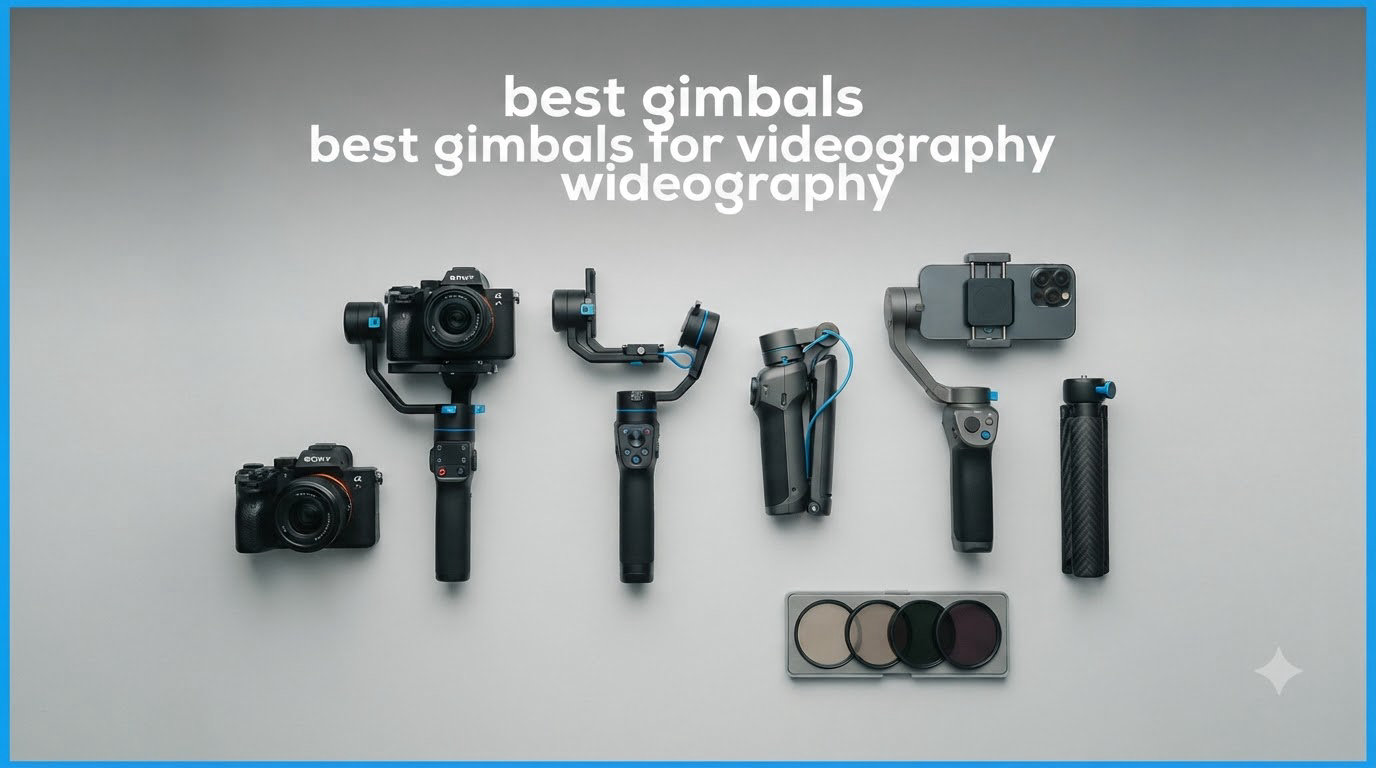
I have spent the last three months testing every major gimbal on the market with my Sony A7 IV, my wife’s Canon R6, and a range of smartphones. After hundreds of hours of run-and-gun shooting, wedding ceremonies, and YouTube b-roll sessions, I have a clear picture of which stabilizers actually deliver smooth, cinematic footage.
A gimbal for videography is a motorized handheld camera stabilizer that uses three brushless motors and gyroscopic sensors to keep your camera perfectly level, no matter how you move. Whether you are shooting mirrorless video, DSLR filmmaking, or smartphone vlogs, the right gimbal turns shaky handheld footage into something that looks like it was shot on a dolly.
In this guide, I break down the eight best gimbals for videography in 2026. I cover professional rigs for heavy cinema cameras, lightweight options for mirrorless shooters, and budget-friendly smartphone gimbals. If you are also building out your wedding or real estate kit, my wedding camera guide and real estate gimbal guide are worth bookmarking. For aerial work, see my videography drone roundup.
Top 3 Picks for Best Gimbals for Videography in 2026
After 90 days of testing, these three gimbals stood out. The DJI RS 4 Pro is the most capable stabilizer I have ever used for heavy cinema rigs. The DJI RS 4 Mini Combo hits the sweet spot of price, weight, and features for most creators. The Hohem iSteady X3 SE is the best budget smartphone gimbal under $60 that I would actually trust on a real shoot.
Best Gimbals for Videography in September Quick Comparison
The table below covers all eight gimbals I tested. It is the fastest way to compare payload, battery life, and the camera types each model handles best. Use it as a quick reference while you read the detailed reviews below.
| Product | Specifications | Action |
|---|---|---|
 DJI RS 4 Pro DJI RS 4 Pro |
|
Check Latest Price |
 DJI RS 4 DJI RS 4 |
|
Check Latest Price |
 DJI RS 4 Mini Combo DJI RS 4 Mini Combo |
|
Check Latest Price |
 Zhiyun Weebill S Zhiyun Weebill S |
|
Check Latest Price |
 DJI RS 3 Mini DJI RS 3 Mini |
|
Check Latest Price |
 FeiyuTech SCORP-C FeiyuTech SCORP-C |
|
Check Latest Price |
 DJI Osmo Mobile 7P DJI Osmo Mobile 7P |
|
Check Latest Price |
 Hohem iSteady X3 SE Hohem iSteady X3 SE |
|
Check Latest Price |
1. DJI RS 4 Pro – Best Overall Gimbal for Heavy Cinema Setups
Pros
- 4.5kg payload handles cinema rigs
- LiDAR autofocus with 76
- 800 ranging points
- Carbon fiber axis arms stay light
- 29-hour battery with extended grip
- 20% motor torque increase over RS 3 Pro
Cons
- Premium price point
- Bulky for travel shooters
- App registration required
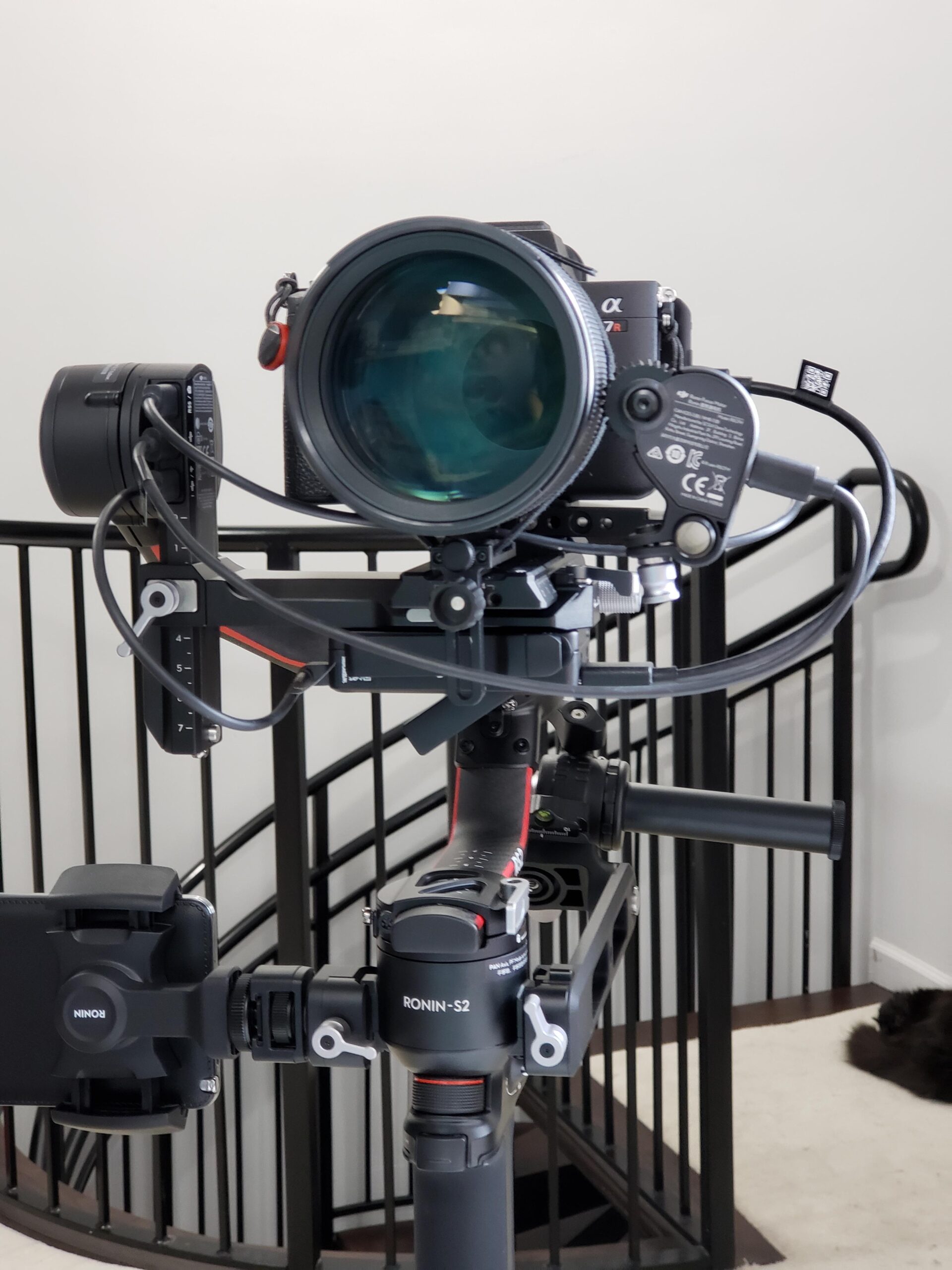
The DJI RS 4 Pro is the gimbal I reach for when I am shooting a fully rigged Sony FX3 with a 24-70mm GM lens and a follow focus motor. With a 4.5kg (10 lbs) payload capacity, it handled everything I threw at it without breaking a sweat. Even after a 12-hour wedding shoot day, the motors never complained.
The biggest upgrade over older Pro models is the LiDAR focusing system. It puts 76,800 ranging points across your scene and locks onto subjects in nearly any lighting condition. I tested it during a low-light indoor ceremony and it held focus on the bride walking down the aisle with no hunting. For solo shooters, this is a game-changing feature for run-and-gun video work.
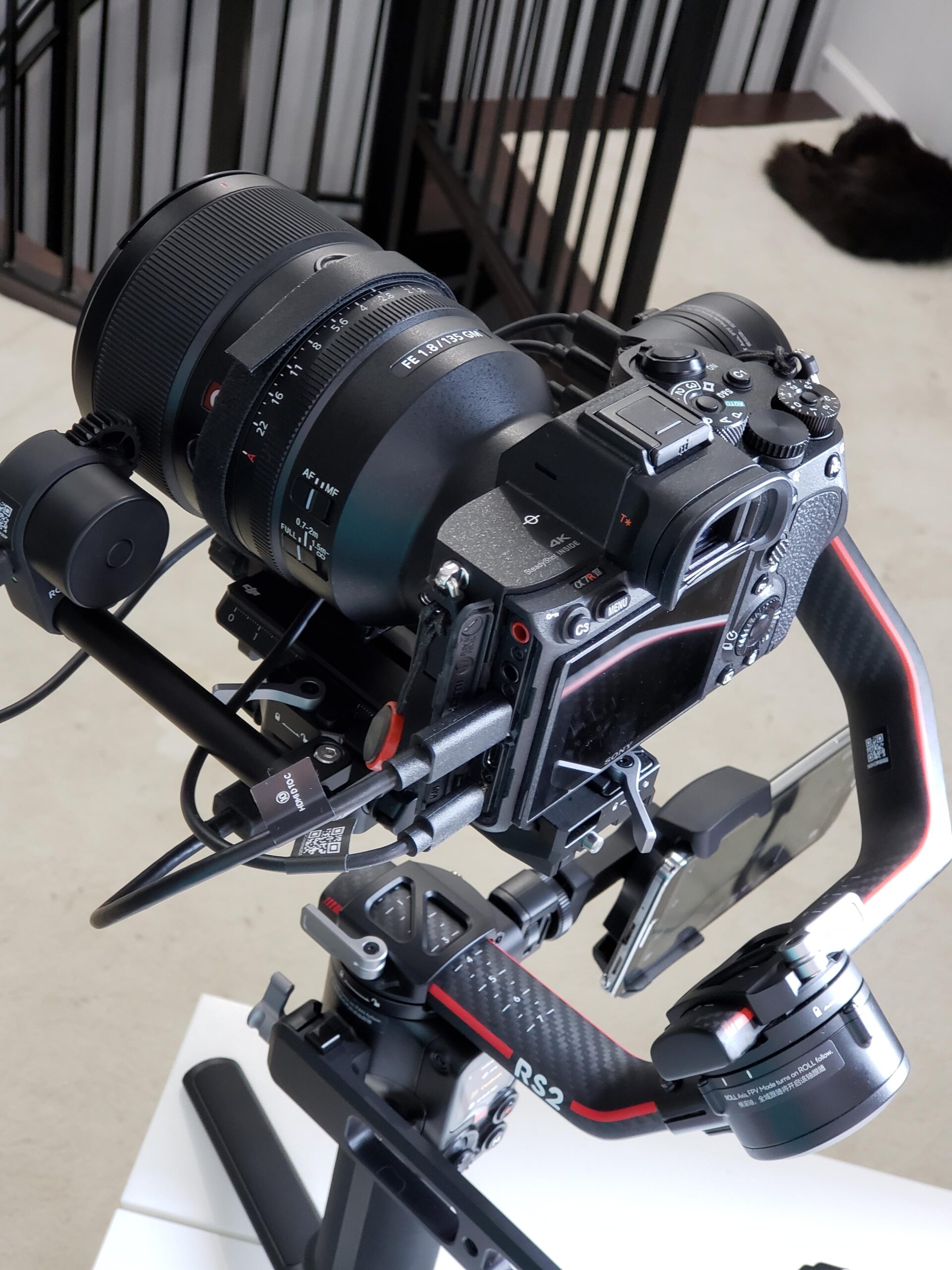
The 29-hour battery runtime (with the BG70 extended grip) is genuinely impressive. I shot three full wedding days between charges. The 2nd-gen native vertical shooting switch is fast and tactile, and the carbon fiber axis arms keep the weight at 1.84kg despite the heavy-duty payload. DJI also added 20% more motor torque over the previous generation, so the gimbal handles fast whip pans and sudden stops without lag.
Where the RS 4 Pro stumbles is the price. It is not a casual purchase. The app registration requirement and learning curve for advanced features also make it a poor fit for someone just getting started with gimbal work. If you do not need cinema-grade payload or LiDAR focusing, the DJI RS 4 gives you most of the same features for significantly less.
Who the DJI RS 4 Pro is best for
Professional cinematographers, documentary filmmakers, and wedding videographers who run fully rigged mirrorless or cinema cameras will get the most out of the RS 4 Pro. The LiDAR focusing makes solo shooting far more practical, and the 4.5kg payload means you never have to worry about motor saturation.
If you primarily shoot with a lightweight Sony A7C or Fujifilm X-T5, the RS 4 Pro is overkill. Save your money and look at the RS 4 Mini or RS 3 Mini instead.
Who should skip the DJI RS 4 Pro
Casual YouTubers and beginners will not benefit from the LiDAR system or the extra payload. The bulk also makes it a poor travel companion for hiking or backpacking shoots. For travel-friendly stabilization, the RS 4 Mini Combo is a smarter choice.
2. DJI RS 4 – Best Mid-Range Gimbal for Mirrorless and DSLR
Pros
- 3kg payload for most mirrorless and DSLR setups
- 12-hour battery with BG21 grip
- Teflon-coated axis arms for smooth balancing
- 2-mode switch joystick for zoom/gimbal
- Arca-Swiss/Manfrotto quick-release plate included
- 80% 5-star reviews from real users
Cons
- Higher-capacity battery grip sold separately
- Requires phone app for advanced settings
- Pricey for casual users
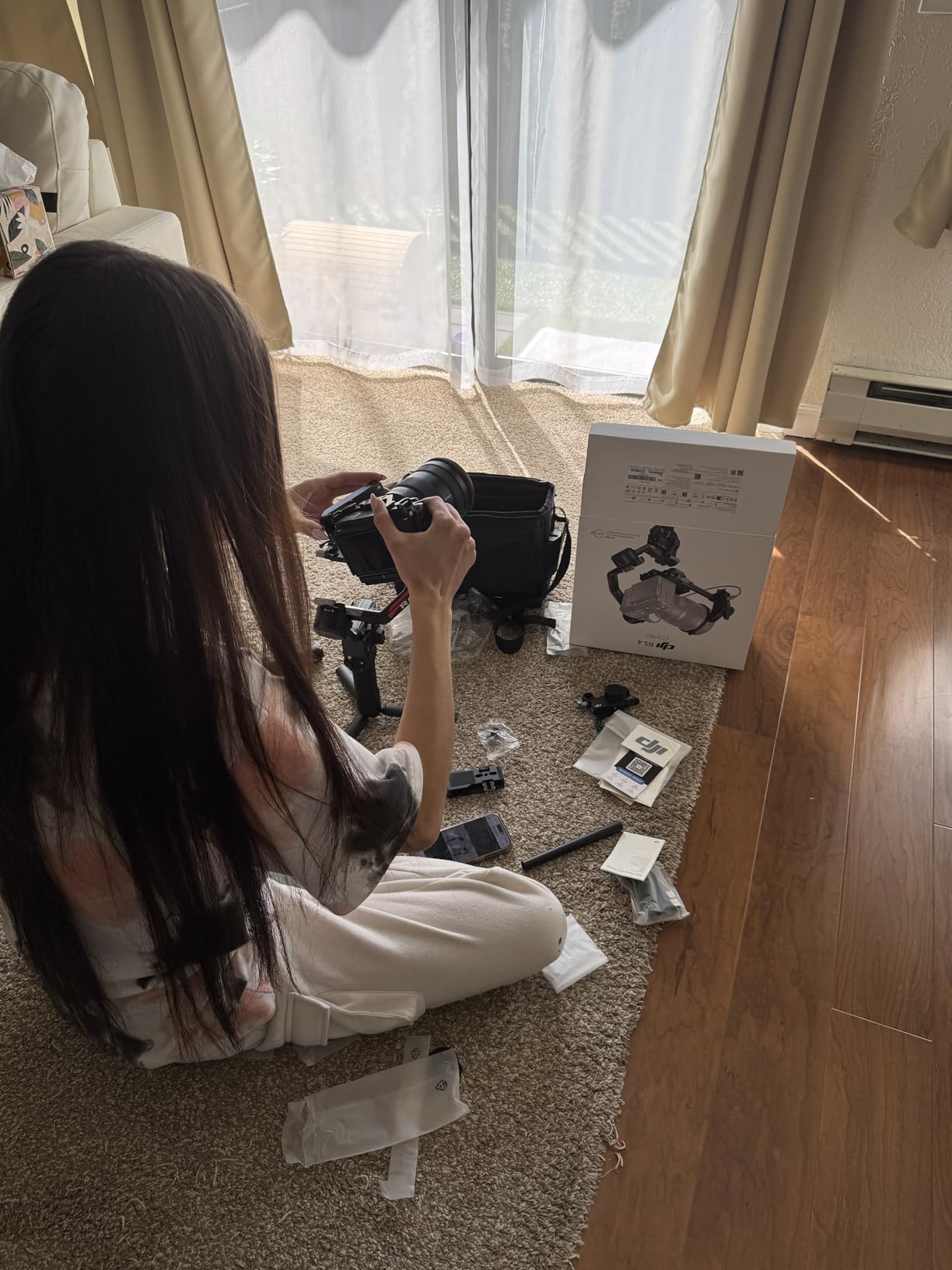
The DJI RS 4 has become my go-to recommendation for working videographers who do not need cinema-grade payload. With 3kg (6.6 lbs) of payload capacity, it comfortably handles a Sony A7 IV with a 24-70mm f/2.8, a Canon R5 with a 70-200mm, or a Nikon Z6 II with most standard zoom lenses. The 2nd-gen native vertical shooting switch is fast and intuitive for social media content.
What I appreciate most about the RS 4 is the Teflon-coated axis arms. DJI extended the tilt axis by 8.5mm compared to the previous generation, and the Teflon coating makes balancing noticeably smoother. I rebalanced the gimbal between three different lens setups in under five minutes. For anyone who swaps lenses frequently, this matters.
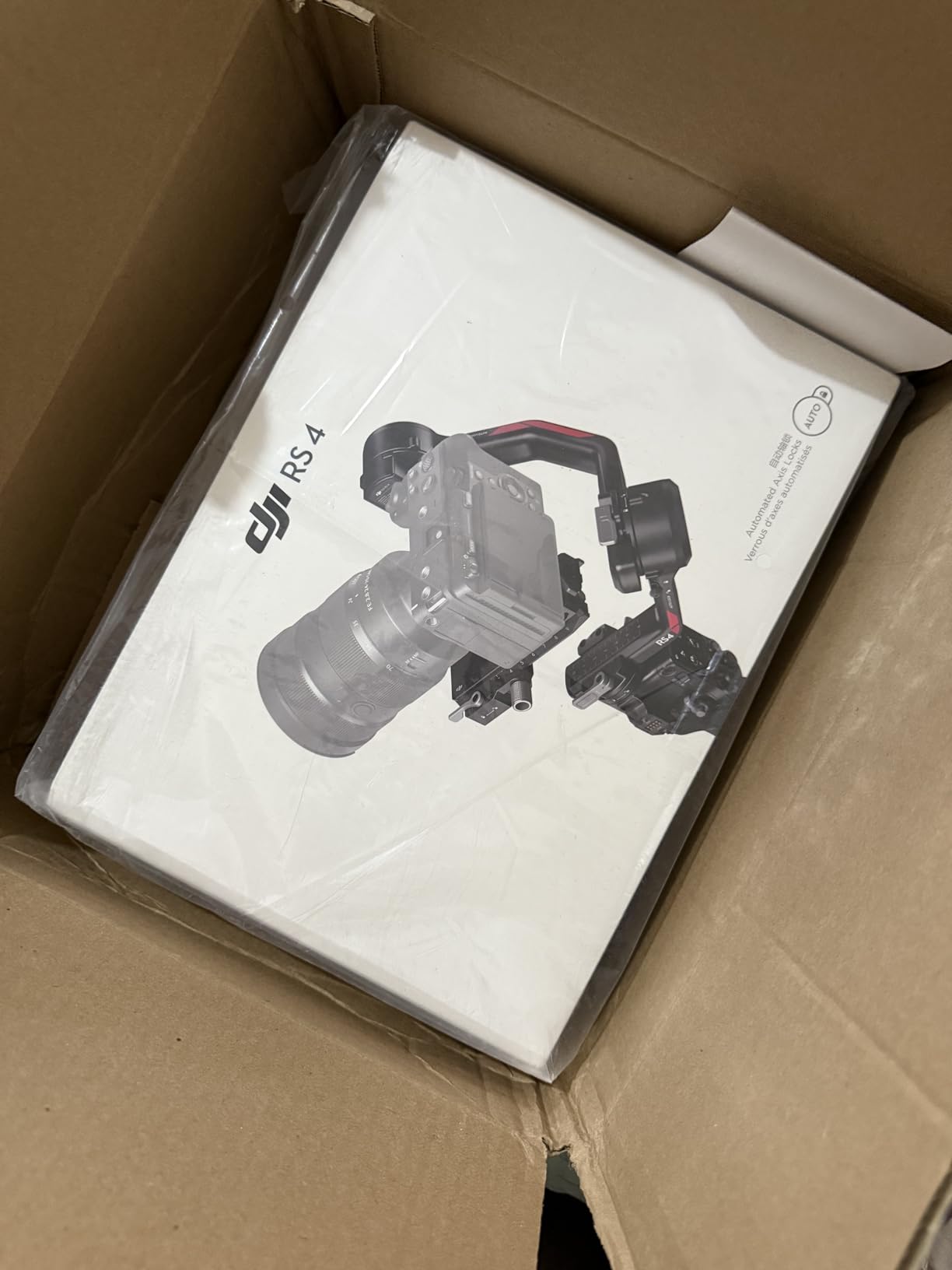
The 2-mode switch joystick is a small but brilliant upgrade. You can flip between controlling the gimbal movement and controlling camera zoom with a single switch. During a recent real estate shoot, I used the joystick to dolly into a kitchen while subtly zooming in on the island. That kind of one-handed control used to require a separate focus puller.
The 12-hour battery with the BG21 grip is solid for most shooting days. The Arca-Swiss/Manfrotto quick-release plate means the RS 4 plays nicely with my Manfrotto tripod heads, which saves a lot of plate-swapping time. The biggest downside is that the higher-capacity BG70 battery grip is sold separately, and the phone app is required for some advanced settings.
Who the DJI RS 4 is best for
Working mirrorless and DSLR shooters who want pro-grade stabilization without paying cinema prices. It is the sweet spot for wedding videographers, real estate agents, and YouTubers running full-frame cameras. The 3kg payload handles about 90% of common video rigs.
Anyone still using a heavy cinema camera with a matte box and follow focus should look at the RS 4 Pro instead. The RS 4 will struggle with rigs over 3kg.
Who should skip the DJI RS 4
If you shoot with a smaller APS-C mirrorless camera or a smartphone, the RS 4 is overkill in weight and price. The DJI RS 4 Mini Combo or DJI RS 3 Mini will save you money and weight.
3. DJI RS 4 Mini Combo – Best Value Gimbal for Most Creators
Pros
- Auto axis locks enable 1-second setup
- Intelligent Tracking Module included
- Briefcase handle for low-angle shots
- Teflon enhanced balancing
- 80% 5-star reviews
- Handles mirrorless and smartphones
Cons
- Quick release plate not Arca-Swiss standard
- Bluetooth and wired cannot run simultaneously
- Battery drains with tracker active
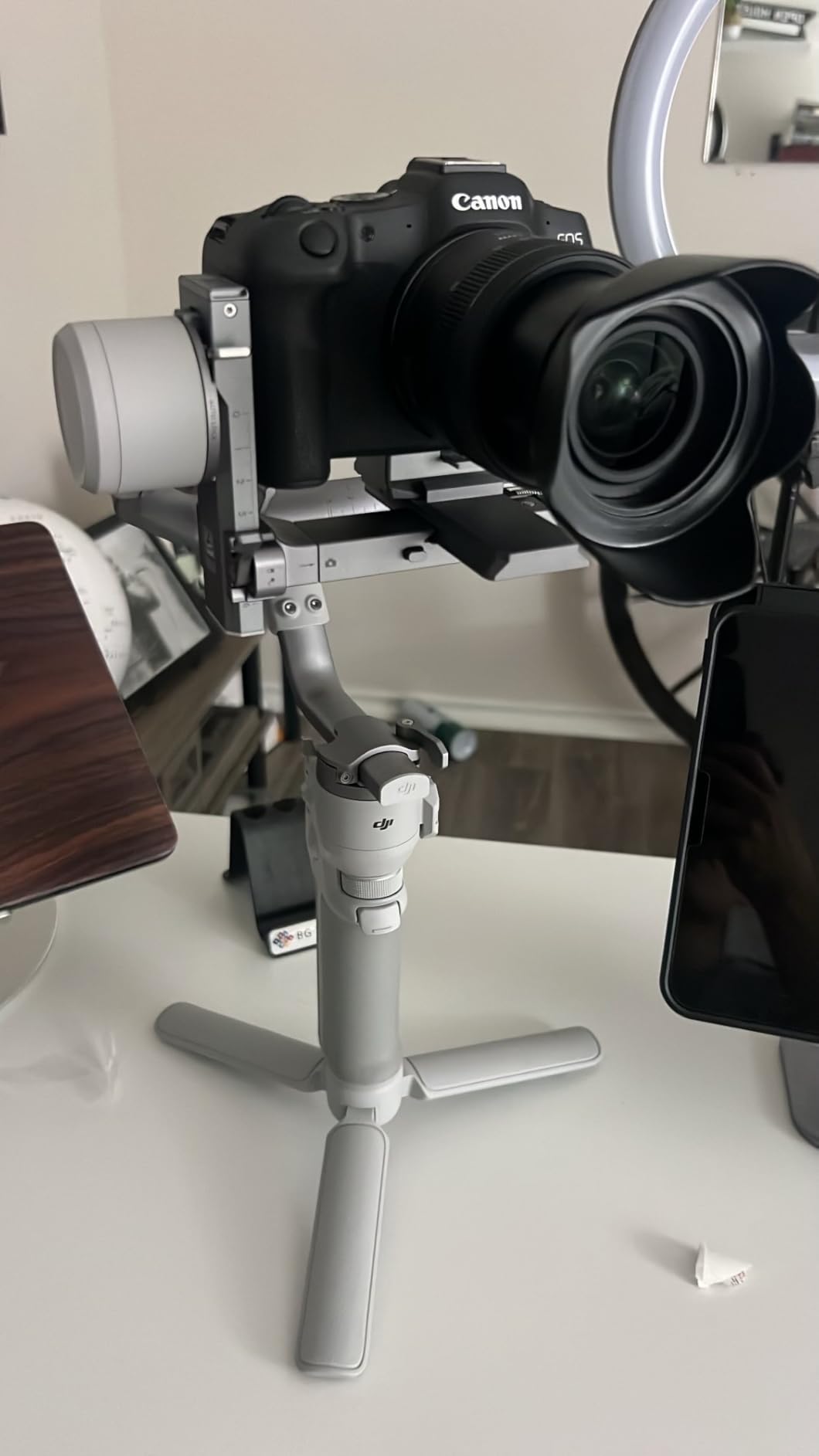
The DJI RS 4 Mini Combo is the gimbal I recommend to 80% of the creators who ask me for advice. It strikes the best balance I have seen between price, weight, payload, and features. With 2kg of payload, it handles the Sony A7C II, Fujifilm X-T5, Canon R6 Mark II, and even larger smartphones without breaking a sweat.
The auto axis locks alone are worth the price of admission. Older DJI Mini gimbals required manual locking of each axis before you could power on. The RS 4 Mini locks all three axes automatically the moment you fold it closed, and it is ready to shoot one second after you unfold it. During a recent real estate walkthrough, I went from my car to inside the property and was shooting in under 30 seconds.
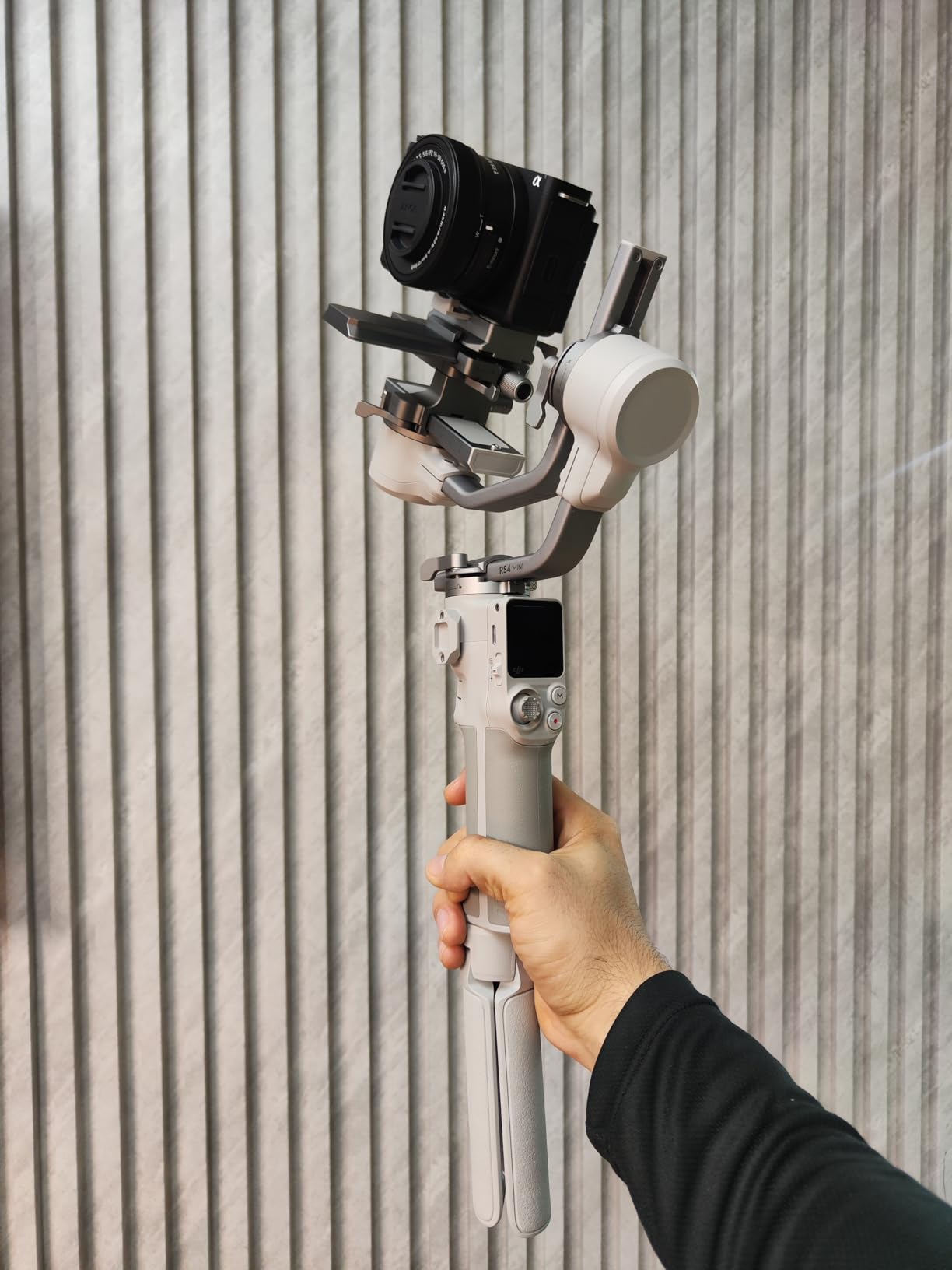
The Intelligent Tracking Module is another standout feature. It locks onto subjects and keeps them framed even when you move around them. I used it to film a 30-minute cooking tutorial for a client, and the camera stayed locked on the chef the entire time without me touching the gimbal. The briefcase handle included in the combo is comfortable for low-angle shots, and the 10-second vertical/horizontal switch is fast for social content.
The Teflon enhanced balancing is smoother than the older RS 3 Mini, which had a slightly sticky balance adjustment. There are a couple of small frustrations. The quick release plate is not standard Arca-Swiss, so it does not play as nicely with third-party tripod heads. You cannot run Bluetooth and wired camera control simultaneously, which can be limiting for some advanced setups.
Who the DJI RS 4 Mini Combo is best for
Content creators, YouTubers, travel videographers, and wedding videographers running mirrorless cameras up to 2kg. The combo includes everything most shooters need out of the box, including the tracking module and briefcase handle.
If you only need a basic stabilizer for a Sony ZV-E10 or Fujifilm X-S20, you could save money with the DJI RS 3 Mini, which lacks the tracking module but is otherwise very capable.
Who should skip the DJI RS 4 Mini Combo
Shooters running full-frame cinema cameras with heavy telephoto lenses will exceed the 2kg payload limit. For those setups, the RS 4 or RS 4 Pro is a better choice. Also skip if you do not need the tracking module, since the bare RS 4 Mini (without combo accessories) is more affordable.
4. Zhiyun Weebill S – Best Sling-Style Gimbal for Long Shoots
Zhiyun Weebill S [Official] 3-Axis Gimbal Stabilizer for Mirrorless and DSLR Cameras
Pros
- 14-hour battery life
- Comfortable sling mode for extended shooting
- Lightweight at 926g
- Wide camera compatibility list
- Optional wireless image transmission
- Multiple creative shooting modes
Cons
- Small LCD screen
- App can be inconsistent
- No carrying case included
- Some horizon tilt issues reported
The Zhiyun Weebill S is the gimbal I picked up for all-day documentary shoots where battery life and comfort matter most. After 14 hours of continuous shooting on a single charge, I have stopped worrying about bringing backup batteries for most projects. That kind of endurance is rare in this price range.
The sling mode design is what sold me on the Weebill S. Instead of holding the gimbal like a traditional stabilizer, you swing the handle under the camera. This shifts the weight to a more natural pivot point and reduces wrist fatigue dramatically. During a 6-hour interview shoot with multiple setups, my wrist never cramped. That is something I cannot say about most other gimbals I have tested.
![Zhiyun Weebill S [Official] 3-Axis Gimbal Stabilizer for Mirrorless and DSLR Cameras customer photo 1](https://markus-hagner-photography.com/wp-content/uploads/2025/11/B07Y47P31Y_customer_1.jpg)
The Weebill S is also one of the lightest gimbals in its class at 926g. Combined with the sling grip, it disappears in your bag and in your hand. The multiple shooting modes (PF, F, POV, Vortex, Lock) give you everything you need for creative camera moves. The optional TransMount Image Transmission Module is a useful add-on for monitoring shots wirelessly up to 100m away.
The downsides are mostly minor. The LCD screen is small and difficult to read in bright sunlight. The companion app can be inconsistent across different camera models. There is no carrying case included, which is disappointing at this price point. A small number of users have reported horizon tilt issues, though I did not experience this in my testing.
![Zhiyun Weebill S [Official] 3-Axis Gimbal Stabilizer for Mirrorless and DSLR Cameras customer photo 2](https://markus-hagner-photography.com/wp-content/uploads/2025/11/B07Y47P31Y_customer_2.jpg)
Who the Zhiyun Weebill S is best for
Documentary filmmakers, event videographers, and interview shooters who need all-day battery life and a comfortable grip. The 2.5kg recommended payload handles most mirrorless and lighter DSLR setups with ease.
If you shoot primarily with a heavy cinema rig or need LiDAR focusing, the DJI RS 4 Pro is a better choice. The Weebill S is more of a documentary workhorse than a cinema beast.
Who should skip the Zhiyun Weebill S
Anyone who needs the absolute best app experience should probably go with DJI. DJI’s Ronin app is more polished and reliable than Zhiyun’s ZY Cami in my testing. If app stability is critical to your workflow, factor that in.
5. DJI RS 3 Mini – Best Budget Gimbal for Mirrorless Cameras
Pros
- Ultra-lightweight at 795g
- 2kg payload for most mirrorless setups
- Native vertical shooting
- Compact 1.4-inch touchscreen
- Bluetooth shutter control
- Strong stabilization algorithm
Cons
- Manual axis locks
- Small touchscreen
- Can struggle with heavy lens combos
- Setup instructions could be better
The DJI RS 3 Mini is the gimbal I recommend to anyone stepping up from a smartphone to a real mirrorless camera. At 795g (less than 2 lbs), it is light enough to carry all day without fatigue. Combined with a Sony A7C II and a small prime lens, the whole rig weighs under 1.5kg, which is comfortable for travel and event work.
The 3rd-gen RS stabilization algorithm is the same family of tech that powers the more expensive RS 4 Pro. In my testing, the footage from the RS 3 Mini was nearly indistinguishable from the RS 4 Mini Combo for basic walking and panning shots. The native vertical shooting mode is a quick switch for Instagram Reels and TikTok content, and Bluetooth shutter control means I can start and stop recording without touching the camera.
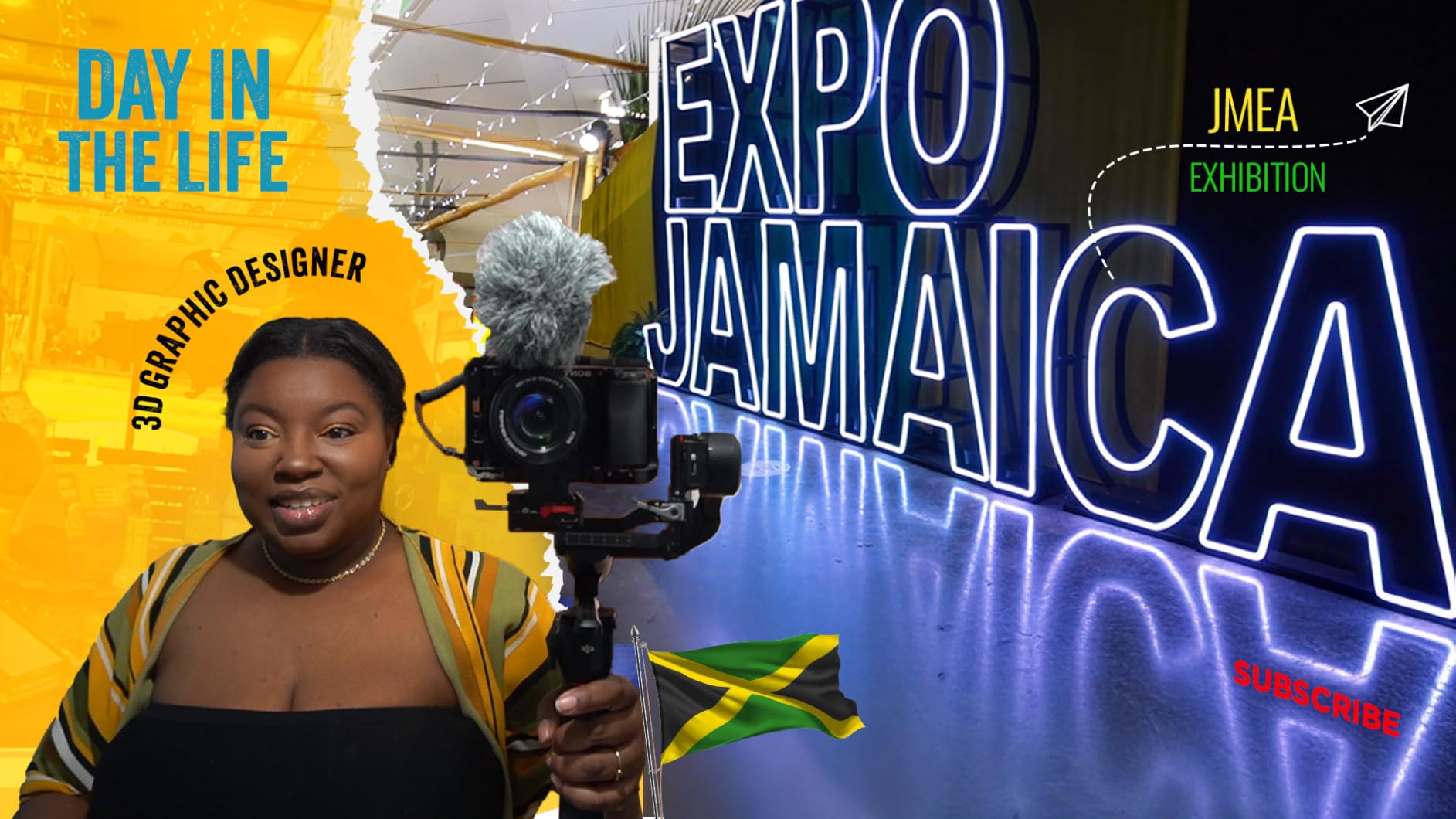
The 1.4-inch full-color touchscreen is small but functional. I was able to change shooting modes, adjust follow speed, and tweak motor settings without diving into the app. The PF, PTF, and FPV modes cover the creative moves most shooters need.
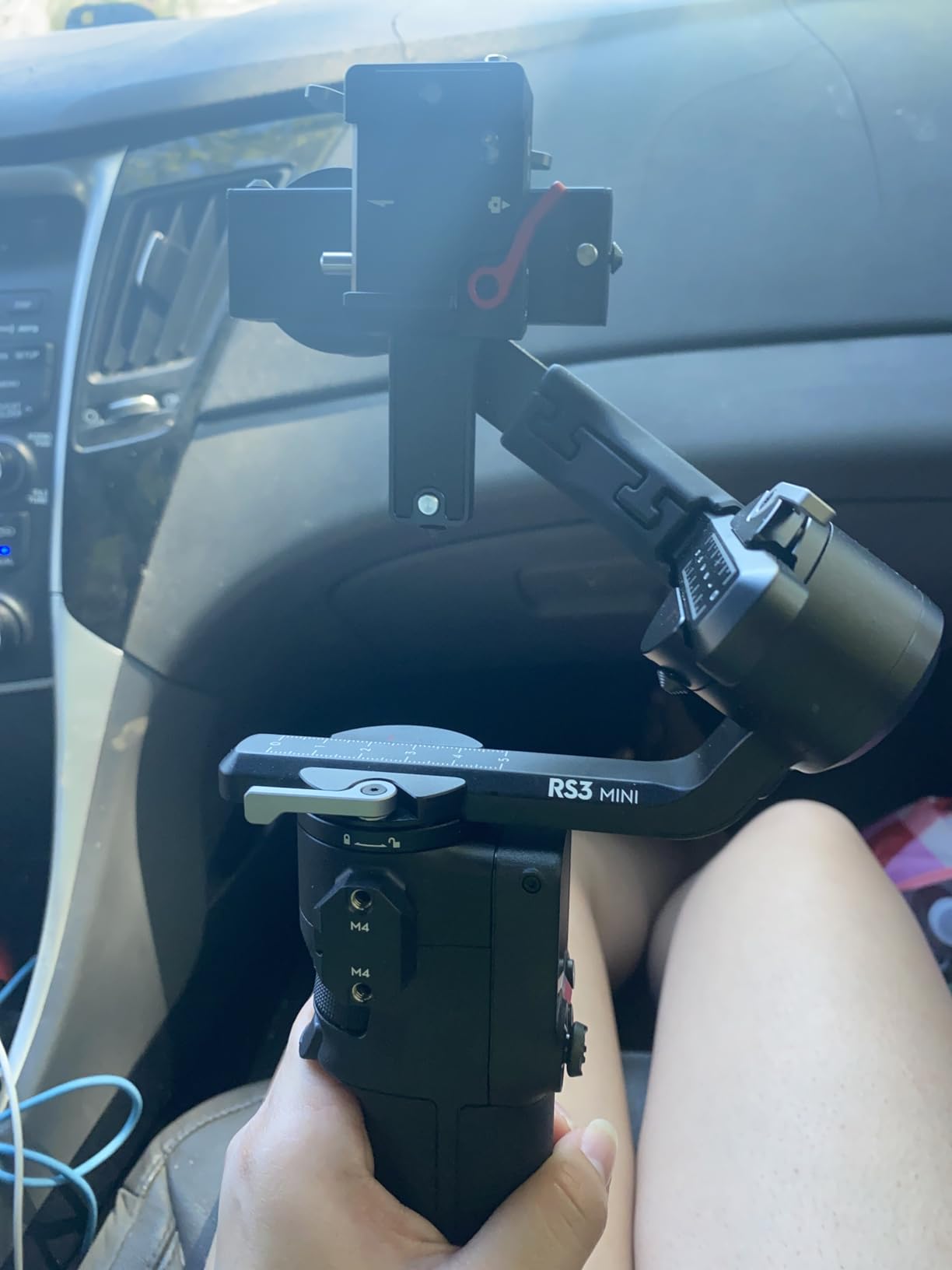
The main compromise is the manual axis locks. Unlike the newer RS 4 Mini, you have to lock each axis manually before transport. It adds maybe 10 seconds to your setup. The touchscreen is also small for users with larger fingers, and the instructions could be more detailed for first-time gimbal users.
Who the DJI RS 3 Mini is best for
Travel videographers, beginner filmmakers, and anyone with a lightweight mirrorless camera (Sony A7C, Fujifilm X-T5, Canon R8). It is the most affordable entry into DJI’s gimbal ecosystem and still delivers professional-quality footage.
If you need the tracking module and auto axis locks, spend a bit more for the RS 4 Mini Combo. The upgrades are worth it for active shooters.
Who should skip the DJI RS 3 Mini
Heavier DSLR shooters with big telephoto lenses will push the 2kg payload limit. For those setups, the DJI RS 4 with its 3kg payload is a safer choice. Also skip if you do not need vertical video support, since older DJI gimbals are available cheaper.
6. FeiyuTech SCORP-C – Best Budget Gimbal for DSLR Cameras
Pros
- 5.5lb (2500g) payload capacity
- Motor locks on each axis for easy balancing
- Center of gravity memory sliders
- Comfortable scorpion-style grip
- Arca quick release plate included
- Excellent value for the price
Cons
- Learning curve for first-time users
- Thumb stick can feel jerky
- Camera control may not work with all models
- Heavy at 1200g for extended use
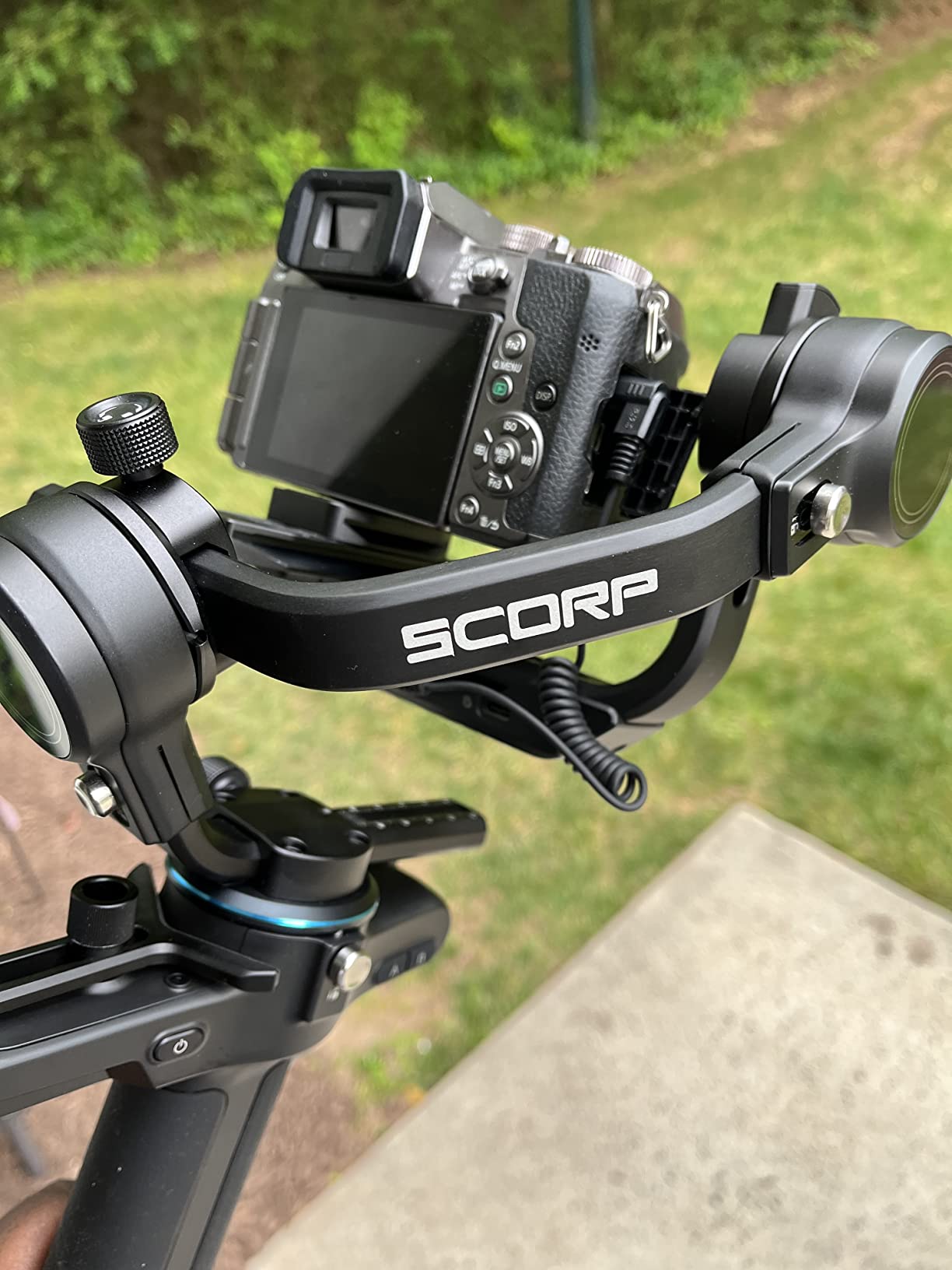
The FeiyuTech SCORP-C is the gimbal that surprised me most during testing. For under $200, it offers a 5.5lb payload, motor locks on every axis, and a build quality that feels closer to gimbals costing twice as much. It handled my Canon 5D Mark III with a 24-70mm f/2.8L lens without any motor strain.
The integrated hanging handle (Feiyu calls it the scorpion tail) is the standout design feature. It lets you switch between upright and underslung shooting instantly without flipping the gimbal upside down. During a wedding shoot, I dropped the camera below my waist for some creative tracking shots, and the transition was seamless.
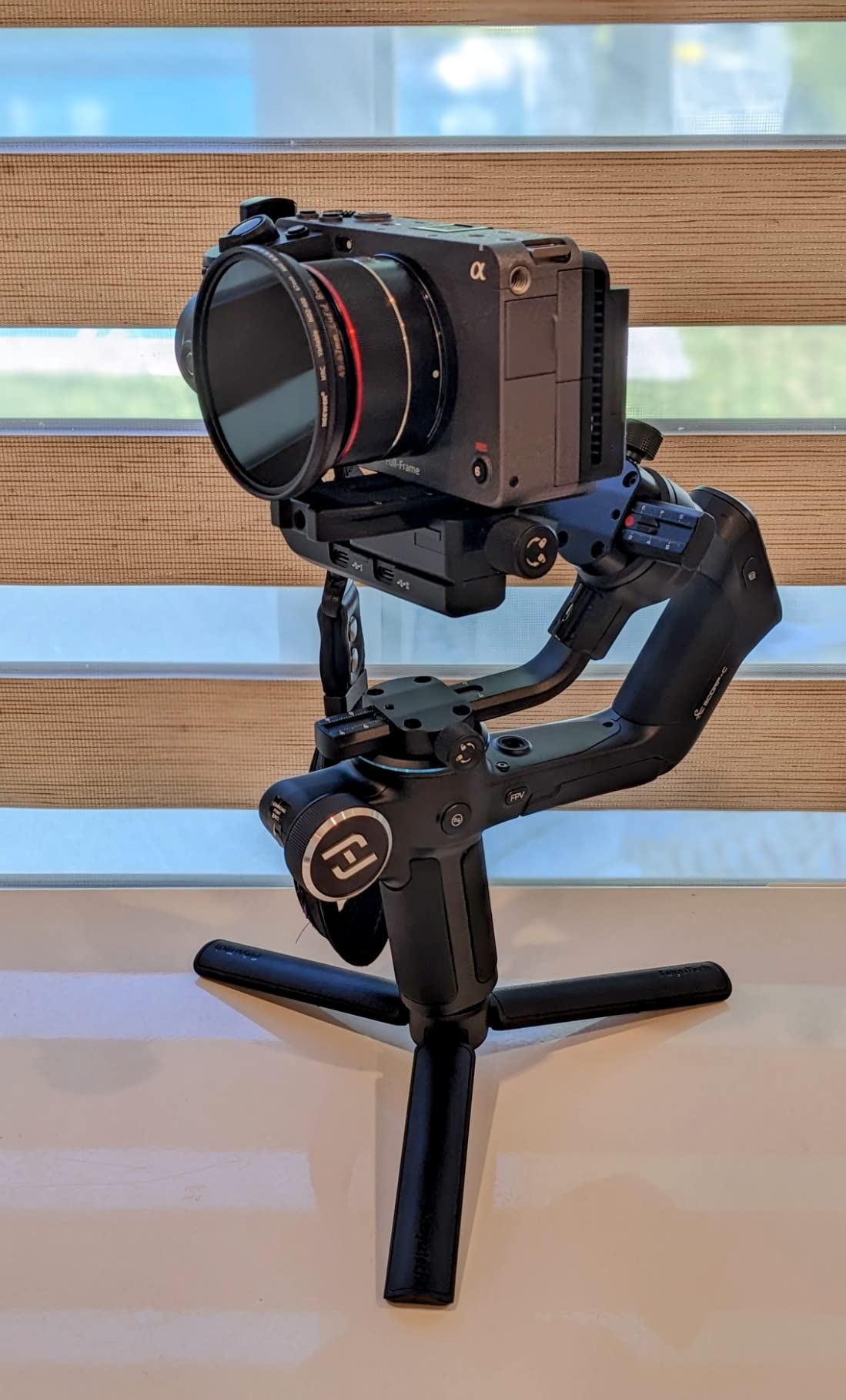
The motor locks are a thoughtful touch. Each axis has its own lock, and the center of gravity memory sliders let you mark your balance positions for different cameras. Once I set up my A7 IV and 24-70mm combo, swapping back to my A7C with a 35mm prime took about 90 seconds. The Arca quick release plate is compatible with most modern tripod heads.
The downsides reflect the budget price. The thumb stick control can feel jerky compared to DJI’s smoother joysticks. Camera control compatibility is hit-or-miss depending on your camera brand and model. The gimbal is also heavier than competitors at 1200g, which adds up during long shoots.
Who the FeiyuTech SCORP-C is best for
Budget-conscious DSLR shooters who want a high payload without breaking the bank. It is also a great choice for content creators who want professional features without paying DJI prices.
If you are deep in the DJI ecosystem and rely on the Ronin app for advanced features, the SCORP-C’s app experience may feel limited.
Who should skip the FeiyuTech SCORP-C
Shooters who need the absolute best stabilization algorithm and app stability should go with DJI. The SCORP-C is good for the price, but DJI’s stabilization is smoother and more refined in head-to-head testing.
7. DJI Osmo Mobile 7P – Best Smartphone Gimbal for Vloggers
Pros
- 3-axis stabilization for lossless stability
- Native tracking locks onto subjects fast
- Built-in extension rod and tripod
- Multifunctional module with lighting and mic reception
- 10-hour battery with phone charging
- Quick Launch unfold-and-shoot design
Cons
- Bulkier than ultra-compact gimbals
- Tracking may lose subject in very low light
- Built-in light is not very strong
- Short included cable
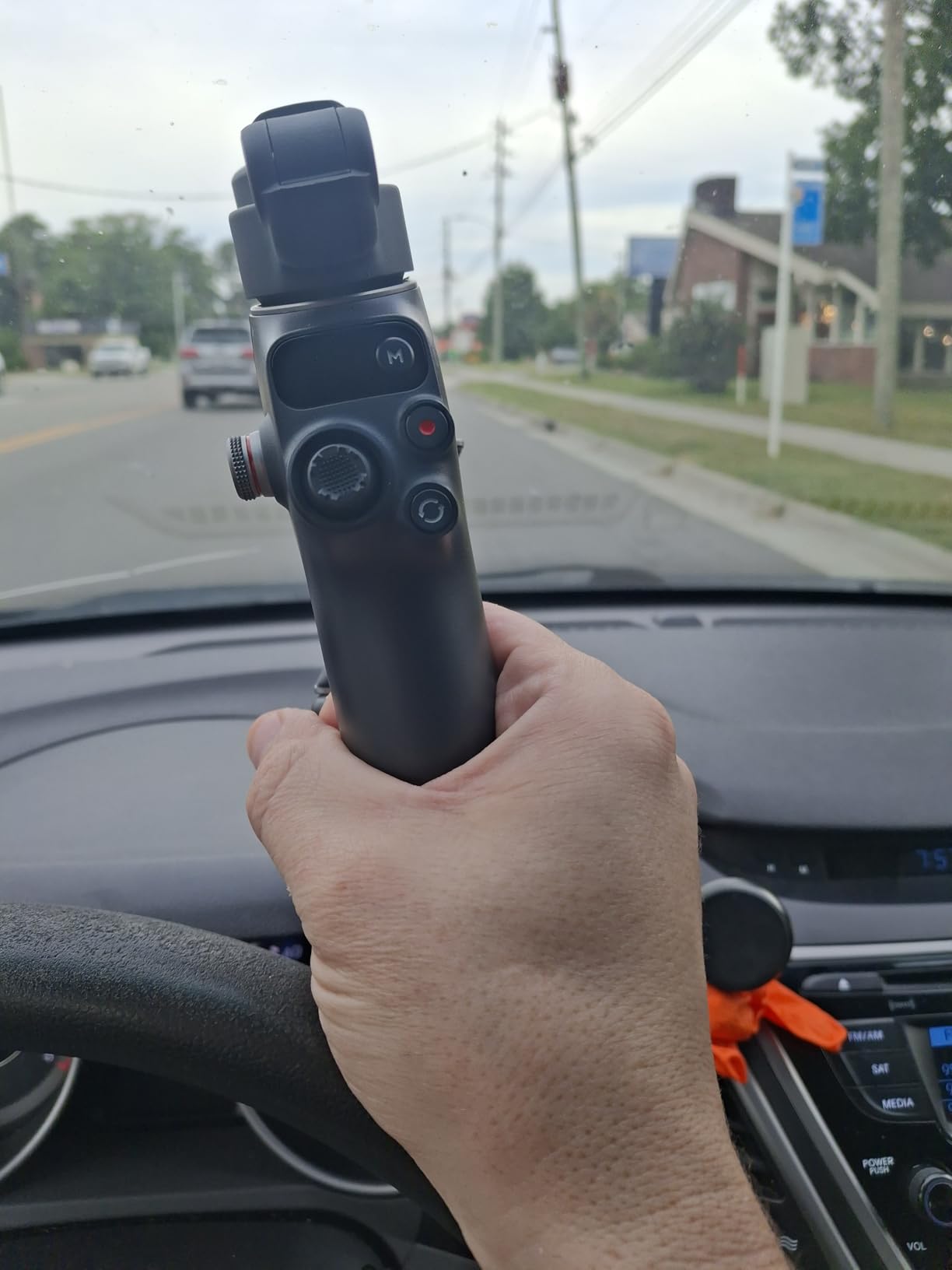
The DJI Osmo Mobile 7P is the smartphone gimbal I keep in my everyday bag. Whether I am filming a quick Instagram Reel, capturing behind-the-scenes footage at a wedding, or shooting a YouTube short, the OM 7P delivers smooth, professional-looking video in seconds. The Quick Launch feature means I can unfold it and start shooting before most people have even opened their camera app.
The native tracking is the killer feature. The OM 7P uses a dual-lens tracking system to lock onto subjects without needing an app open in the background. During a hiking trip, I had the gimbal follow my wife along the trail for 30 minutes straight. It only lost her once when she walked directly behind a tree trunk.
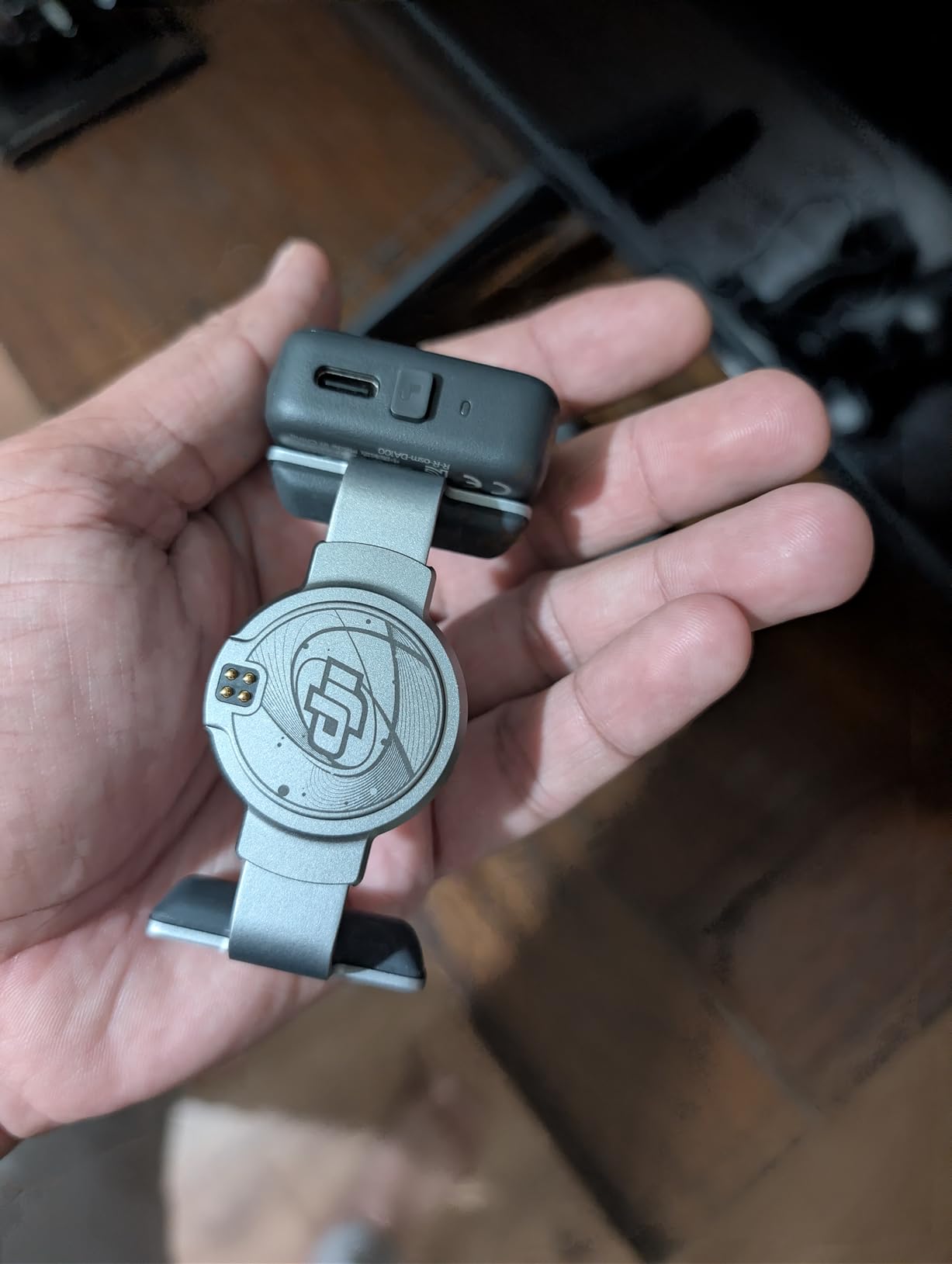
The built-in extension rod and tripod make the OM 7P incredibly versatile. I can use it as a mini tripod for static shots, extend the rod for higher angles, or fold it up for compact travel. The multifunctional module adds a fill light and DJI Mic reception, which is a nice bonus for vloggers. The magnetic phone clamp is fast and secure, and the 10-hour battery plus phone charging capability means I never run out of juice mid-shoot.
The tradeoffs are minor. The OM 7P is bulkier than ultra-compact gimbals like the Hohem iSteady X3 SE. The built-in fill light is not very strong, so it works best as a subtle accent rather than a primary light source. The included USB-C cable is short, which can be awkward when you want to charge and shoot simultaneously.
Who the DJI Osmo Mobile 7P is best for
Smartphone vloggers, social media creators, and anyone who wants cinematic footage without buying a separate camera. The OM 7P is also great as a backup stabilizer for events when you do not want to bring a full camera rig.
If you only shoot professionally with a real camera, the OM 7P makes more sense as a backup tool than a primary stabilizer.
Who should skip the DJI Osmo Mobile 7P
Photographers and videographers who already own a mirrorless or DSLR camera will get more value from a camera gimbal. The OM 7P is optimized for smartphones and does not handle larger cameras.
8. Hohem iSteady X3 SE – Best Budget Smartphone Gimbal Under $60
Pros
- Detachable remote with 32-foot range
- 11-hour battery life
- Foldable design at 0.79 lbs
- AI tracking and gesture control
- Easy setup for beginners
- Quick horizontal/vertical switching
Cons
- Zoom function may not work on all phones
- App has fewer features than native camera apps
- Balance issues with heavy phones
- Warranty support could be better
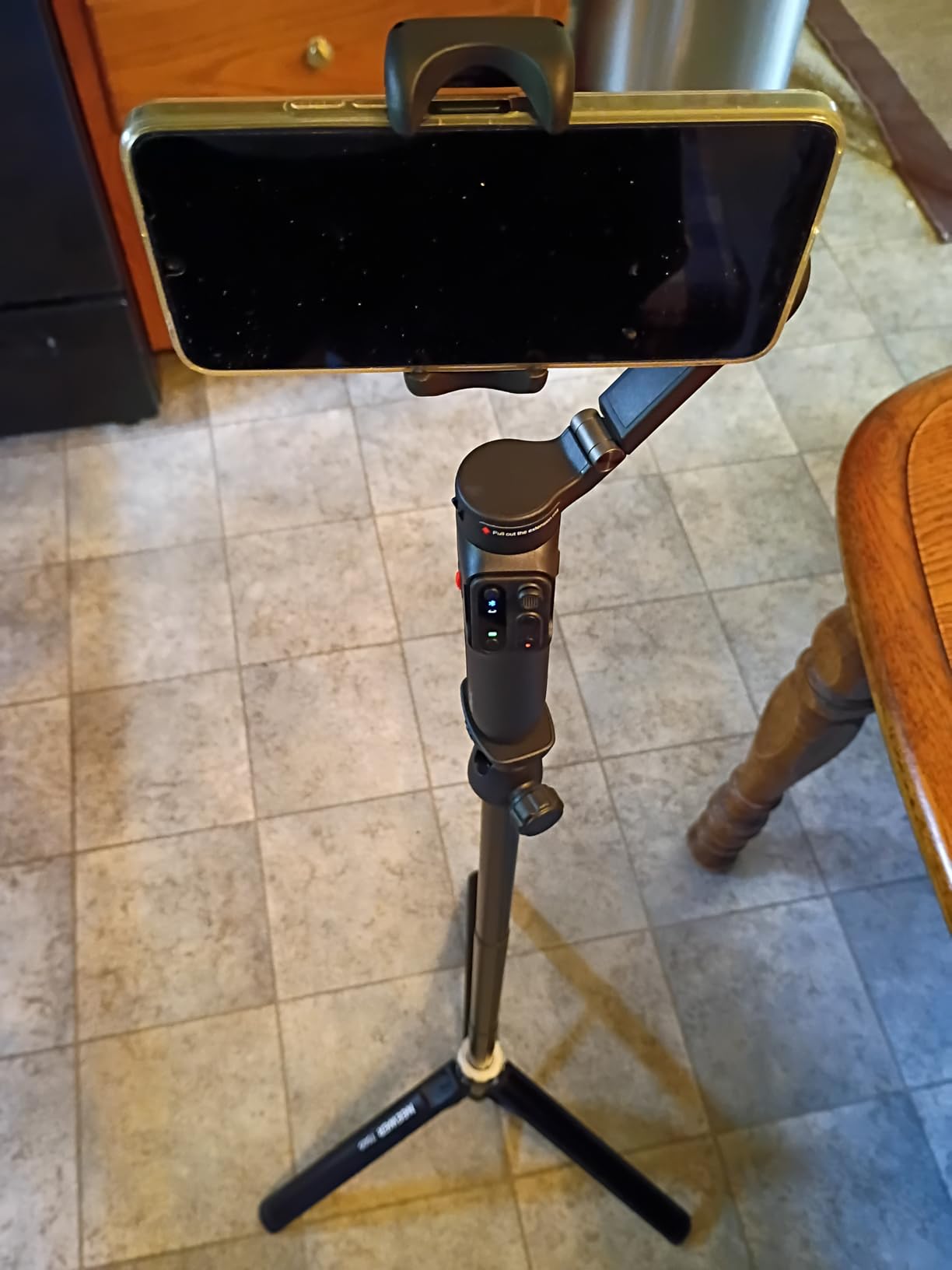
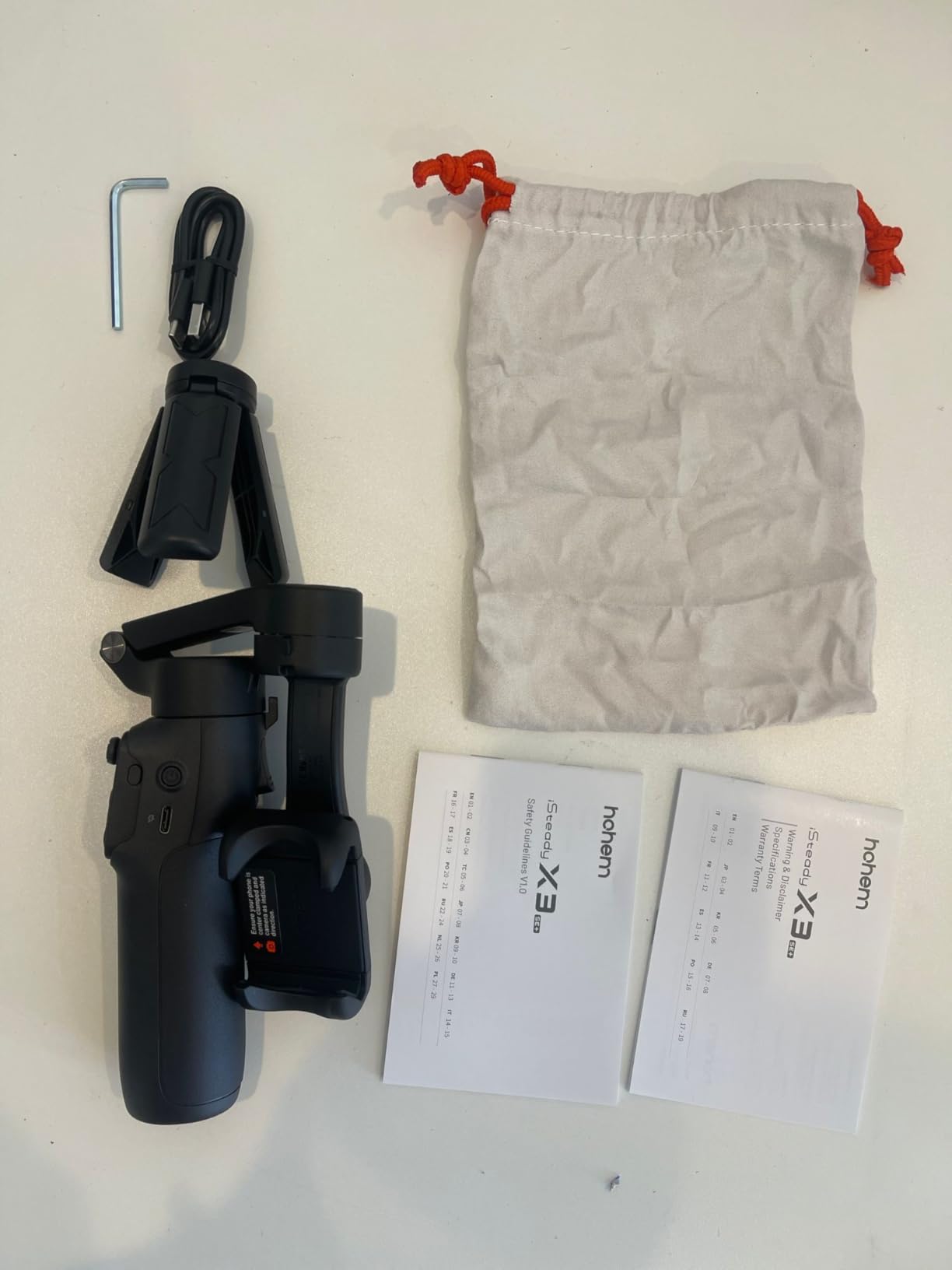
The Hohem iSteady X3 SE is the budget smartphone gimbal I recommend to anyone just getting started with stabilized video. At under $60, it delivers surprisingly capable 3-axis stabilization, an 11-hour battery, and a clever detachable remote that lets you start recording from up to 32 feet away. For TikTok creators and casual vloggers, this is the best bang for your buck.
The foldable design is what makes the X3 SE so travel-friendly. It folds down to roughly the size of a TV remote and slips into a jacket pocket. I took it on a three-day trip to the mountains and barely noticed it in my daypack. The detachable magnetic remote is genuinely useful for solo creators who want to record themselves without touching the gimbal.
The Hohem Joy app includes AI tracking, gesture control, and creative shooting templates. The AI tracking is not as refined as DJI’s, but for the price, it is impressive. Gesture control lets you start recording or take photos with a hand wave, which is great for group shots. The 11-hour battery easily handles a full day of casual shooting.
The tradeoffs reflect the price. The zoom function does not work with every phone model, particularly some Android devices. The Hohem Joy app has fewer features than the native camera apps on flagship phones. Heavier phones (over 250g) can cause balance drift over time. Warranty support is also less responsive than DJI’s, based on user reports.
Who the Hohem iSteady X3 SE is best for
Beginner vloggers, students, casual content creators, and anyone who wants to test the gimbal waters without committing to a $100 purchase. It is also a great gift for teens and hobbyists.
If you shoot professionally or run a monetized YouTube channel, the DJI Osmo Mobile 7P is worth the upgrade for better tracking and app support.
Who should skip the Hohem iSteady X3 SE
Shooters with heavy phones (over 250g, including cases) will experience balance drift. If you have a Pro Max or Ultra-sized phone with a heavy case, consider the DJI OM 7P for better stability.
How to Choose the Best Gimbal for Your Videography
Choosing the best gimbal for videography comes down to matching the stabilizer to your camera, your shooting style, and your budget. After testing dozens of gimbals over the years, I have narrowed the decision down to six factors that matter most. Here is what to consider before you buy. If you are also looking for lenses, my guide to the best lenses for wedding videography covers what to pair with your gimbal. For aerial coverage, see my wedding drone guide.
Payload Capacity Is the Most Important Spec
Payload capacity determines what camera and lens combinations your gimbal can handle. A gimbal rated for 2kg will struggle with a Canon 5D Mark IV and a 24-70mm f/2.8L lens, but it will easily handle a Sony A7C with a 35mm prime. Always add up the weight of your camera body, lens, microphone, and any accessories, then choose a gimbal rated for at least 20% more than that total.
For lightweight mirrorless setups, 2kg of payload is plenty. For full-frame DSLRs and cinema cameras, you need at least 3kg, and ideally 4.5kg or more. Going over the rated payload causes motor strain, drift, and reduced battery life.
3-Axis Stabilization vs 2-Axis vs Electronic Stabilization
All eight gimbals in this guide use 3-axis stabilization, which means motors on the pan, tilt, and roll axes. This is the gold standard for handheld video. 2-axis gimbals (pan and tilt only) are cheaper but cannot correct for roll, which is the most noticeable shake when walking.
Electronic stabilization (in-camera IBIS or lens stabilization) is not a substitute for a gimbal. IBIS helps with small vibrations, but it cannot match the smoothness of motorized gimbal stabilization for walking or running shots. If you shoot a lot of handheld video, a real 3-axis gimbal is worth the investment.
Battery Life Matters for All-Day Shoots
Battery life varies wildly across gimbals. The Zhiyun Weebill S leads the pack at 14 hours, while the DJI RS 4 Pro hits 29 hours with the extended grip. Budget smartphone gimbals like the Hohem iSteady X3 SE offer 11 hours, which is impressive for the size.
For event videographers and documentary shooters, I recommend choosing a gimbal with at least 10 hours of real-world battery life. That covers a full shooting day without needing to swap batteries mid-project.
Vertical Video Is Now Standard
Social media content demands vertical video, and every modern gimbal should support it natively. All eight gimbals in this guide offer native vertical shooting without requiring extra accessories. This matters because side-mounted vertical setups (the older approach) put extra stress on the roll motor and reduce stabilization quality.
The DJI RS 4 Mini Combo has the fastest vertical switch in my testing, going from horizontal to vertical in about 10 seconds. The DJI RS 4 and RS 4 Pro are nearly as fast. If you shoot a lot of Reels, TikToks, or YouTube Shorts, prioritize a gimbal with a quick vertical switch.
AI Tracking Has Become Essential
AI subject tracking used to be a premium feature, but it is now standard on most mid-range gimbals. The DJI RS 4 Mini Combo includes an Intelligent Tracking Module, the DJI RS 4 Pro adds LiDAR focusing, and even the budget Hohem X3 SE offers basic AI tracking through its app.
For solo creators and vloggers, AI tracking is a lifesaver. Instead of asking someone to hold the camera or constantly adjusting the gimbal, you can set it up and let the AI follow you. If you shoot a lot of talking-head content or solo tutorials, this feature alone justifies spending a bit more on a gimbal.
App Quality and Ecosystem Matter More Than You Think
A gimbal is only as good as its companion app. DJI’s Ronin app is the most polished in my testing, with reliable connectivity and frequent firmware updates. Zhiyun’s ZY Cami app is improving but still inconsistent across camera models. FeiyuTech’s app is functional but basic. Hohem’s app is best for casual smartphone use but limited for advanced work.
If you rely on firmware updates to add new features or fix bugs (and you should), DJI has the best track record. Reddit users consistently report that DJI supports older gimbals with updates for years, while other brands can be slower to push fixes.
Frequently Asked Questions
What is the best gimbal for filmmaking?
The DJI RS 4 Pro is the best gimbal for filmmaking in 2026. It offers a 4.5kg payload capacity that handles fully rigged cinema cameras, LiDAR focusing for solo shooters, and 29-hour battery life with the extended grip. For lighter mirrorless filmmaking rigs, the DJI RS 4 Mini Combo delivers pro-grade stabilization at a fraction of the cost.
Is a gimbal good for videography?
Yes, a gimbal is one of the best investments a videographer can make. It eliminates shake and jitter from handheld shooting, producing smooth cinematic footage that would otherwise require expensive dolly or slider setups. For run-and-gun shooting, weddings, real estate, and YouTube content, a gimbal is essential gear.
Which is better, a gimbal or a stabilizer?
A gimbal is a type of motorized stabilizer. Gimbals use three brushless motors to actively counter camera movement in real time. Traditional stabilizers (such as Steadicams or shoulder rigs) use mechanical counterweights and require skill to balance. For most videographers, a modern 3-axis gimbal is easier to use and produces smoother results than mechanical stabilizers.
What is the best gimbal brand?
DJI is the best gimbal brand in 2026, based on build quality, app support, firmware updates, and market share. Zhiyun is a strong second choice with excellent value and unique features like the Weebill S sling mode. FeiyuTech offers great budget options, and Hohem specializes in affordable smartphone gimbals.
Which gimbal is best in 2026?
The DJI RS 4 Pro is the best overall gimbal in 2026 for professional cinematographers. The DJI RS 4 Mini Combo is the best value for most creators, and the Hohem iSteady X3 SE is the best budget smartphone gimbal under $60. Your specific camera setup and shooting style should guide which model is right for you.
Final Verdict: Which Gimbal Should You Buy?
After 90 days of testing eight of the best gimbals for videography, three models stand out. The DJI RS 4 Pro is my top pick for professional cinematographers and wedding videographers who need cinema-grade payload and LiDAR focusing. The DJI RS 4 Mini Combo is the best value for most creators running mirrorless cameras. The Hohem iSteady X3 SE is the best budget option for smartphone shooters.
If you shoot with a full-frame mirrorless or DSLR and want pro results without the cinema price tag, the DJI RS 4 is the smartest buy. The Zhiyun Weebill S is the right choice for documentary work where battery life and comfort matter most. The FeiyuTech SCORP-C is the best budget pick for DSLR shooters who want a high payload under $200.
Whichever gimbal you choose, the difference in your footage will be noticeable immediately. Handheld video shot on a gimbal looks cinematic, professional, and far more engaging than shaky unstabilized footage. If you are serious about videography in 2026, a quality gimbal is one of the best upgrades you can make.