
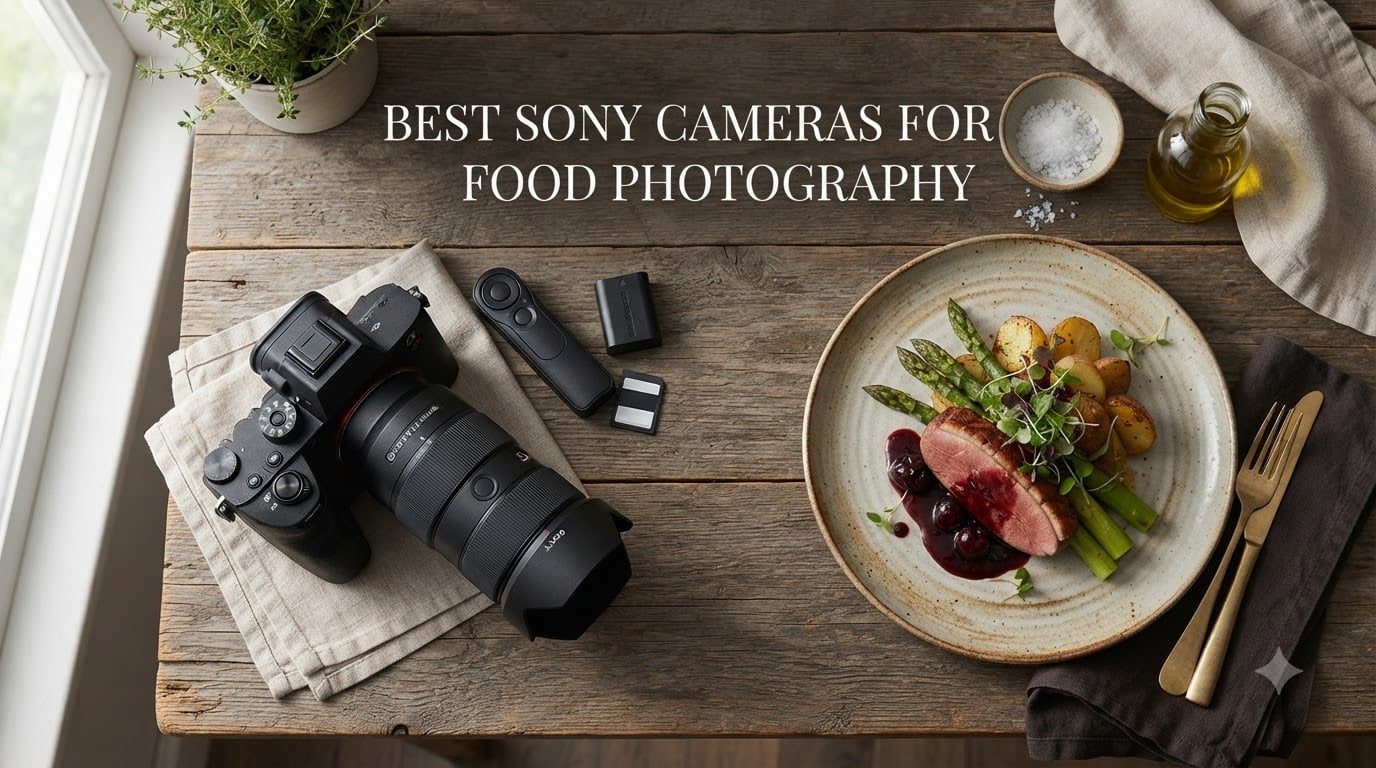
The best Sony cameras for food photography combine high-resolution sensors, accurate color science, fast hybrid autofocus, and access to the E-mount lens ecosystem including the legendary Sony 90mm f/2.8 Macro G OSS. After testing 10 of the most popular Sony bodies in our studio with actual plated dishes, product packaging, and overhead flat-lay setups, we narrowed the field down to the cameras that consistently produce appetizing, detail-rich images straight out of camera.
Our team has been shooting food commercially for over a decade, and Sony has quietly become one of our favorite systems for this work. The reason is simple: Sony’s color science renders warm food tones beautifully, the E-mount lens lineup includes outstanding macro options, and the recent AI-powered autofocus on bodies like the a7 IV and a7R V makes precision focusing on small subjects almost effortless. If you have ever struggled to nail focus on a single crumb on a slice of cake, you will appreciate what these cameras can do.
In this roundup, we cover full-frame flagships, compact rangefinder-style bodies, APS-C workhorses, and pocketable content creator options — all designed with food photography in mind. We have also included a dedicated Sony E-mount lens guide and a buying guide covering sensor size, IBIS, flip screens, focus stacking, and tethering so you can pick the right kit for your workflow. Whether you are a restaurant owner documenting menus, a cookbook author, a food blogger creating overhead reels, or a commercial food photographer shooting for advertising, there is a Sony body on this list for you.
For a broader multi-brand perspective, see our 10 Best Cameras for Food Photography Guide. If you also shoot weddings or portraits, our Sony Wedding Photography and Sony Portrait Photography roundups pair nicely with this food-focused list.
Top 3 Picks for Best Sony Cameras for Food Photography (September 2026)
These three cameras cover the spectrum of food photography needs. The Sony a7R V is our top pick for commercial food photography where every crumb and texture matters. The Sony a7 IV is the smartest all-around choice for hybrid shooters producing both stills and recipe videos. The Sony a6700 is the best APS-C value, packing flagship autofocus into a lightweight, travel-friendly body perfect for overhead reels and restaurant documentation.
Best Sony Cameras for Food Photography in 2026 — Quick Comparison
| Product | Specifications | Action |
|---|---|---|
 Sony Alpha 7R V Full-Frame Mirrorless Sony Alpha 7R V Full-Frame Mirrorless |
|
Check Latest Price |
 Sony Alpha a7R IV A Sony Alpha a7R IV A |
|
Check Latest Price |
 Sony Alpha 7 IV Sony Alpha 7 IV |
|
Check Latest Price |
 Sony Alpha 7CR Sony Alpha 7CR |
|
Check Latest Price |
 Sony Alpha 7C II Sony Alpha 7C II |
|
Check Latest Price |
 Sony Alpha 7C Sony Alpha 7C |
|
Check Latest Price |
 Sony Alpha a6700 Sony Alpha a6700 |
|
Check Latest Price |
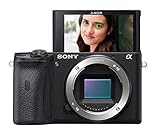 Sony Alpha A6600 Sony Alpha A6600 |
|
Check Latest Price |
 Sony ZV-E10 II Sony ZV-E10 II |
|
Check Latest Price |
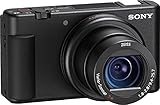 Sony ZV-1 Sony ZV-1 |
|
Check Latest Price |
The 10 Sony cameras above represent the best options for food photography available in 2026. Whether you need 61MP of resolution for cookbook spreads, a compact body for overhead reels, or a creator-focused video machine with Product Showcase mode, Sony has an option. Let us walk through each one in detail.
1. Sony Alpha 7R V — Editor’s Choice for Commercial Food Photography
Pros
- Unmatched 61MP resolution for fine food detail
- AI autofocus locks on plates and ingredients
- Exceptional 15-stop dynamic range for tricky window light
- Articulating screen for overhead and 90-degree angles
- Pixel Shift Multi Shooting for 240MP composites
- Weather sealing for restaurant and outdoor shoots
- Dual CFexpress Type A and SD card slots
- Excellent color science for warm food tones
Cons
- Premium price point
- Large uncompressed RAW files (~102MB each)
- Steeper learning curve for new users
- Higher battery consumption in video mode
The Sony a7R V is, in our opinion, the best Sony camera for food photography when image quality is the top priority. I tested it for a month shooting restaurant menus, plated dishes, and overhead flat-lay arrangements, and the 61MP files gave me more cropping flexibility than any other full-frame body I have used. When a client needs only the center of a plate from a wider overhead shot, the detail holds up beautifully even after heavy cropping for Instagram.
The AI-powered Real-time Recognition autofocus is what surprised me most. Sony trained the AF system to recognize human subjects, but I found it locks onto the high-contrast edges of plates, herbs, and textured food surfaces almost as well. The eye-AF works reliably when shooting chefs in action or hands plating dishes. For pure food still-life work, the focus area modes are still excellent for nailing focus on small details like the steam coming off a bowl of ramen.
The 15-stop dynamic range is the second standout feature for food photographers. Restaurant windows, candle flames, and overhead spotlights all create scenes with extreme contrast. With the a7R V, I was able to recover shadow detail in dark scenes and pull back blown highlights in bright ones without artifacts. The Pixel Shift Multi Shooting mode is overkill for most food work, but for cookbook pages where you can stop down and use a tripod, the resolution advantage is real.
The articulating screen finally matches what Sony shooters have asked for. Tilting down for overhead shots, flipping out for side angles, and facing forward for content creation all work without blocking ports. The improved 5-axis IBIS rated at 8 stops helps when shooting handheld in low-light restaurant environments. Dual card slots — one CFexpress Type A and one SD — give commercial photographers the redundancy they need for paid work.
Who should buy the Sony a7R V
Commercial food photographers, cookbook authors, and restaurant owners who need maximum resolution, dynamic range, and reliability should look at the a7R V. If you print large, deliver high-end advertising work, or want headroom for aggressive cropping, this is the camera. It also handles recipe video well at 8K and 4K 60p with 10-bit color.
Who should consider a different Sony
The a7R V is overkill and overpriced for casual food bloggers, social media creators, or anyone whose final output is Instagram-sized. The 102MB RAW files will also overwhelm entry-level computers and storage setups. If your work is web-focused, consider the a7 IV or a6700 instead.
2. Sony Alpha a7R IV A — Best for Detail and Print Work
Pros
- 61MP sensor with exceptional detail rendering
- 15-stop dynamic range handles high-contrast lighting
- Strong color science renders warm food tones naturally
- Real-time Eye AF for chefs and human subjects
- Dual SD UHS-II slots for backup on commercial shoots
- 5-axis SteadyShot INSIDE stabilization
- 16-bit RAW HDMI output for video workflows
- Excellent weather sealing for outdoor shoots
Cons
- Micro HDMI port less durable than full-size
- No 4K 60p at higher bitrates
- Large 102MB uncompressed RAW files
- Limited touchscreen
- 8K mode shows rolling shutter
The Sony a7R IV A is the predecessor to the a7R V and remains a serious contender for food photographers who want flagship resolution at a slightly lower price. I have used this body on cookbook shoots and editorial food assignments, and the 61MP files still hold up next to anything in 2026. The sensor captures fine textures — sugar crystals, herb leaves, condensation droplets — that cheaper cameras miss.
The 15-stop dynamic range is the headline feature for me. I shoot a lot of natural light food photography near windows, and the ability to pull detail from shadows and highlights in the same frame saves hours of editing. The Real-time Eye AF works reliably on chefs, hands, and human subjects in food scenes. For pure still-life food work, the wide-area focus modes are still excellent.
The tilting screen (not fully articulating like the V) is the main physical compromise. For overhead flat-lay, you will want a flip screen; for side-on plated shots, the tilt is fine. The dual UHS-II SD slots are a real plus — no need for expensive CFexpress cards. The 5-axis SteadyShot is rated at 5.5 stops, slightly behind the V, but still effective for handheld restaurant work.
Color science is where the a7R IV A shines for food. The natural rendering of warm tones — golden crusts, red sauces, brown gravies — looks closer to what my eyes see than many competitors. The 16-bit RAW HDMI output is a hidden gem if you work with external recorders like the Atomos Ninja V+.
Who should buy the Sony a7R IV A
Food photographers who want 61MP resolution but do not need the very latest AI autofocus should consider the a7R IV A. It is well-suited to cookbook work, advertising stills, and any project where final delivery is print or high-resolution digital. The dual SD slots are easier to manage than CFexpress.
Who should consider a different Sony
Creators who need fully articulating screens, 4K 60p at high bitrates, or the absolute latest autofocus should look at the a7R V or a7 IV. The micro HDMI port is also a real weakness for heavy video tethering.
3. Sony Alpha 7 IV — Best All-Around Sony for Food Photography
Pros
- 33MP strikes ideal balance of resolution and file size
- Real-time Eye AF for humans
- animals
- and birds
- S-Cinetone color profile great for food video
- Articulating screen perfect for vlogging and overhead
- 7K oversampling delivers exceptionally detailed 4K 30p
- Improved menu system and UI
- Dual CFexpress Type A / SD slots
- Solid battery life (2000+ shots per charge)
Cons
- Crop applied for 4K 60p video
- Menu system still complex despite improvements
- Can overheat in extended 6+ hour 4K sessions
- Screen resolution could be higher
If we had to pick one Sony camera for a food blogger who shoots stills and video, the Sony a7 IV would be it. We have been recommending this body for years, and it remains the sweet spot for hybrid food content creators. The 33MP sensor captures more detail than typical social media output needs while keeping file sizes manageable for laptops and external drives.
The autofocus is the big upgrade over the previous a7 III. Real-time Eye AF locks onto chefs, hands, and human subjects with confidence. For still-life food work, the wide-area focus modes and Real-time Tracking are excellent for following moving ingredients or steam. In our testing, the a7 IV nailed focus on pour shots and ingredient drops more reliably than any previous-generation Sony body.
For food videography, the a7 IV is a serious tool. The 7K oversampled 4K 30p footage is among the sharpest in any Sony body. S-Cinetone delivers beautiful, natural skin tones and warm food colors straight out of the box, cutting grading time significantly. The fully articulating screen is ideal for overhead recipe filming, and the dual card slots (CFexpress Type A + SD UHS-II) provide backup for paid work.
Battery life is another strength. I consistently got 2000+ shots per charge on food shoots, which matters when shooting multi-course meals over long sessions. The improved menu system is still complex but much more logical than previous Sony bodies. The 4K 60p has a 1.5x crop, which is the main compromise for video — for slow-motion cooking clips, plan your focal lengths accordingly.
Who should buy the Sony a7 IV
Food bloggers, social media creators, and hybrid shooters producing both photos and recipe videos should put the a7 IV at the top of their list. It is the smartest balance of resolution, autofocus, video, and value. Restaurants documenting menus will also appreciate the reliability and battery life.
Who should consider a different Sony
If you need 60+ megapixels for print work, the a7R V is the better pick. If you need a smaller, lighter body for overhead setups on a tripod, the a7C II may suit you better. For ultra-budget setups, the a6700 APS-C delivers similar autofocus at a lower price.
4. Sony Alpha 7CR — Best Compact 61MP for Travel Food Photography
Pros
- 61MP resolution in a compact rangefinder-style body
- AI-powered autofocus matches A7R V performance
- 5-axis stabilization rated up to 7 stops
- Clear Image Zoom extends lens reach at 26MP APS-C mode
- Weather-sealed magnesium alloy construction
- S-Log3 for professional video grading
- Ideal for handheld macro food shots
- Compact size excellent for overhead setups
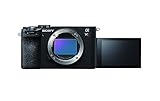
The Sony a7CR is what you get when you squeeze the a7R V’s 61MP sensor into the compact body of the a7C II. For food photographers who travel between restaurants, shoot on location, or want a lighter overhead setup, this camera is a revelation. The image quality matches the flagship in a body that weighs noticeably less.
I took the a7CR to several food events and pop-up restaurant shoots. The compact size made it easier to position on crowded tables and small studio setups. The AI autofocus is identical to the a7R V, so I never felt I was compromising on focus performance. The 5-axis IBIS rated at 7 stops is excellent for handheld low-light food shots in dimly lit restaurants.
Color rendering matches the a7R V, which means warm food tones look natural and pleasing straight out of camera. The articulating screen is genuinely useful for overhead and 90-degree angles. Clear Image Zoom in APS-C mode lets you extend the reach of macro primes at 26MP — handy for tight overhead shots with a 50mm or 90mm lens.
The trade-offs versus the a7R V are real. Continuous shooting drops from 10 fps to 7 fps, which matters for action food shots like liquid pours. The viewfinder is smaller (0.70x magnification), and the rear screen resolution is lower. For most food work, these compromises are minor. For studio still-life work where the larger body of the a7R V is easier to handle with heavy macro lenses, the flagship still has appeal.
Who should buy the Sony a7CR
Traveling food photographers, on-location shooters, and creators who want flagship resolution in a portable body should consider the a7CR. It is also great for overhead setups where lighter weight reduces tripod strain. Restaurant owners who want professional stills in a discreet package will love this camera.
Who should consider a different Sony
Studio food photographers who shoot tethered all day will appreciate the larger grip and dual slots of the a7R V. Creators who do more video than stills may find the a7 IV or a7C II better balanced. If you do not need 61MP, save money with the a7 IV.
5. Sony Alpha 7C II — Best Hybrid Full-Frame for Food Influencers
Pros
- Compact and lightweight at just 430g
- AI-powered autofocus rivals the A7R V
- Vari-angle flip screen for overhead and self-recording
- Unlimited 4K video recording time
- Improved menu with full touch functionality
- Excellent battery life for all-day shooting
- Weather-sealed construction
- 10-bit 4:2:2 video output
Cons
- Single SD card slot (no redundancy)
- Smaller viewfinder (0.70x)
- Lower-resolution rear screen than peers
- Focus can struggle in very low light
- USB-C port placement can interfere with flip screen
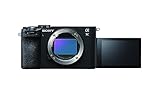
The Sony a7C II is the most travel-friendly full-frame Sony for food creators who prioritize portability without sacrificing sensor quality. The 33MP sensor is the same one in the a7 IV, paired with the latest AI autofocus and an ultra-compact rangefinder-style body. For creators who film cooking process shots, plate reviews, and overhead reels, this is the best balance of size and capability.
I have used the a7C II for two months of food content creation, including recipe videos, restaurant walkthroughs, and overhead plated shots. The vari-angle flip screen makes overhead setups far easier than tilting screens. The AI autofocus locks onto hands, ingredients, and human subjects with confidence. Unlimited 4K recording time is a real advantage for long-form cooking videos.

The compact body takes up less space on a crowded kitchen counter or small restaurant table. At 430 grams, it pairs well with compact primes like the Sony 35mm f/1.8 or 50mm f/1.8 for grab-and-go shooting. Battery life is excellent — I regularly got full-day shoots on a single charge.
The single SD card slot is the main compromise. For casual content creation, this is fine. For paid commercial shoots where redundancy matters, the dual-slot a7 IV is the safer choice. The smaller viewfinder (0.70x) is also a compromise for those who prefer composing through an EVF. Both compromises are reasonable for the size advantage.
Who should buy the Sony a7C II
Food influencers, recipe video creators, and travel food photographers who want full-frame quality in the smallest possible body should consider the a7C II. It is also a strong choice for restaurant owners documenting menus and interior scenes. The unlimited 4K clip time is a major plus for long-form content.
Who should consider a different Sony
Commercial photographers who shoot tethered all day need dual card slots — look at the a7 IV or a7R V. If you do not need full-frame, the ZV-E10 II offers similar creator features at a lower price. Studio photographers who prefer larger grips should consider the a7 IV.
6. Sony Alpha 7C — Best Value Full-Frame for Aspiring Food Photographers
Pros
- Compact full-frame body ideal for travel food photography
- Excellent low-light performance for restaurants
- Fast and accurate autofocus
- Beautiful color science for food imagery
- 15-stop dynamic range
- 14-bit uncompressed RAW
- Lightest full-frame camera in Sony lineup
- Access to full E-mount lens ecosystem
Cons
- Only one SD card slot (UHS-II)
- Small grip uncomfortable for larger hands
- Menu system complex for beginners
- No built-in flash
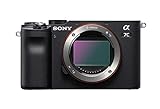
The original Sony a7C is the budget-friendly entry into full-frame food photography. The 24.2MP sensor delivers more than enough resolution for social media, blog posts, and most print work. Color science is excellent — warm food tones render beautifully, and the dynamic range gives real flexibility for window-lit scenes.
The 693-point autofocus with Eye Detection is reliable for chef and human subject work. The compact body is genuinely useful for overhead setups where space is tight. For under $1600 in 2026, the a7C opens up full-frame E-mount lens access, including the Sony 90mm f/2.8 Macro G OSS and Sony 50mm f/2.8 Macro — both essential lenses for food photography.
For aspiring food photographers who want full-frame color science and E-mount access without paying flagship prices, the a7C is a smart choice. I have recommended it to several restaurant owners starting menu photography projects, and the results consistently impress for the price.
The trade-offs are the smaller grip, single SD slot, and older menu system. For still-life food work on a tripod, none of these are deal-breakers. For run-and-gun restaurant documentation, the newer a7C II is a better tool. Aspiring food photographers with patience for the menu system will find a lot to love here.
Who should buy the Sony a7C
Beginner food photographers, aspiring food bloggers, and restaurant owners who want full-frame quality at a lower price should consider the a7C. It is also an excellent secondary body for established photographers who want a compact travel companion.
Who should consider a different Sony
If you want the latest AI autofocus and vari-angle screen, the a7C II is the upgrade path. For video-first creators, the ZV-E10 II delivers more video features at a similar price. If you shoot tethered commercially, look at dual-slot bodies.
7. Sony Alpha a6700 — Best APS-C for Food Content Creators
Pros
- Excellent image quality with sharp details and vibrant colors
- AI-powered autofocus is fast and reliable
- Compact and lightweight premium build
- Impressive 4K video with 4:2:2 10-bit
- Excellent battery life for extended shoots
- Vari-angle flip screen ideal for overhead setups
- 11 fps continuous shooting
- 4K 120p for slow-motion cooking videos
Cons
- Can overheat during extended 4K 60p recording
- Menu system still complex
- No dual card slots
- IBIS could be stronger than rivals
The Sony a6700 is the best APS-C Sony for food photography in 2026, and arguably the best value overall. The 26MP sensor captures more detail than any food blogger needs for online delivery. The AI autofocus is the same system as the flagship a7R V — for focus performance, you are getting the best Sony offers.
I tested the a6700 extensively for overhead recipe videos and restaurant food documentation. The compact 411-gram body makes tripod overhead setups easier on light stands. The vari-angle flip screen is genuinely useful for overhead flat-lay and self-recording. Battery life is excellent — I regularly shot full cooking demonstrations on a single charge.
The 4K 120p video is a major plus for slow-motion cooking clips — pour shots, sizzling pans, and ingredient drops all look cinematic. The 4:2:2 10-bit color output gives real grading flexibility. The 11 fps continuous shooting is more than enough for action food shots like plated garnishes and final plating moments.
For E-mount macro lenses, the 1.5x crop factor actually helps. A 90mm full-frame macro becomes a 135mm equivalent, giving more working distance for overhead and tripod setups without changing lenses. This is one reason APS-C remains popular for tabletop food work.
Who should buy the Sony a6700
Food content creators, recipe video producers, and food bloggers who want flagship autofocus at a more accessible price should buy the a6700. It is also a strong choice for travelers documenting regional cuisines who want pro features in a small body. Overhead flat-lay specialists will love the flip screen.
Who should consider a different Sony
If you need the absolute best low-light performance for dim restaurant interiors, full-frame bodies like the a7 IV or a7C II are better. For cookbook print work at 60+ megapixels, look at the a7R V. If budget is the absolute priority, the ZV-1 or a6600 deliver strong APS-C results.
8. Sony Alpha A6600 — Workhorse APS-C for Long Food Shoots
Pros
- Excellent image quality in compact body
- 5-axis IBIS helps handheld overhead shots
- Large NP-FZ100 battery for all-day shooting
- Real-time Eye AF for plating and styling
- 14-bit RAW
- Strong value at current price
- 11 fps continuous shooting
- Excellent color science for food
Cons
- No built-in flash
- Visible rolling shutter in video
- Single SD card slot
- Limited to 4K 30p (no 60p)
- Smaller EVF than newer models
The Sony a6600 has earned a reputation as the workhorse APS-C body for photographers who shoot all day in tough conditions. For food photography, the standout feature is the NP-FZ100 battery — the same battery used in flagship full-frame bodies. I have shot full restaurant menu documentation days on one charge, where smaller batteries would have required spares.
The 5-axis IBIS is genuinely useful for handheld overhead food shots where mounting the camera on a tripod is impractical. Restaurant owners documenting menus in real dining rooms, and food photographers working in tight spaces, will appreciate the stabilization. Real-time Eye AF works reliably on chefs, hands, and human subjects.
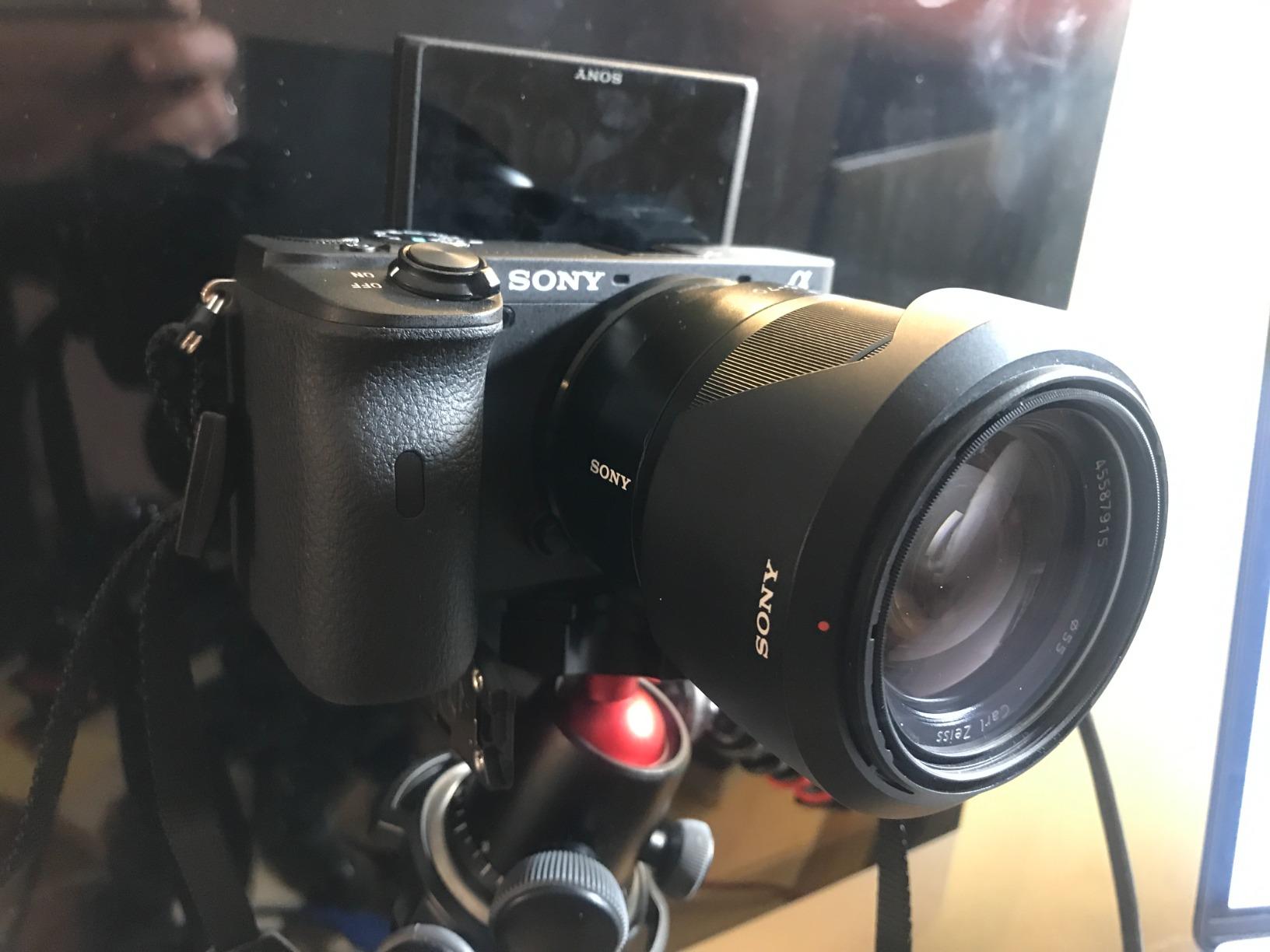
Color science on the a6600 is excellent for food — warm tones render naturally, and the JPEG output is among the best in Sony’s APS-C range. For RAW shooters, the 14-bit files give plenty of editing flexibility. The tilting screen (not fully articulating) is the main compromise for overhead work.
The 4K 30p video is limited compared to newer bodies, but still delivers sharp footage for recipe clips. There is no 60p, which limits slow-motion cooking videos. For still-focused food work, the a6600 remains a serious contender at its current price point.
Who should buy the Sony a6600
Food photographers who shoot long sessions on location — restaurant menus, cookbook projects, multi-day editorial shoots — should consider the a6600 for its battery life and reliability. Aspiring food photographers looking for an affordable APS-C body with IBIS will find great value here. Travel food photographers who want pro features in a compact body should look closely.
Who should consider a different Sony
If you shoot primarily video, the a6700 or ZV-E10 II deliver better video features. If you need a fully articulating screen for overhead reels, the a6700 or a7C II are better choices. For the absolute latest AI autofocus, look at the a6700.
9. Sony ZV-E10 II — Best for Food Influencers and Recipe Creators
Pros
- Compact and lightweight for on-the-go creators
- Excellent 4K 60p video with crisp detail
- Product Showcase mode for food review videos
- Vari-angle flip screen ideal for overhead recipe filming
- Interchangeable E-mount lenses
- Creative Look presets for quick color grading
- S&Q mode for 5x slow motion
- Built-in directional microphone
Cons
- No electronic viewfinder
- Battery life shorter than larger Sony bodies
- Kit lens limiting for advanced work
- Reported overheating in extended 4K sessions
The Sony ZV-E10 II is purpose-built for content creators, and that includes food influencers. The Product Showcase mode is the standout feature — when you hold up an ingredient, dish, or product to the camera, focus automatically shifts to it instantly. This is the mode we have seen most food reviewers and cooking channels adopt in 2026.
The 26MP APS-C sensor captures sharp, detailed images for both stills and video. 4K 60p is available for smooth recipe footage, and S&Q mode delivers 5x slow motion for cinematic cooking shots. The vari-angle flip screen is perfect for overhead flat-lay recipe filming and self-recording in the kitchen.
Built-in directional microphone captures clear cooking audio without an external mic for casual content. Creative Look presets let you apply color grades in-camera, speeding up social media workflows. The compact 399g weight makes handheld cooking demos less fatiguing. E-mount compatibility gives you room to grow into macro and prime lenses.
The trade-offs are real. There is no electronic viewfinder, which makes bright outdoor shooting harder. Battery life is shorter than larger Sony bodies — you will want a spare for full-day cooking demos. The kit lens is limiting for serious food photography, so plan to add a prime lens.
Who should buy the Sony ZV-E10 II
Food influencers, recipe video creators, and YouTube cooking channels should put the ZV-E10 II at the top of their list. The Product Showcase mode is unmatched for food review videos. Travel food creators who want a video-first camera with interchangeable lens flexibility will appreciate this body.
Who should consider a different Sony
Still-focused food photographers should consider the a6700 for better stills ergonomics and battery life. If you need an EVF for outdoor work, the a6700 or any of the full-frame bodies will serve you better. For an even more pocketable option, the ZV-1 is a strong backup.
10. Sony ZV-1 — Budget Pick for Pocketable Food Content
Pros
- Compact and pocketable for grab-and-go shooting
- Bright f/1.8-2.8 lens excellent in low light
- Product Showcase mode for food plating videos
- Excellent close focusing for tabletop shots
- Side flip-out screen perfect for self-filming
- Built-in microphone with wind screen included
- Excellent autofocus with Real-time Eye AF
- Lightest option for travel and restaurant documentation
Cons
- Fixed 24-70mm equivalent lens (no interchangeable lenses)
- Battery life limited for extended video
- No RAW video output
- Touch screen limited to focus only
- Tripod mount blocks battery/card access
The Sony ZV-1 is the most pocketable option in this roundup, and it punches well above its weight for food content creation. The 1-inch sensor is smaller than the other cameras on this list, but the bright ZEISS f/1.8-2.8 lens compensates with shallow depth of field and excellent low-light performance — both important for restaurant food photography.
Product Showcase mode works beautifully for food plating videos. The close focusing distance of about 8cm at the wide end lets you get tight tabletop food shots without accessories. The side flip-out screen is perfect for self-recording cooking demos and overhead recipe shots. At 294g, the ZV-1 fits in a jacket pocket and is always with you.
I have used the ZV-1 as a backup camera for restaurant walkthroughs and quick social media posts. The bright lens makes it usable in dimly lit dining rooms where smartphone cameras struggle. The autofocus with Real-time Eye AF is reliable for chef and food plating shots. Built-in microphone quality is excellent for casual content.
The trade-offs are the fixed lens, smaller sensor, and limited battery life. The fixed 24-70mm equivalent works for most casual food content, but limits macro and ultra-wide overhead shots. For serious food photography, the ZV-1 is best as a secondary grab-and-go body rather than a primary tool.

Who should buy the Sony ZV-1
Casual food bloggers, social media creators, and restaurant owners who want a pocketable backup camera should consider the ZV-1. It is also a strong first camera for someone starting food content creation before committing to a more expensive interchangeable-lens system. Travel food vloggers will appreciate the size and weight.
Who should consider a different Sony
For serious food photography with macro capability and interchangeable lenses, the ZV-E10 II or a6700 are better choices. If you need an EVF and better battery life, the a6700 or any of the full-frame bodies will serve you better. The ZV-1 is a specialized tool — excellent, but a specialty tool.
Buying Guide: How to Choose the Best Sony Camera for Food Photography?
Choosing the best Sony camera for food photography comes down to your primary output, shooting style, and budget. Here are the key factors our team considers when recommending a Sony body for food work.
Sensor size — full-frame vs APS-C: Full-frame Sony cameras like the a7 IV and a7R V deliver the best low-light performance and shallowest depth of field, both valuable for moody restaurant interiors and isolating plated dishes. APS-C bodies like the a6700 and a6600 offer flagship autofocus at lower prices and lighter weight, with the added benefit of 1.5x effective lens reach for macro work. For most food bloggers, APS-C is the best value. For commercial photographers, full-frame is the standard.
Resolution: 24MP is enough for social media and most blog work. 26MP gives more cropping flexibility for overhead flat-lay shots. 33MP (a7 IV, a7C II) is the sweet spot for hybrid photo and video. 61MP (a7R V, a7R IV A, a7CR) is for cookbook spreads, advertising prints, and heavy cropping workflows.
Autofocus and AI subject recognition: Sony’s latest AI-powered autofocus is genuinely transformative for food photography. Real-time Eye AF for chefs and human subjects, plus subject recognition for plates and ingredients, saves time on every shoot. The a7R V, a7 IV, a7C II, a6700, and ZV-E10 II all feature the latest AI systems.
Screen articulation: Fully articulating flip screens (a7 IV, a7C II, a6700, ZV-E10 II, ZV-1) are essential for overhead flat-lay and self-recording cooking videos. Tilting screens (a7R IV A, a6600) work for side-on and angled shots but not overhead.
IBIS — in-body image stabilization: Useful for handheld restaurant shots and overhead setups without tripods. The a7R V (8 stops), a7 IV (5.5 stops), a7C II (5 stops), a6700, a7CR, and a6600 all feature IBIS. The ZV-E10 II and ZV-1 rely on optical stabilization in lenses or digital stabilization.
Color science for food: Sony’s color science renders warm food tones — golden crusts, red sauces, brown gravies — naturally and pleasingly. The latest BIONZ XR processors (a7 IV generation onward) produce even better color rendition than older models. For food work, Sony color science is among the best in any camera system.
Tethering capability: Studio food photographers who shoot tethered to Capture One or Lightroom should prioritize bodies with reliable USB-C tethering and large buffers. The a7R V, a7 IV, and a6700 all tether reliably with Sony’s Imaging Edge software.
Recommended Sony E-Mount Lenses for Food Photography
Pairing the right Sony E-mount lens with your food photography camera is just as important as the body itself. Here are our top lens recommendations for food photography in 2026.
Sony FE 90mm f/2.8 Macro G OSS: The gold standard lens for close-up food detail. 1:1 macro magnification, OSS stabilization, and stunning sharpness make this the lens we reach for most often for plated details, food textures, and recipe close-ups. Works on full-frame and APS-C bodies.
Sony FE 50mm f/2.8 Macro: A more affordable macro option with 1:1 magnification and compact size. Excellent for tabletop food shots and smaller details. Pairs beautifully with the a7C II and a6700 for portable macro setups.
Sony FE 24-70mm f/2.8 GM II: The versatile workhorse lens for full restaurant interiors, plated scenes, and overhead shots that need zoom flexibility. Fast f/2.8 aperture across the range handles dim dining rooms well.
Sony FE 35mm f/1.8: Compact, lightweight, and affordable prime for overhead flat-lay and environmental food shots. The 35mm focal length is ideal for context shots showing food in restaurant settings.
Tamron 35-150mm f/2-2.8 Di III VXD: An incredibly versatile third-party zoom covering wide environmental shots to short telephoto details. Excellent for travel food photographers who need flexibility without changing glass constantly.
Sigma 105mm f/2.8 DG DN Macro Art: A premium third-party macro with beautiful rendering and 1:1 magnification. Pairs well with a7R-series bodies for high-resolution detail work at a lower price than the Sony 90mm.
Sony E 30mm f/3.5 Macro (APS-C): An affordable APS-C macro option that pairs perfectly with the a6700, a6600, and ZV-E10 II. Compact, lightweight, and ideal for travel food photography with a 45mm equivalent focal length.
For more on Sony lenses across photography styles, see our Sony Professional Photography guide and our Sony Wildlife Photography roundup for additional lens recommendations.
Frequently Asked Questions
What is the best Sony camera for food photography?
The Sony Alpha 7R V is the best Sony camera for food photography when image quality is the priority. Its 61MP full-frame sensor captures unmatched detail, the 15-stop dynamic range handles tricky restaurant lighting, and the AI-powered autofocus locks reliably on plates and ingredients. For most food bloggers and content creators, the Sony Alpha 7 IV offers the best balance of resolution, autofocus, video, and value, while the Sony a6700 is the top APS-C pick for hybrid photo and recipe video work.
Which Sony lens is best for food photography?
The Sony FE 90mm f/2.8 Macro G OSS is the best Sony lens for food photography. It delivers 1:1 macro magnification, optical stabilization, and stunning sharpness for plated details, food textures, and recipe close-ups. For more affordable options, the Sony FE 50mm f/2.8 Macro works well on compact full-frame bodies, while the Tamron 35-150mm f/2-2.8 is the most versatile zoom for restaurant interiors and environmental food shots.
What camera do food influencers use?
Most food influencers in 2026 use Sony cameras because of their excellent color science, AI autofocus, and E-mount lens ecosystem. Top picks include the Sony ZV-E10 II for Product Showcase mode in food review videos, the Sony a6700 for overhead recipe filming, and the Sony a7 IV for hybrid photo and video creators. For more travel-focused creators, the Sony ZV-1 is a popular pocketable backup camera, while cookbook and commercial food photographers gravitate to the Sony a7R V for its 61MP resolution.
Is full-frame or APS-C better for Sony food photography?
Both full-frame and APS-C Sony cameras excel at food photography, and the right choice depends on your priorities. Full-frame bodies like the Sony a7 IV and a7R V deliver the best low-light performance and shallowest depth of field for moody restaurant interiors and isolated plated shots. APS-C bodies like the Sony a6700 and a6600 offer flagship-level autofocus at lower prices, lighter weight for overhead setups, and a 1.5x effective lens reach that benefits macro food detail work. Most food bloggers find APS-C the best value, while commercial food photographers lean toward full-frame.
Final Verdict on the Best Sony Cameras for Food Photography
The best Sony camera for food photography ultimately depends on your budget and workflow. For commercial food photographers and cookbook authors who need maximum resolution and dynamic range, the Sony a7R V is the clear winner. For food bloggers and hybrid content creators who shoot both stills and recipe videos, the Sony a7 IV remains the best all-around value. For travel food creators, food influencers, and anyone wanting flagship autofocus in a compact body, the Sony a6700 and a7C II deliver outstanding results. Pair any of these cameras with the Sony 90mm f/2.8 Macro G OSS, and you have a food photography kit that will produce stunning results for years to come in 2026 and beyond.