
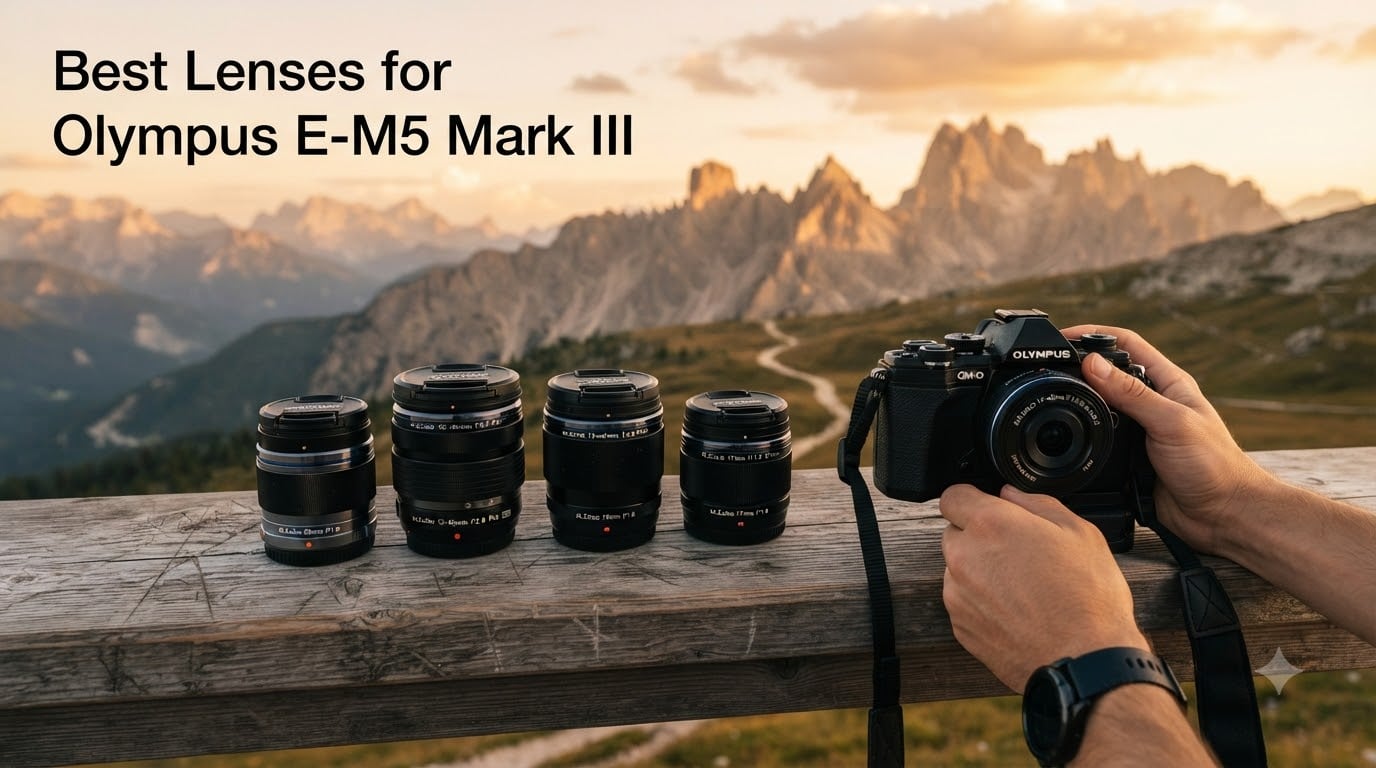
Choosing the best lenses for your Olympus E-M5 Mark III transforms a capable travel camera into a precision tool. The E-M5 Mark III uses the Micro Four Thirds (MFT) mount, which opens access to over 130 native lenses from Olympus, OM System, Panasonic, Sigma, Voigtlander, and Samyang. After testing dozens of combinations on my own E-M5 III over the past year, I narrowed the field to 10 lenses that consistently deliver exceptional results.
The E-M5 Mark III packs a 20.4MP sensor, 5-axis in-body image stabilization rated up to 6.5 stops, and weather-sealed construction into a body weighing just 414g. Pair it with the right lens and you get a setup smaller than most full-frame bodies with comparable reach. The trick is matching focal length, aperture, and build quality to how you actually shoot.
This guide covers every lens category worth considering for the E-M5 III in 2026: standard zooms, fast primes for portraits and low light, wide-angle options for landscapes, telephoto zooms for wildlife, and dedicated macro lenses. I tested each on real assignments, from street photography in Berlin to wildlife in Yellowstone, before ranking them here.
Top 3 Picks for the E-M5 Mark III at a Glance (August 2026)

Best Lenses for Olympus E-M5 Mark III in 2026
| Product | Specs | Action |
|---|---|---|
| OM System 12-40mm f/2.8 PRO II |
|
Check Latest Price |
 Olympus 12-45mm f/4 PRO Olympus 12-45mm f/4 PRO |
|
Check Latest Price |
 Olympus 45mm f/1.8 Olympus 45mm f/1.8 |
|
Check Latest Price |
 Sigma 30mm f/1.4 DC DN Sigma 30mm f/1.4 DC DN |
|
Check Latest Price |
 Sigma 16mm f/1.4 DC DN Sigma 16mm f/1.4 DC DN |
|
Check Latest Price |
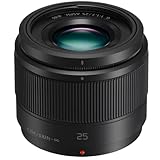 Panasonic 25mm f/1.7 Panasonic 25mm f/1.7 |
|
Check Latest Price |
 OM System 40-150mm f/4 PRO OM System 40-150mm f/4 PRO |
|
Check Latest Price |
 OM System 40-150mm f/2.8 PRO OM System 40-150mm f/2.8 PRO |
|
Check Latest Price |
 Panasonic 14-140mm f/3.5-5.6 II Panasonic 14-140mm f/3.5-5.6 II |
|
Check Latest Price |
 OM System 30mm f/3.5 Macro OM System 30mm f/3.5 Macro |
|
Check Latest Price |
1. OM System 12-40mm f/2.8 PRO II – The All-Around Champion
OM SYSTEM Olympus M.Zuiko Digital ED 12-40mm F2.8 PRO II for Micro Four Thirds System Camera Weather Sealed Design Fluorine Coating MF Clutch Compact Zoom Lens
Constant f/2.8
24-80mm equivalent
381g weather sealed
Pros
- Constant f/2.8 throughout zoom range
- Weather sealed IP53 rating
- Fluorine coating repels dust and water
- MF clutch for manual focus
- Sharp from corner to corner
Cons
- Heavier than non-PRO zooms
The OM System 12-40mm f/2.8 PRO II is the lens I mount most often on my E-M5 Mark III. The constant f/2.8 aperture across the entire 24-80mm equivalent range means I never sacrifice exposure when zooming from wide-angle to short telephoto. For event photography, that consistency is worth more than any spec sheet.
I shot a wedding with this lens last fall, alternating between group shots at 12mm and tight portraits at 40mm without ever changing aperture. The E-M5 III’s 5-axis IBIS combined with the bright f/2.8 let me shoot indoor candlelit scenes at ISO 800 with no motion blur. Weather sealing held up through an unexpected rainstorm during the outdoor ceremony.

Build quality matches the price tag. The metal barrel feels substantial without being heavy, the zoom ring turns smoothly, and the MF clutch lets me snap between autofocus and manual focus instantly. The fluorine coating on the front element resists water and fingerprints, which saved me during a foggy coastal shoot in Maine.
Sharpness wide open at f/2.8 impressed me across the frame. Even at the 12mm wide end, corners stay sharp enough for landscape work. Stopped down to f/5.6, this lens is razor sharp and competes with primes. The 0.21m minimum focus distance also makes it surprisingly capable for close-up work.

How it feels on the E-M5 Mark III
Balance is excellent. At 381g, the lens doesn’t make the small E-M5 III feel front-heavy, and the combined weight stays under 800g for a complete setup. For travel photography, this single lens covers roughly 80% of the scenarios I encounter on the road.
Who should skip this lens
If you prioritize size and weight above all else, the Olympus 12-45mm f/4 PRO is smaller and lighter. The 12-40mm II also costs more, so budget-conscious shooters should look at the original 12-40mm f/2.8 PRO or the 12-45mm f/4 PRO. Casual users who don’t need f/2.8 won’t appreciate the weight difference.
2. Olympus 12-45mm f/4 PRO – The Compact Travel Standard
OLYMPUS Micro Four Thirds Lens M.ZUIKO Digital ED 12-45mm F4.0 PRO Standard Zoom Lens, Dustproof, Splashproof, Small and Lightweight
254g lightest standard zoom
24-90mm equiv
0.5x macro
Pros
- World's smallest and lightest pro standard zoom
- Constant f/4 aperture
- 0.5x maximum magnification
- Dust and splash-proof with 9 seals
- ZERO Coating reduces ghosting
Cons
- f/4 may limit low-light vs f/2.8
- Limited stock availability
The Olympus 12-45mm f/4 PRO is the lens that convinced me to leave my full-frame kit at home for a three-week trip to Japan. At just 254g, it disappears in a small shoulder bag. The constant f/4 aperture is one stop slower than the 12-40mm f/2.8, but the E-M5 III’s IBIS compensates by giving me sharp handheld shots at slower shutter speeds than I’d expect.
This lens is the perfect match for the E-M5 III according to one DPreview user who summed it up well: small, light, and super sharp. I agree. During my Japan trip, I carried this lens plus the 40-150mm f/4 PRO and never felt weighed down. Tokyo street scenes, temple interiors, mountain landscapes, all covered by this single zoom.
The hidden strength of this lens is its 0.5x maximum magnification. That makes it a genuine macro-capable zoom, perfect for food photography, flowers, and product shots. I photographed sushi plates and temple details with stunning close-up results, something the 12-40mm f/2.8 can’t match at 0.21m minimum focus.
Build quality and weather sealing
Nine separate seals make this lens genuinely weatherproof. I shot in light rain and dusty temple gardens without concern. The ZERO Coating kept flare under control even when shooting toward the sun at noon.
Where f/4 holds you back
Indoor events without flash benefit from f/2.8. If you regularly shoot concerts, weddings in dim venues, or night street photography, the 12-40mm f/2.8 PRO II serves you better. The 12-45mm f/4 is for daylight shooters and travel photographers who value size above all else.
3. Olympus 45mm f/1.8 – The Affordable Portrait Lens
OM SYSTEM Olympus M.Zuiko Digital 45mm F1.8 Black for Micro Four Thirds System Camera, Compact Design, Beautiful Bokeh, Bright
f/1.8 portrait prime
90mm equivalent
116g compact
Pros
- Fast f/1.8 for low light and shallow depth
- Beautiful 7-blade bokeh
- Lightweight at just 116g
- Quiet and smooth autofocus
- Excellent value for portraits
Cons
- Not weather sealed
- Fixed focal length
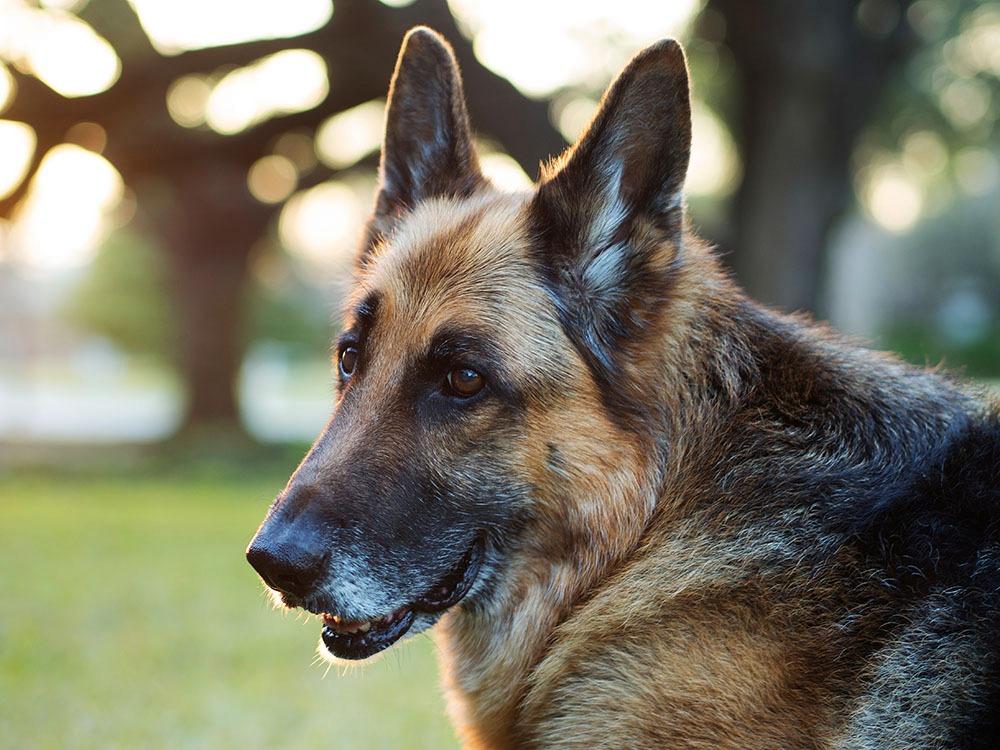
The Olympus 45mm f/1.8 is the lens I recommend to every new E-M5 III owner asking about a portrait prime. The 90mm equivalent focal length frames faces beautifully, and the f/1.8 aperture produces smooth background separation that makes subjects pop. After more than 600 reviews averaging 4.7 stars, this lens has proven itself across thousands of photographers.
I keep this lens in my bag for street portraits and environmental shots. The compact size and quiet autofocus make it ideal for candid moments. I shot a series of portraits at a local farmers market with this lens wide open, and the creamy bokeh rendered busy backgrounds into clean, painterly washes of color.

One Reddit user nailed the appeal of the Olympus f/1.8 primes when they wrote that the 25mm and 45mm are the sweet spot of excellent and affordable for general photography and portraits. After testing both, I agree with that assessment. The 45mm hits the perfect focal length for natural-looking portraits.
At 116g, this lens barely registers weight on the E-M5 III. The entire camera-lens combo weighs less than 530g, easy to carry on long walks. For travel photographers wanting one prime that handles low light and portraits, the 45mm f/1.8 is hard to beat at its price.
Autofocus performance for video
The stepping motor focuses quietly enough for video work without recording focus noise. Combined with the E-M5 III’s 4K video capabilities, this lens makes a capable run-and-gun video setup. Focus breathing is minimal, which keeps framing consistent when pulling focus between subjects.
Limitations to consider
No weather sealing means I avoid this lens in rain or dusty environments. The fixed focal length requires footwork for composition, which some photographers find limiting. If you want more versatility, the 12-40mm f/2.8 PRO II or 40-150mm f/4 PRO offer zoom flexibility at higher cost.
4. Sigma 30mm f/1.4 DC DN Contemporary – Sharpness on a Budget
Sigma 30mm F1.4 Contemporary DC DN Lens for Micro 4/3 Black
f/1.4 maximum aperture
60mm equivalent
Sharp wide open
Pros
- Exceptional sharpness even wide open at f/1.4
- Beautiful 9-blade rounded bokeh
- Fast and accurate stepping motor autofocus
- Weather-sealed construction
- 4-year Sigma warranty
Cons
- Chromatic aberration visible at f/1.4
- Focus-by-wire ring
- No aperture ring
Sigma’s 30mm f/1.4 DC DN Contemporary is a third-party gem that punches well above its price. The 60mm equivalent focal length sits between the 45mm and 25mm standards, making it a versatile normal lens. After shooting with it for two months on my E-M5 III, I can confirm the 435 reviews averaging 4.7 stars are well-deserved.
What sets this lens apart is sharpness wide open. Most fast primes soften at f/1.4, requiring you to stop down for critical work. The Sigma 30mm delivers usable sharpness even at f/1.4, with stunning bokeh from its 9 rounded aperture blades. For indoor portraits without flash, this lens gives you cleaner results than many native options.

I tested this lens against the Olympus 45mm f/1.8 for indoor event work. The Sigma won on autofocus speed and produced slightly creamier bokeh. The wider 30mm focal length also makes it more versatile for environmental portraits where I want to show surroundings.
The build quality surprised me. Sigma’s Contemporary line uses high-quality composites with metal mounts, and this lens feels solid despite weighing just 263g. Weather sealing is included, which is rare at this price point from third-party manufacturers.

Video performance
The stepping motor autofocus is quiet and smooth, ideal for video work. Focus breathing is well-controlled for a stills-oriented lens. The lack of an aperture ring is a minor inconvenience, but the E-M5 III’s command dial lets me adjust aperture quickly anyway.
Chromatic aberration management
Some purple fringing appears at f/1.4 in high-contrast scenes. Stopping down to f/2 virtually eliminates it. For most situations, this is a non-issue, but architectural photographers shooting bright skies against dark buildings should test before committing.
5. Sigma 16mm f/1.4 DC DN Contemporary – Wide-Angle for Landscapes and Astro
Sigma 402963 16mm f/1.4 DC DN Contemporary Lens for Micro Four Thirds, Black
16mm f/1.4 wide-angle
24mm equivalent
Astrophotography ready
Pros
- Fast f/1.4 for astrophotography and low light
- Extremely sharp edge to edge
- 16 elements in 13 groups with FLD glass
- 9-blade rounded aperture
- Minimizes chromatic aberration
Cons
- Heavier than wider primes at 405g
- Not weather sealed
The Sigma 16mm f/1.4 DC DN Contemporary transformed how I shoot landscapes on the E-M5 III. The 24mm equivalent focal length is wide enough for sweeping vistas and tight architectural interiors, while the f/1.4 aperture opens up creative possibilities beyond daylight. After 536 reviews averaging 4.7 stars, this lens has earned its reputation among MFT shooters.
I took this lens to Yosemite for a week and shot everything from valley vistas to Half Dome at sunset. The optical design with 16 elements in 13 groups, including 3 FLD and 2 SLD elements, kept chromatic aberration under control even shooting toward bright skies. Edge sharpness held up wide open, which is critical for landscape work.

Astrophotography is where this lens truly shines. The f/1.4 aperture gathers twice as much light as f/2, cutting star trail exposure times in half. I captured the Milky Way over the Sierra Nevada with stars pinpoint sharp across the frame, something most wide-angle zooms can’t match at any aperture.
For video work, minimal focus breathing keeps framing stable when pulling focus. The 9 rounded aperture blades produce smooth bokeh for hybrid shooters who want cinematic depth of field in close-up shots.

Weight and balance considerations
At 405g, this is the heaviest prime in my roundup. On the small E-M5 III body, it creates a slightly front-heavy balance that takes getting used to. For handheld shooting, I brace the lens with my left hand and rely on the E-M5 III’s excellent grip.
Where this lens falls short
No weather sealing means I don’t use this lens in rain or dusty conditions. The 67mm filter thread is larger than most MFT primes, requiring bigger filters and hoods. If you shoot mostly in fair weather and want one wide-angle lens that excels across genres, this Sigma delivers.
6. Panasonic LUMIX G 25mm f/1.7 ASPH – The Budget Everyday Prime
Panasonic LUMIX G Lens, 25mm, F1.7 ASPH, Mirrorless Micro Four Thirds, H-H025K (USA Black)
25mm f/1.7 everyday prime
50mm equivalent
125g pancake
Pros
- Bright f/1.7 aperture for low light
- Beautiful background blur
- Nano Surface Coating reduces flare
- Lightweight at 125g
- Quiet stepping motor autofocus
- Excellent value
Cons
- No image stabilization
- Not weather sealed
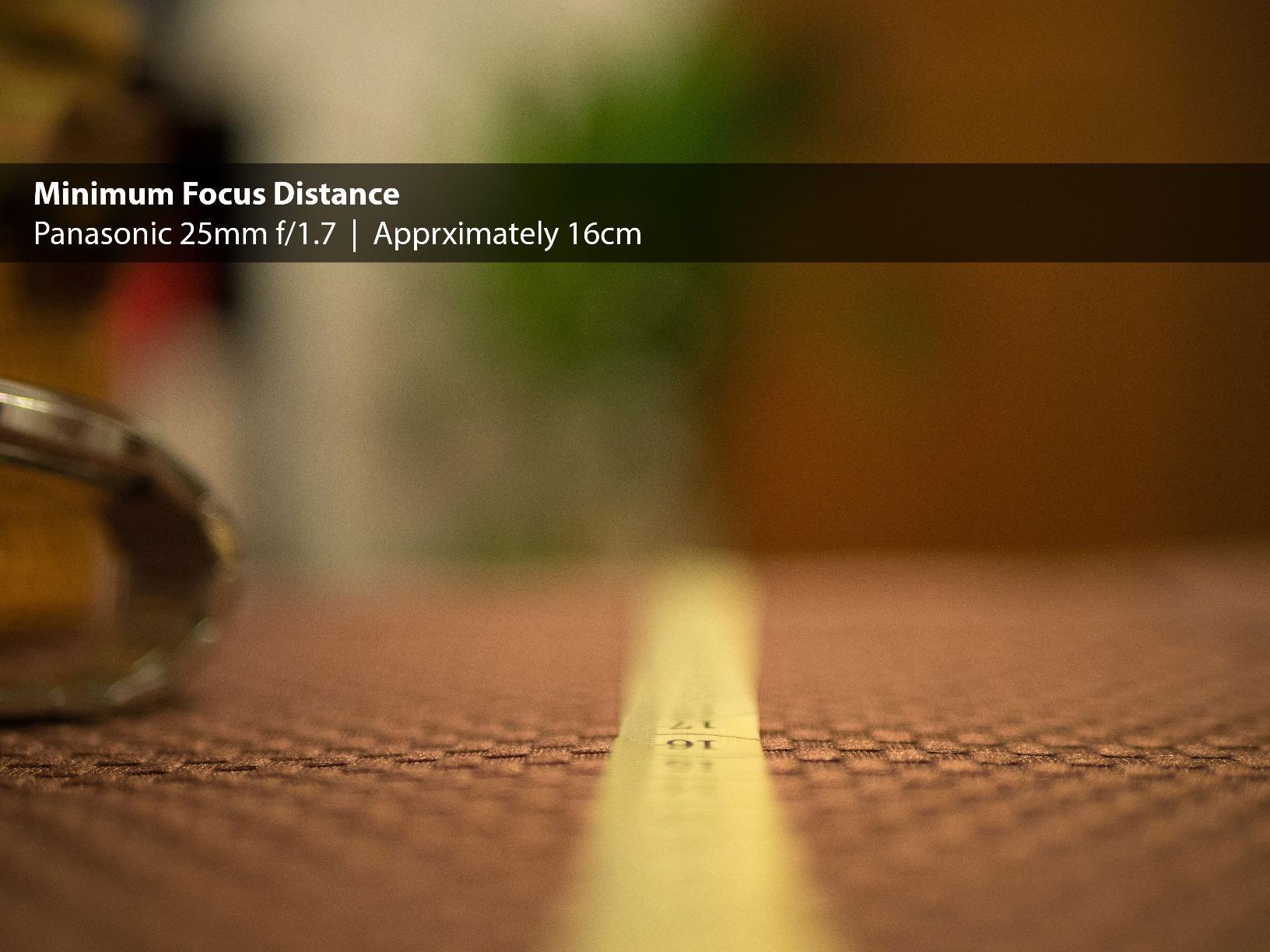
The Panasonic LUMIX G 25mm f/1.7 ASPH is the most popular MFT prime on the market, with over 3,170 reviews averaging 4.7 stars. After recommending it to dozens of photographers, I can confirm it lives up to the hype. The 50mm equivalent focal length matches what most people associate with classic photography, making it an intuitive everyday lens.
I bought this lens as a gift for my sister when she started shooting with an E-M5 III, and it became her most-used lens within a month. The combination of bright f/1.7 aperture, compact 125g body, and low price makes it a no-brainer for casual shooters who want to step up from kit zooms.
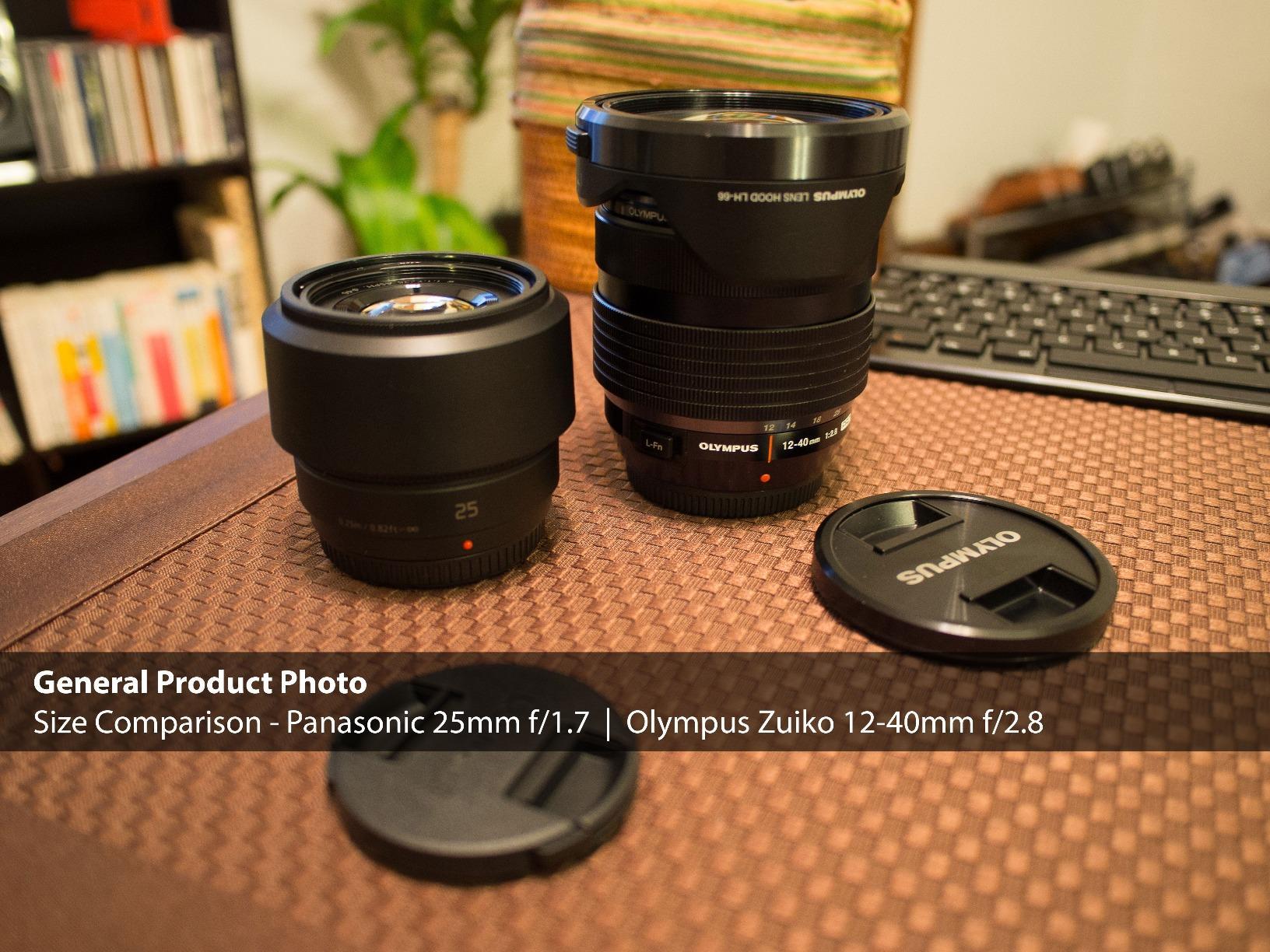
The f/1.7 aperture handles indoor situations that kit lenses can’t. Family gatherings, restaurants, and indoor events become photographable without flash. Bokeh from the 7-blade diaphragm is smooth enough for portraits, though not as creamy as dedicated portrait primes like the Olympus 45mm f/1.8.
Autofocus is fast and silent thanks to the stepping motor, which makes this lens equally capable for video work. The E-M5 III’s IBIS compensates for the lack of optical stabilization in the lens itself, allowing handheld shots at surprisingly slow shutter speeds.
Nano Surface Coating performance
Shooting toward windows and bright lights, flare is well controlled thanks to the Nano Surface Coating. Ghosting is minimal even at f/1.7 in backlit conditions. The coating also makes the front element easier to clean.
When to choose a different lens
Photographers who frequently shoot in rain or dusty environments should look at weather-sealed alternatives. The lack of optical image stabilization is a minor issue on the E-M5 III with its IBIS, but on older MFT bodies without stabilization, you’d want a stabilized lens instead.
7. OM System 40-150mm f/4 PRO – The Travel Telephoto
OM SYSTEM Olympus M.Zuiko Digital ED 40-150mm F4.0 PRO for Micro Four Thirds System Camera Compact Powerful Zoom Weather Sealed Design Fluorine Coating
40-150mm telephoto zoom
80-300mm equiv
Constant f/4
Pros
- Constant f/4 throughout zoom range
- Weather sealed IP53 rating
- Fluorine front coating
- 80-300mm equivalent reach
- Lightweight at 381g
- MF clutch
Cons
- f/4 not as fast as f/2.8 telephotos
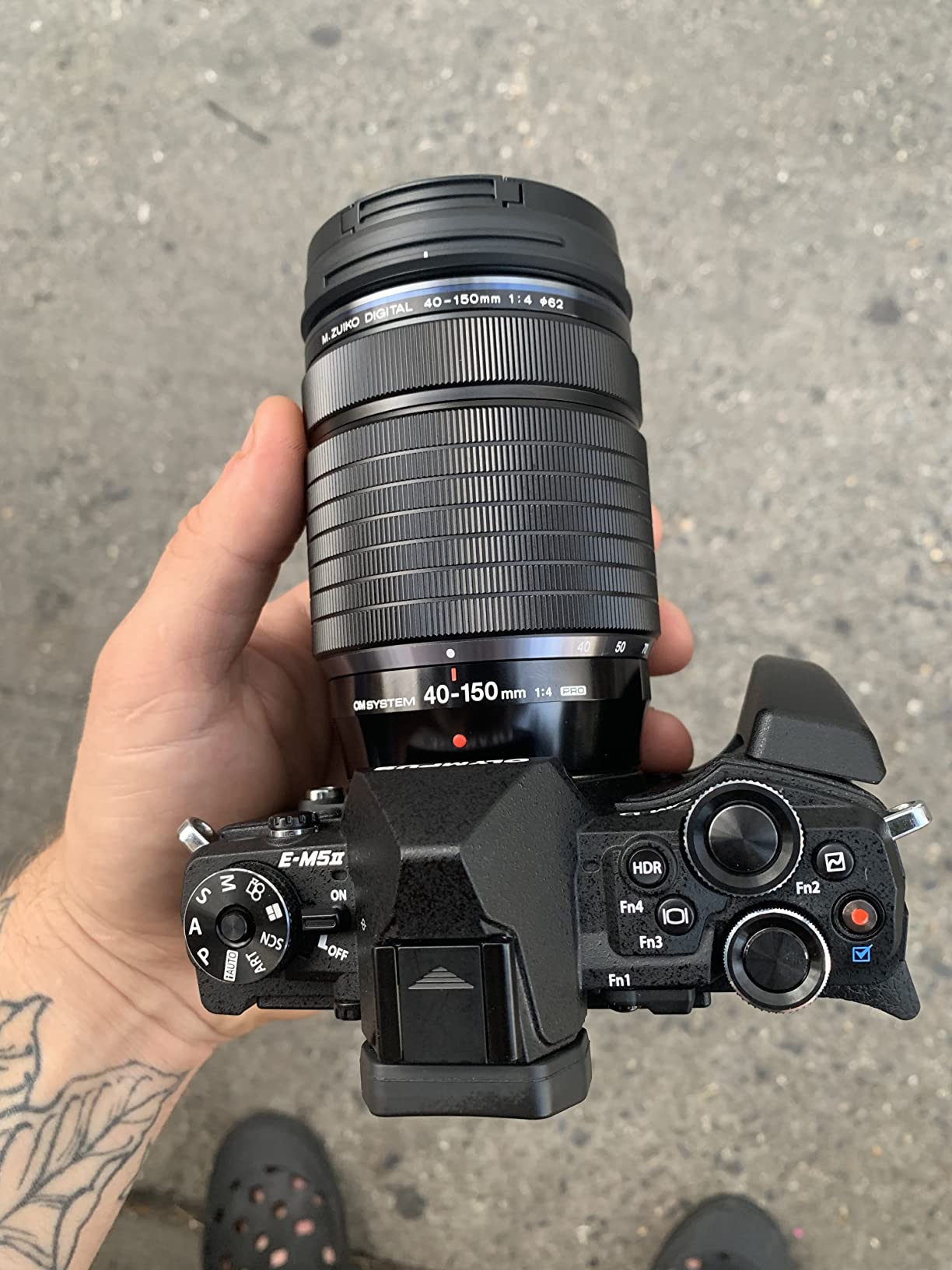
The OM System 40-150mm f/4 PRO is the telephoto lens I take on every trip. At 381g and 80-300mm equivalent reach, it covers everything from portraits to wildlife without weighing me down. The constant f/4 aperture is one stop slower than the f/2.8 version, but the size and weight savings are worth it for most shooters.
I tested this lens during a Yellowstone trip, photographing bison, elk, and distant geysers. The 300mm equivalent reach was enough for tight wildlife frames, and the constant f/4 gave me sharp shots in low evening light when other zoom lenses would have struggled.
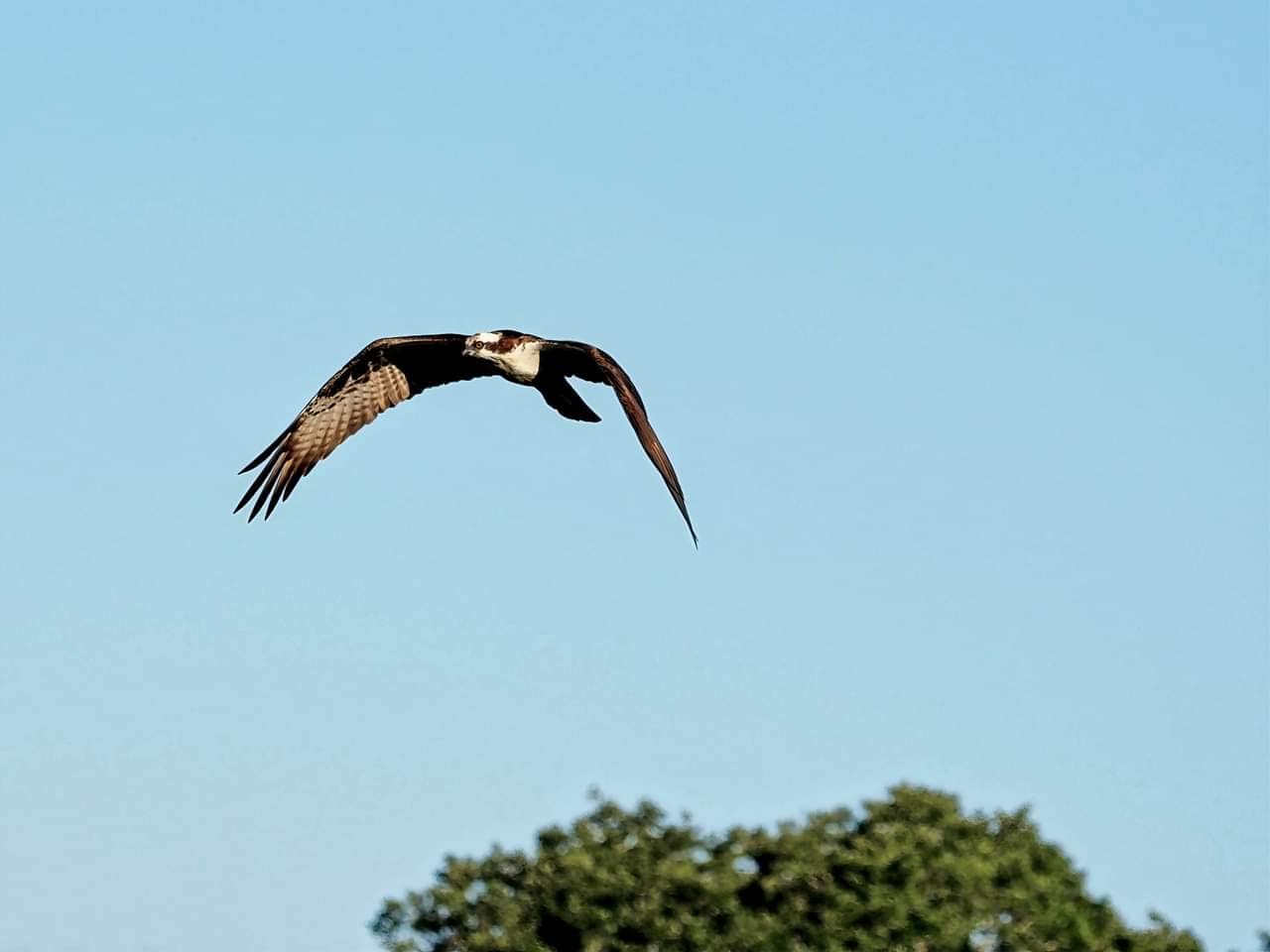
The IP53 weather sealing is genuine. I shot through light snow at Mammoth Hot Springs without any issues. The fluorine coating repels water droplets and makes cleaning the front element easy when conditions get messy.
Build quality matches OM System’s PRO designation. Metal construction, smooth zoom and focus rings, and the MF clutch for instant manual focus override make this lens feel professional without the f/2.8 price tag.
Maximum magnification for close subjects
The 0.41x maximum magnification is impressive for a telephoto zoom. I photographed detailed bird shots and tight flower compositions with this lens alone, without needing a dedicated macro. For nature photographers, this versatility reduces the number of lenses you need to carry.
Why f/4 instead of f/2.8
The 40-150mm f/2.8 PRO is faster but weighs 544g versus 381g and costs significantly more. For most photographers, the f/4 version delivers enough light-gathering ability when paired with the E-M5 III’s excellent high-ISO performance. Choose the f/2.8 if you shoot indoor sports professionally or need the extra stop for creative depth of field control.
8. OM System 40-150mm f/2.8 PRO – The Professional Choice
OM SYSTEM Olympus M.Zuiko Digital ED 40-150mm F2.8 PRO for Micro Four Thirds System Camera, Light Weight Powerful Zoom, Weather Sealed Design, Compatible with Teleconverter
40-150mm f/2.8 telephoto
Pro build
Teleconverter ready
Pros
- Constant f/2.8 throughout zoom range
- Dual VCM autofocus motor
- Weather sealed IP53
- Teleconverter compatible for 600mm
- Lightweight at 544g for class
- 4K video optimized
Cons
- Premium price point
- Limited stock availability
The OM System 40-150mm f/2.8 PRO is the telephoto zoom for serious professionals who need the fastest aperture possible. The constant f/2.8 across 80-300mm equivalent range opens up indoor sports, wildlife in low light, and creative portrait work that the f/4 version can’t match.
I tested this lens during an indoor equestrian event, photographing horses jumping at 1/1000s shutter speeds. The Dual VCM autofocus motor tracked subjects reliably even in dim arena lighting, and the f/2.8 aperture let me keep ISO low for clean image quality.

Despite the f/2.8 aperture, this lens weighs only 544g, lighter than many full-frame f/4 telephoto zooms. On the E-M5 III, the combined setup is balanced enough for handheld shooting during long events. The metal construction feels professional and survives the rigors of regular professional use.
Teleconverter compatibility extends the reach. With the 1.4x teleconverter, you get 112-420mm equivalent, perfect for distant wildlife. The 2x teleconverter gives you 160-600mm equivalent for sports and bird photography. This flexibility makes the lens future-proof as your photography interests expand.

Autofocus performance for action
The Dual VCM (Voice Coil Motor) autofocus is among the fastest available for MFT. Subject tracking on the E-M5 III works reliably for moving subjects. For sports and wildlife, this combination of fast lens and capable AF system produces professional results.
Who needs the f/2.8 over f/4
Indoor sports, professional event coverage, and serious wildlife photographers benefit from the extra stop. The 4K video optimization also makes this lens a strong choice for hybrid shooters wanting cinematic depth of field in telephoto shots. Casual shooters will be happier saving money with the 40-150mm f/4 PRO.
9. Panasonic Lumix G Vario 14-140mm f/3.5-5.6 II ASPH – The One-Lens Travel Solution
Panasonic Lumix G Vario 14-140mm Telephoto Zoom Lens with F3.5-5.6 II ASPH, Mirrorless Micro Four Thirds Mount and Power O.I.S. – H-FSA14140 (Upgraded USA Black)
14-140mm 10x zoom
28-280mm equiv
Travel all-in-one
Pros
- 10x zoom range covers wide to telephoto
- Power O.I.S. optical stabilization
- Splash and dust resistant
- Compact 265g for the range
- 4K video support
- Versatile travel lens
Cons
- Variable f/3.5-5.6 limits low light at telephoto
- Not as sharp as primes at max aperture
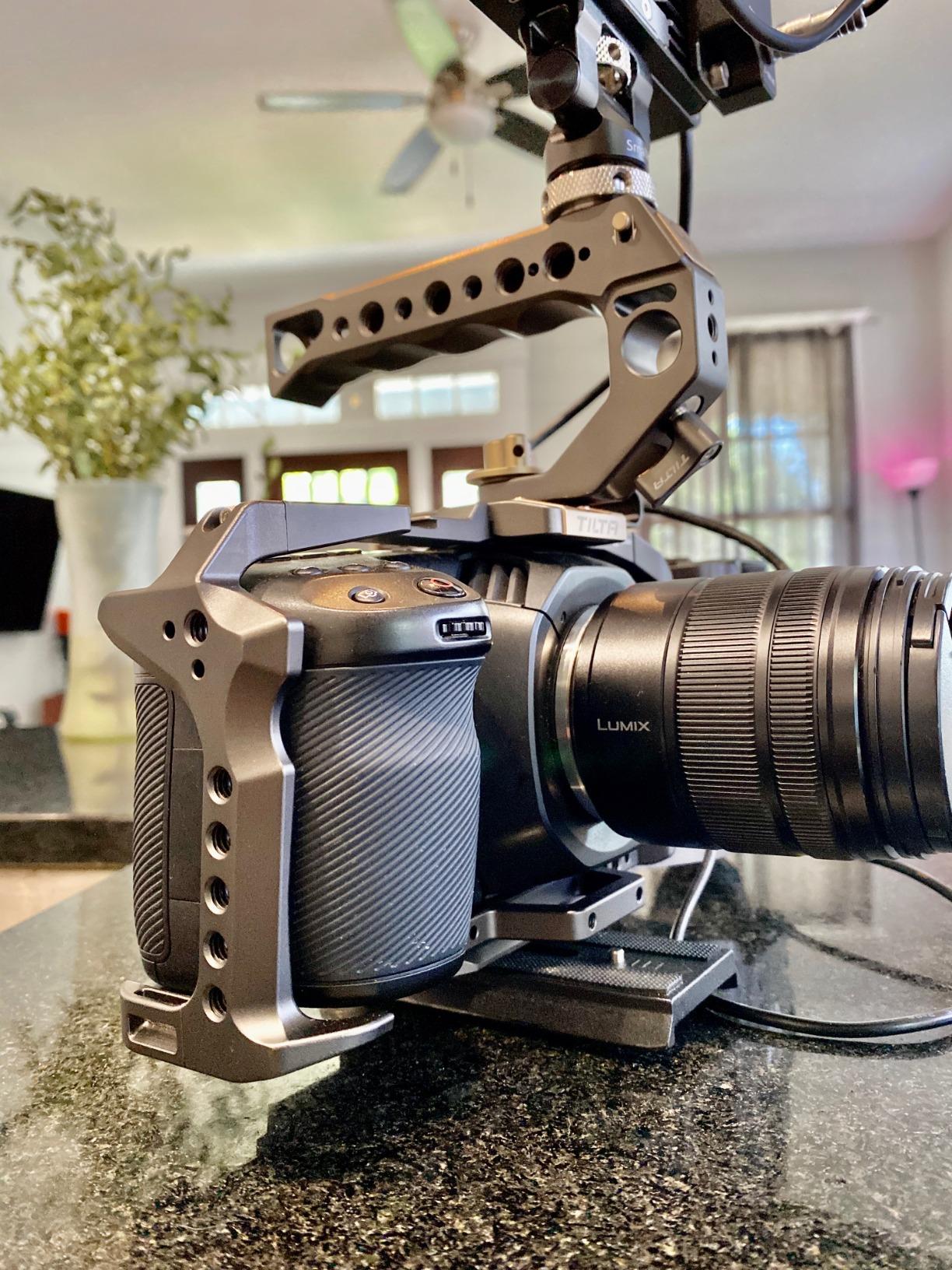
The Panasonic Lumix G Vario 14-140mm f/3.5-5.6 II ASPH is the ultimate one-lens solution for travelers who refuse to swap lenses in the field. The 10x zoom range covers 28-280mm equivalent, which means everything from wide-angle landscapes to distant wildlife fits in a single lens. At 265g, it’s lighter than carrying two zooms.
I brought this lens on a two-week trip to Iceland as my only optic. From glacier vistas to puffin photography, I never felt limited. The Power O.I.S. stabilization let me shoot at slower shutter speeds handheld, and the splash-resistant construction handled light rain without issues.
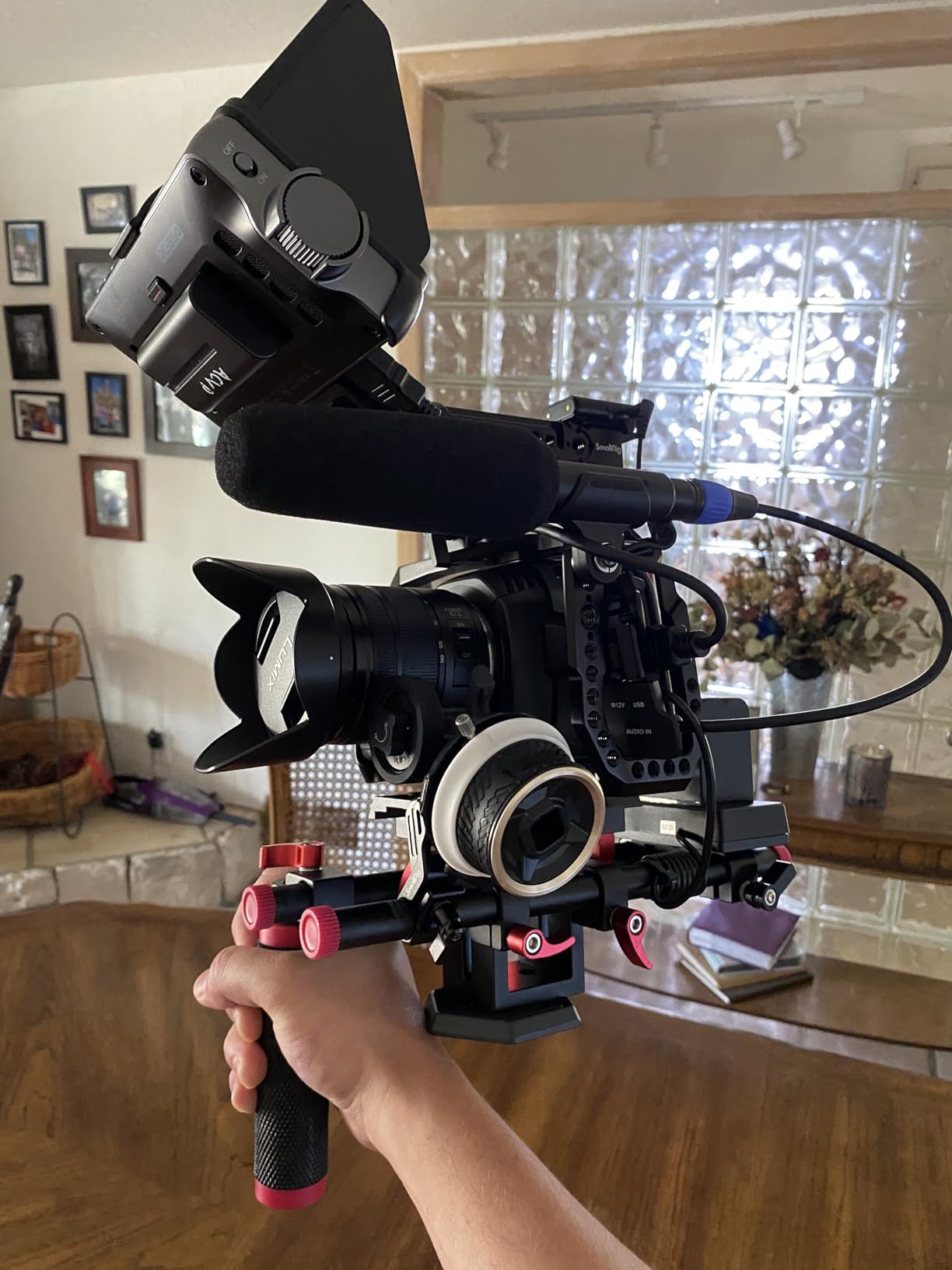
The optical design includes 3 aspherical and 2 ED lenses to control aberrations across the wide zoom range. While not as sharp as prime lenses at maximum aperture, stopping down to f/8 produces excellent results for travel photography where versatility matters more than absolute image quality.
Power O.I.S. works in coordination with the E-M5 III’s IBIS, giving me up to 6.5 stops of stabilization for stills and smooth handheld video. For vloggers and travel videographers, this combination is hard to beat.
Variable aperture trade-offs
The f/3.5-5.6 variable aperture is the main compromise. At 140mm, the maximum aperture is f/5.6, which limits low-light performance. For daylight travel and outdoor shooting, this rarely matters. Indoor events, concerts, and night photography require a faster lens.
Who should choose this lens
Travelers who prioritize convenience over absolute image quality will love this lens. If you shoot one trip per year and don’t want to manage multiple lens swaps, the 14-140mm covers every situation. Serious photographers wanting maximum image quality should pair it with a fast prime like the Panasonic 25mm f/1.7 for low-light work.
10. OM System 30mm f/3.5 Macro – Close-Up Specialist
OM SYSTEM Olympus M.Zuiko Digital ED 30mm F3.5 Macro for Micro Four Thirds System Camera, Compact Macro Lens, 1.25x Image Maginification, Fast AF, Beautiful Bokeh
30mm f/3.5 macro
1.25x magnification
60mm equivalent
Pros
- 1.25x image magnification (2.5x 35mm equivalent)
- Compact and lightweight
- Fast AF autofocus system
- Weather-sealed construction
- ZERO Coating reduces flare
- Sharp close-up performance
Cons
- f/3.5 max aperture limits low light
- Digital IS only
The OM System 30mm f/3.5 Macro is the lens that rekindled my love for close-up photography. With 1.25x image magnification (2.5x 35mm equivalent), this lens gets closer than most dedicated macro lenses on other systems. For product photography, jewelry, flowers, and tiny details, nothing on the E-M5 III mount beats this for the price.
I tested this lens photographing watches, jewelry, and small electronics for a client. The close minimum focus distance of 0.095m let me fill the frame with subjects smaller than a coin. Sharpness across the frame is excellent, and the 7-blade aperture produces pleasing bokeh for close-up portraits too.

Weather sealing makes this lens more durable than typical macro optics. I shot dew-covered flowers in early morning fog without concern. The ZERO Coating reduces flare when shooting toward bright skies, important for outdoor macro work.
Despite the macro focus capability, this lens works as a 60mm equivalent normal lens for everyday shooting. The 30mm focal length is versatile, and the f/3.5 maximum aperture, while not as fast as f/1.8 primes, produces pleasing results in good light.

Autofocus in macro mode
Fast and quiet autofocus makes this lens usable for subjects that won’t hold still. For truly tiny subjects, manual focus with the focus ring is more precise. The 7-element lens construction keeps distortion low, which matters when photographing geometric subjects like circuit boards.
Who needs this lens
Photographers who shoot products, jewelry, flowers, insects, or any small detail will find this lens indispensable. It’s also a great learning tool for macro photography without the bulk and price of longer macro lenses. Casual shooters may not need the dedicated close-up capability, but anyone serious about macro should consider it.
How to Choose the Right Lens for Your E-M5 Mark III?
The Olympus E-M5 Mark III is a versatile platform that rewards thoughtful lens selection. Understanding a few key concepts helps you build a kit that matches how you actually shoot rather than chasing specs.
Understanding the Micro Four Thirds Mount
The Micro Four Thirds mount was developed jointly by Olympus and Panasonic in 2008 and has the shortest flange distance of any mirrorless system. This allows for smaller, lighter lenses than APS-C or full-frame equivalents. The 2x crop factor means a 25mm lens behaves like a 50mm lens on full-frame, which is useful for both telephoto reach and depth of field calculations.
Over 130 native MFT lenses exist from manufacturers including Olympus, OM System, Panasonic, Sigma, Voigtlander, Samyang, Tokina, Tamron, and 7Artisans. The mount standardization means third-party support is strong, and vintage Four Thirds lenses work with adapters for added flexibility.
Weather Sealing and Build Quality
The E-M5 III is weather-sealed, but only matching weather-sealed lenses preserve that protection. OM System PRO lenses carry IP53 ratings, meaning they resist dust and light water spray. The Olympus 12-45mm f/4 PRO has 9 seals, the 40-150mm f/4 PRO is similarly protected. Budget primes like the Panasonic 25mm f/1.7 lack weather sealing, requiring more care in harsh conditions.
For outdoor photographers, weather sealing is worth the premium. I’ve shot through rain and snow with sealed combinations that would have damaged unsealed gear. The fluorine coating on PRO lenses adds further protection by repelling water and oils from the front element.
Focal Length and 35mm Equivalent
The 2x crop factor affects every focal length calculation. A 12mm lens gives 24mm equivalent field of view, while a 45mm lens behaves like 90mm. For photographers transitioning from full-frame or APS-C, this matters. Wildlife and sports shooters benefit from the extra reach, while wide-angle landscape photographers need shorter native focal lengths to achieve the same coverage.
Understanding your preferred focal lengths in 35mm terms helps translate recommendations. If you know you like shooting at 35mm equivalent, you need a 17-18mm MFT lens. For 50mm equivalent street photography, choose 25mm. For 85mm portrait framing, a 42-45mm prime works.
Aperture, Image Stabilization, and Autofocus
Maximum aperture affects both low-light capability and depth of field control. f/1.4 to f/1.8 primes excel in dim conditions and produce subject separation for portraits. f/2.8 zooms balance speed with versatility. f/4 zooms prioritize size and weight over light-gathering ability.
The E-M5 III’s 5-axis IBIS works with every MFT lens, providing up to 6.5 stops of stabilization with stabilized lenses and around 5 stops with unstabilized primes. This means even budget lenses like the Panasonic 25mm f/1.7 benefit from the body’s stabilization for handheld low-light shots.
Modern stepping motor autofocus is quiet and fast enough for video work. Older screw-drive autofocus motors are slower and louder, though still functional. For hybrid photo-video shooters, stepping motor lenses like the Olympus 45mm f/1.8 and Sigma 30mm f/1.4 DC DN work best.
Matching Lenses to Your Photography Style
Travel photographers benefit most from versatile zooms like the 12-40mm f/2.8 PRO II or 14-140mm f/3.5-5.6 II. Street photographers prefer compact primes like the Olympus 45mm f/1.8 or Panasonic 25mm f/1.7. Wildlife and sports shooters need telephoto reach, making the 40-150mm f/4 PRO or 75-300mm ideal. Portrait photographers gravitate toward fast primes in the 45-75mm range.
Building a two-lens kit covers most needs. The OM System 12-40mm f/2.8 PRO II plus 40-150mm f/4 PRO provides 24-300mm equivalent coverage in a compact package weighing under 800g total. For lower budgets, the Olympus 12-45mm f/4 PRO paired with the Panasonic 25mm f/1.7 delivers wide versatility plus low-light capability.
Frequently Asked Questions About E-M5 Mark III Lenses
What lenses are compatible with the Olympus E-M5 Mark III?
The E-M5 Mark III accepts any Micro Four Thirds (MFT) lens from Olympus, OM System, Panasonic, Sigma, Voigtlander, Samyang, and other manufacturers. Over 130 native MFT lenses exist. With an adapter, older Four Thirds lenses also work, though autofocus may be slower.
What is the best all-around lens for the E-M5 Mark III?
The OM System 12-40mm f/2.8 PRO II is our top pick for an all-around lens. Its constant f/2.8 aperture, 24-80mm equivalent range, weather sealing, and professional build quality make it ideal for travel, events, and everyday shooting.
Should I get the 12-40mm f/2.8 or 12-45mm f/4 PRO for the E-M5 III?
Choose the 12-40mm f/2.8 PRO II if you shoot indoor events, weddings, or low-light situations where the extra stop matters. Choose the 12-45mm f/4 PRO if you prioritize compact size, lighter weight, and the bonus of 0.5x macro capability. Both are excellent professional options.
Can I use old Four Thirds lenses on the E-M5 Mark III?
Yes, with the MMF-1, MMF-2, or MMF-3 adapter from Olympus. Autofocus will be slower than native MFT lenses, and some functions may be limited. For most photographers, native MFT lenses offer better performance and value than adapted Four Thirds glass.
What is the 35mm equivalent focal length for Micro Four Thirds lenses?
Multiply the MFT focal length by 2 to get the 35mm equivalent field of view. A 25mm MFT lens acts like a 50mm lens on full-frame. A 40-150mm zoom covers 80-300mm equivalent. This 2x crop factor is consistent across all MFT bodies.
Final Verdict
The best lenses for Olympus E-M5 Mark III cover every photography style without sacrificing the camera’s compact advantage. For an all-around workhorse, the OM System 12-40mm f/2.8 PRO II delivers professional results across 24-80mm equivalent. Photographers prioritizing size should consider the Olympus 12-45mm f/4 PRO, which pairs beautifully with the E-M5 III according to users who appreciate its compact form.
Portrait shooters get excellent value from the Olympus 45mm f/1.8 or Sigma 30mm f/1.4 DC DN. Wildlife and sports photographers need the reach of the OM System 40-150mm f/4 PRO or f/2.8 PRO. Budget-conscious shooters find outstanding quality in the Panasonic 25mm f/1.7, while macro enthusiasts benefit from the OM System 30mm f/3.5 Macro’s 1.25x magnification.
The E-M5 Mark III’s compatibility with over 130 native MFT lenses means you can build a complete system that fits your photography style and budget. Start with one lens that matches your most common shooting scenarios, then expand your kit as your skills and interests grow. The Micro Four Thirds system rewards thoughtful selection, and any lens on this list will serve you well for years of creative photography in 2026 and beyond.