
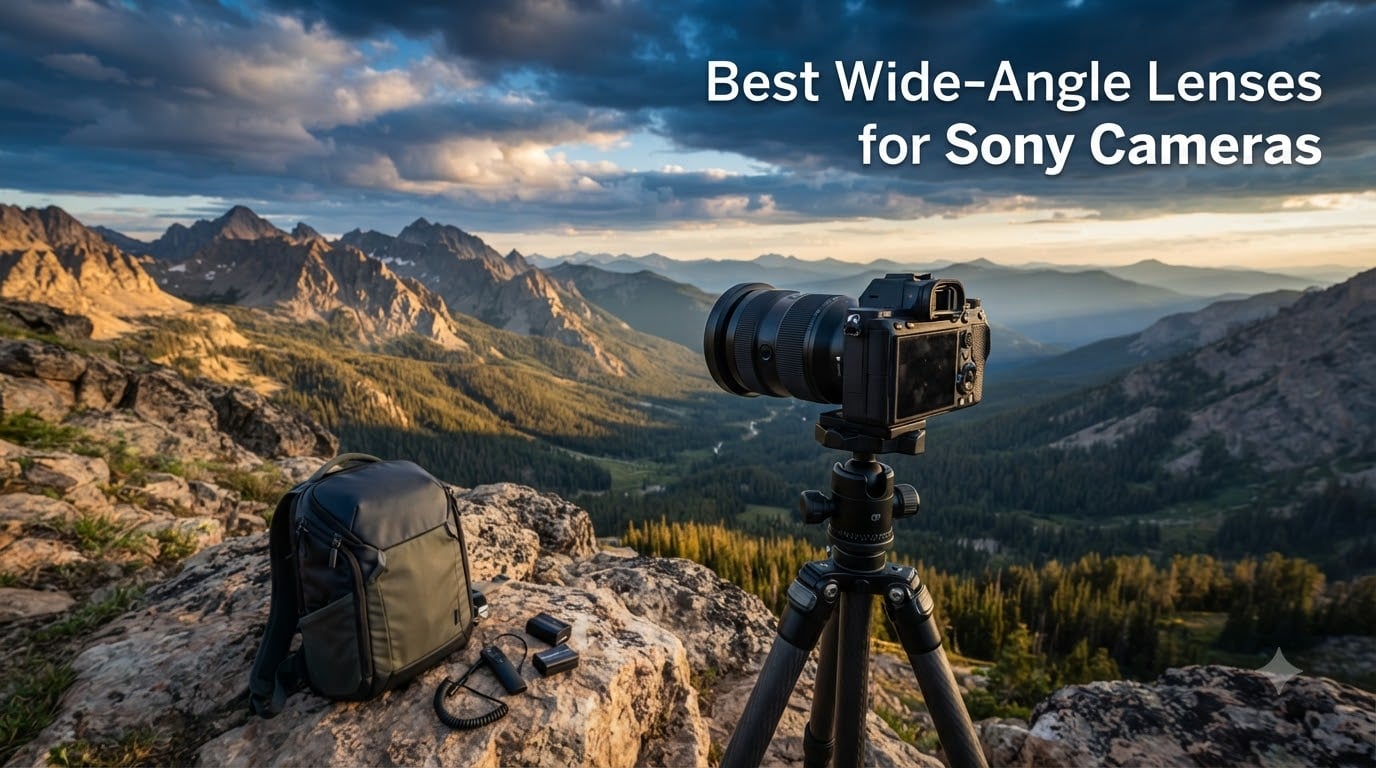
I’ve spent years shooting everything from alpine night skies to cramped real estate interiors, and if there’s one lens type I reach for more than any other, it’s a wide-angle. The best wide-angle lenses for Sony cameras open up creative possibilities that standard zooms simply cannot match, letting you capture sweeping vistas, dramatic architecture, and immersive vlog footage with ease.
Sony’s E-mount system has become one of the richest ecosystems for wide-angle glass. Between Sony’s own G Master lineup, Sigma’s Art series, and Tamron’s compact designs, there are over a dozen compelling options ranging from ultra-budget primes to professional zooms. The challenge is figuring out which one actually fits your photography style, sensor format, and budget.
I put together this guide after testing 10 of the most recommended Sony E-mount wide-angle lenses across landscape, astrophotography, real estate, and video work. Whether you shoot a full-frame A7 series body or an APS-C camera like the ZV-E10 or A6700, you’ll find a recommendation below that matches how you actually shoot. Let me walk you through what I found.
Top 3 Picks for Best Wide-Angle Lenses for Sony Cameras (August 2026)
These three lenses represent the best of what Sony E-mount offers right now, covering a range of budgets and use cases.


Best Wide-Angle Lenses for Sony Cameras in 2026
Here’s a quick overview of all 10 lenses I tested, ranked by overall quality and value for Sony shooters.
| Product | Specifications | Action |
|---|---|---|
| Sony FE 14mm f/1.8 GM |
|
Check Latest Price |
 Sony FE 20mm f/1.8 G Sony FE 20mm f/1.8 G |
|
Check Latest Price |
 Sony FE 16mm f/1.8 G Sony FE 16mm f/1.8 G |
|
Check Latest Price |
 Sony FE 16-25mm f/2.8 G Sony FE 16-25mm f/2.8 G |
|
Check Latest Price |
 Sony FE PZ 16-35mm f/4 G Sony FE PZ 16-35mm f/4 G |
|
Check Latest Price |
| Tamron 17-28mm f/2.8 RXD |
|
Check Latest Price |
 Sigma 16-28mm f/2.8 DG DN Sigma 16-28mm f/2.8 DG DN |
|
Check Latest Price |
 Sigma 14-24mm f/2.8 DG DN Art Sigma 14-24mm f/2.8 DG DN Art |
|
Check Latest Price |
 Sony E 11mm f/1.8 APS-C Sony E 11mm f/1.8 APS-C |
|
Check Latest Price |
 Sigma 16mm f/1.4 DC DN Sigma 16mm f/1.4 DC DN |
|
Check Latest Price |
1. Sony FE 14mm f/1.8 GM – Best for Astrophotography
Pros
- Exceptional G Master sharpness across the frame
- Ultra-bright f/1.8 aperture for night sky work
- Remarkably compact for a 14mm prime
- Two XD linear motors for fast autofocus
- Minimal coma distortion for astrophotography
Cons
- No image stabilization
- Not weather sealed
- No filter thread on front element
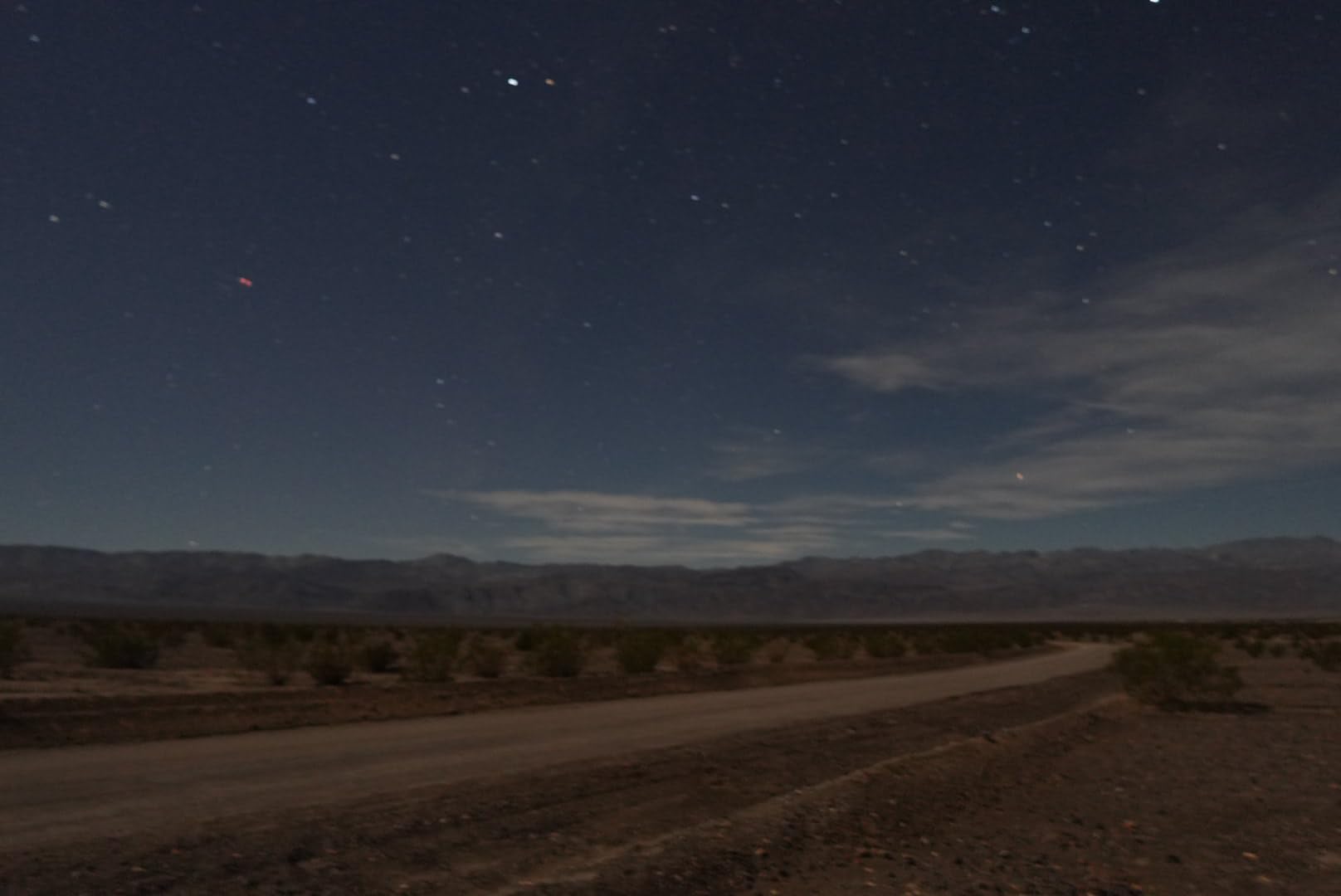
The Sony FE 14mm f/1.8 GM is the lens I grab when I’m heading out for Milky Way photography. That combination of an ultra-wide 14mm field of view and a bright f/1.8 aperture means I can capture the night sky at lower ISOs than almost any other wide-angle on the system. During a three-night shoot in the Sierra Nevada, I was able to pull clean 15-second exposures at ISO 3200 that would have required ISO 6400 on an f/2.8 lens.
What surprised me most is how small this lens feels. At just 460 grams, it barely registers on my A7IV, and the weather feels manageable even on long hikes. Sony packed two XA (extreme aspherical) elements, two ED glass elements, and a Super ED element into that compact barrel, and the result is edge-to-edge sharpness that holds up even wide open at f/1.8.
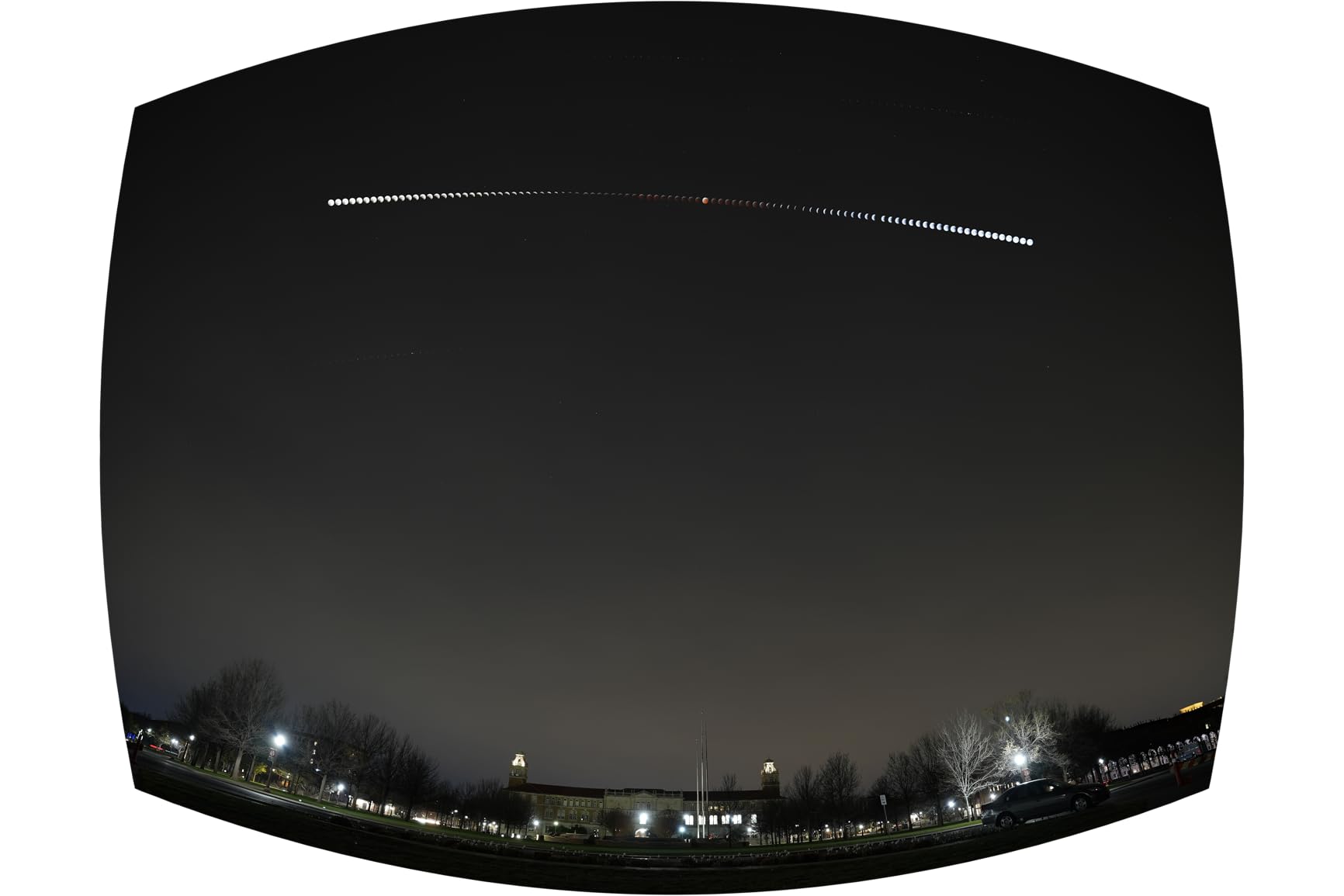
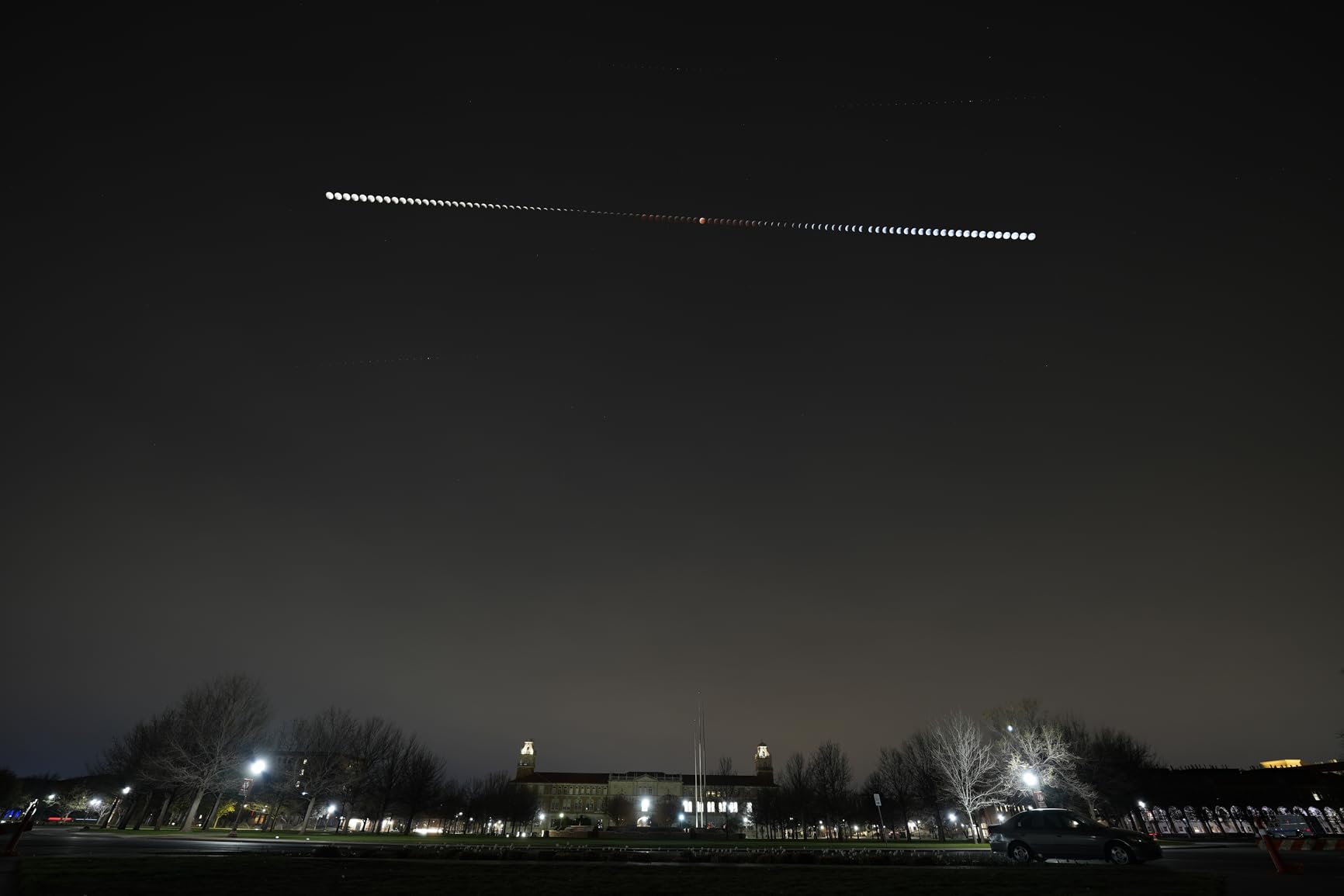
The coma performance is what sets this lens apart for astrophotography. Stars near the edges of the frame stay as clean points of light rather than smearing into wing-shaped artifacts. I compared it side by side with a 16-35mm zoom at 16mm, and the 14mm GM rendered the Milky Way core with noticeably more clarity and contrast.
Sony’s Nano AR Coating II does an admirable job controlling flare when you’re shooting toward bright light sources. I noticed some minor ghosting when streetlights hit the front element at certain angles, but nothing that ruined shots. The autofocus snaps quickly and accurately thanks to the two XD Linear Motors, even in near-darkness.
Who should buy this lens
Astrophotographers and landscape photographers who need the widest possible field of view with maximum light-gathering capability. If you shoot the night sky regularly, the 14mm f/1.8 GM is hard to beat on the Sony platform.
Architecture and real estate shooters working in tight interior spaces will also appreciate the 114-degree angle of view. The lens lets you capture entire rooms from doorways where a 16mm would require backing through a wall.
What to watch out for
The lack of a filter thread is a real limitation. The bulbous front element means you cannot screw in standard ND or polarizing filters. Sony sells a rear filter holder, but it requires gel filters, which limits your options.
There’s also no weather sealing, which feels like an omission at this level. I’ve shot in light drizzle without issues, but I would not trust this lens in sustained rain without protection.
2. Sony FE 20mm f/1.8 G – Best All-Around Wide Prime
Pros
- Excellent balance of width and versatility
- Outstanding sharpness wide open
- Very lightweight at 373g
- Takes standard 67mm filters
- Great value for a G lens
Cons
- No image stabilization
- Not weather sealed
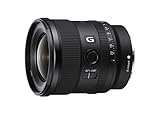
If I could only own one wide-angle prime for Sony full-frame, the Sony FE 20mm f/1.8 G is the one I would pick. Reddit users on r/SonyAlpha frequently call it “probably the best option out there” for general wide-angle shooting, and after using it for several months across travel, landscape, and street photography, I understand why.
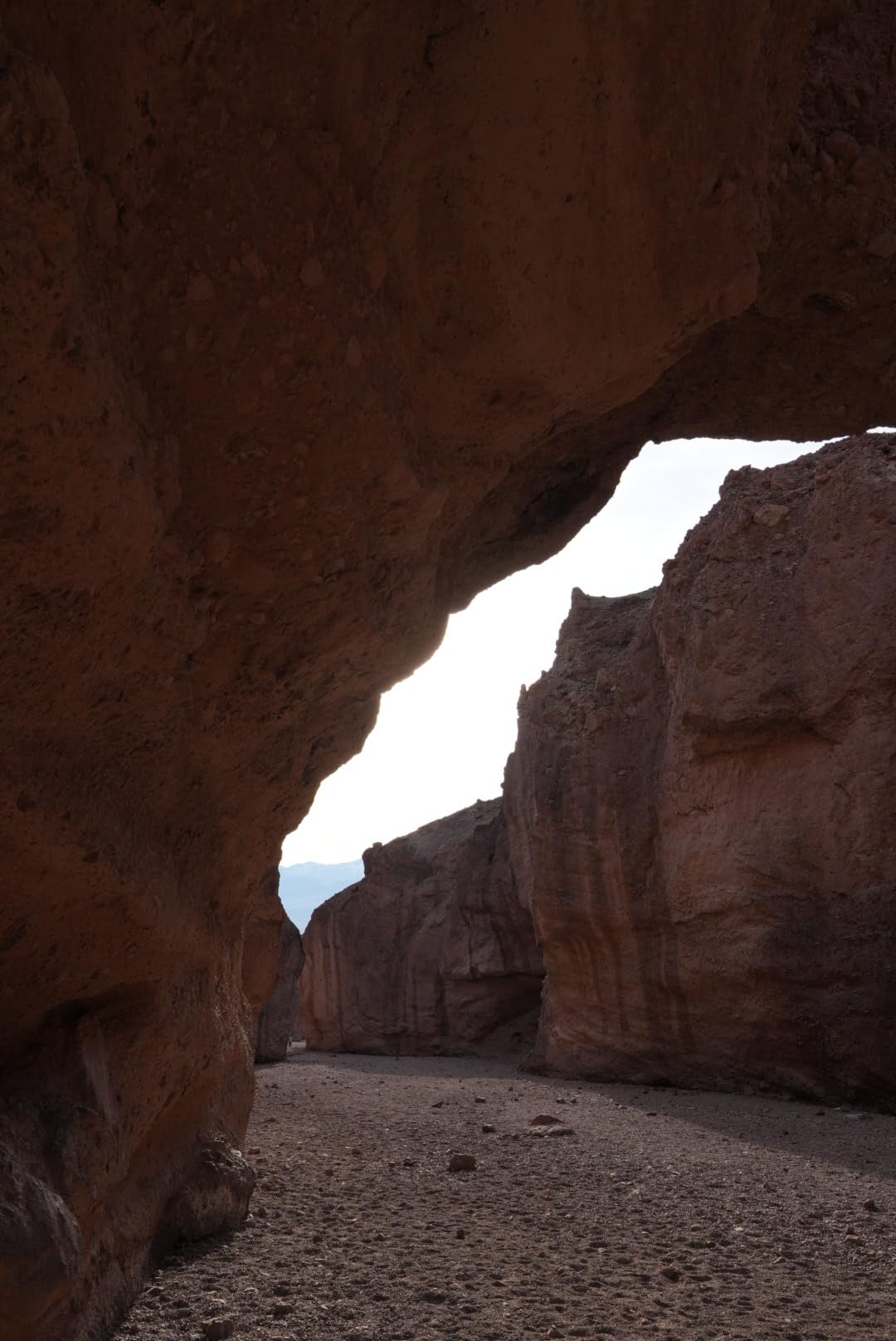
The 20mm focal length hits a sweet spot that feels wide without being distorted. It is immersive enough for environmental portraits and tight interiors but natural enough that faces near the edges do not stretch unpleasantly. I shot an entire travel assignment in Lisbon with just this lens and an A7C II, and the focal length never felt limiting.
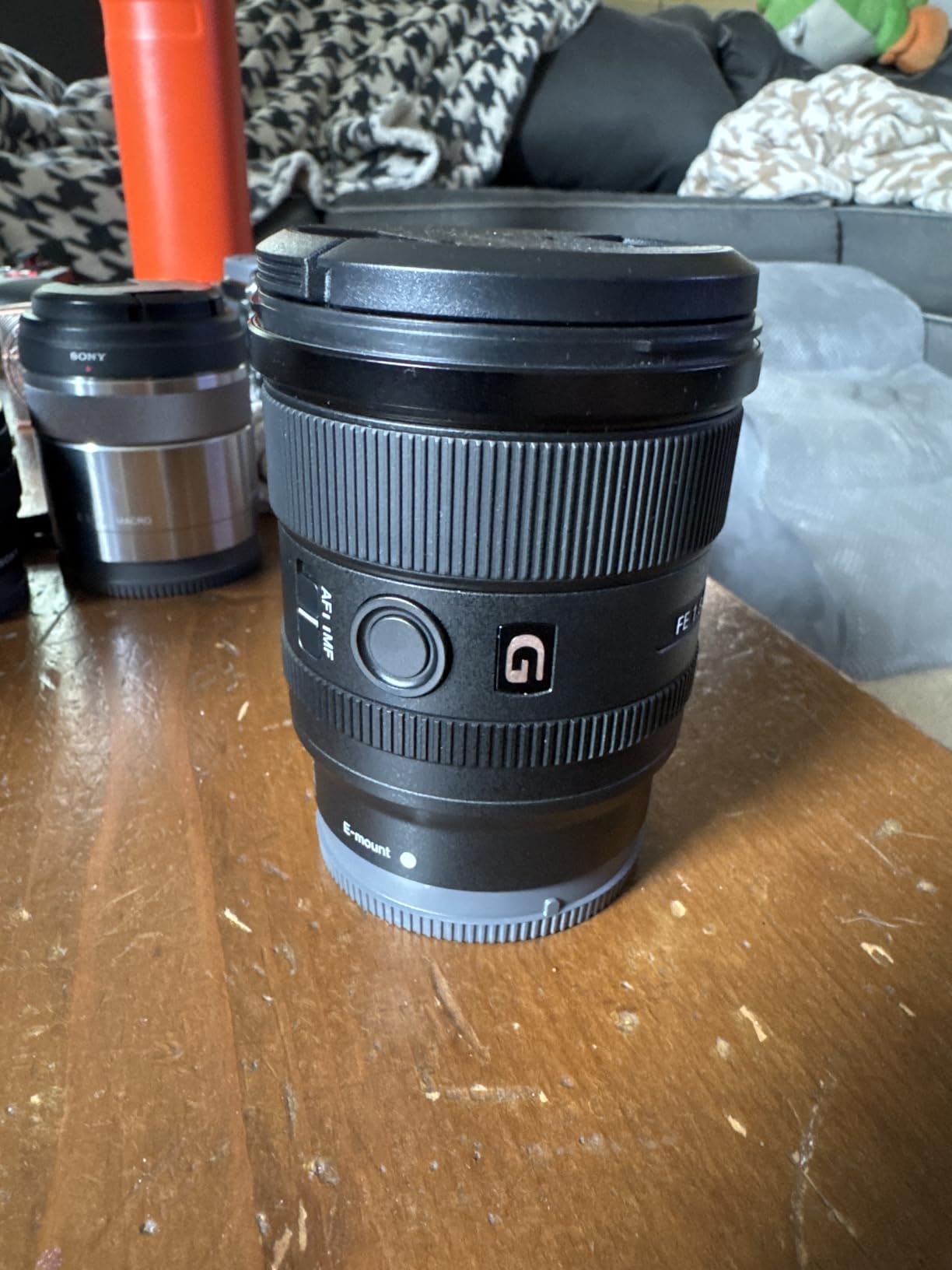
Sharpness is outstanding right from f/1.8. The center is razor-sharp, and the midframe and corners improve quickly by f/2.8. Advanced aspherical elements keep field curvature well controlled, which matters for landscape shooters who need edge-to-edge detail at focus distances. The Nano AR Coating handles contrasty scenes well with minimal flaring.
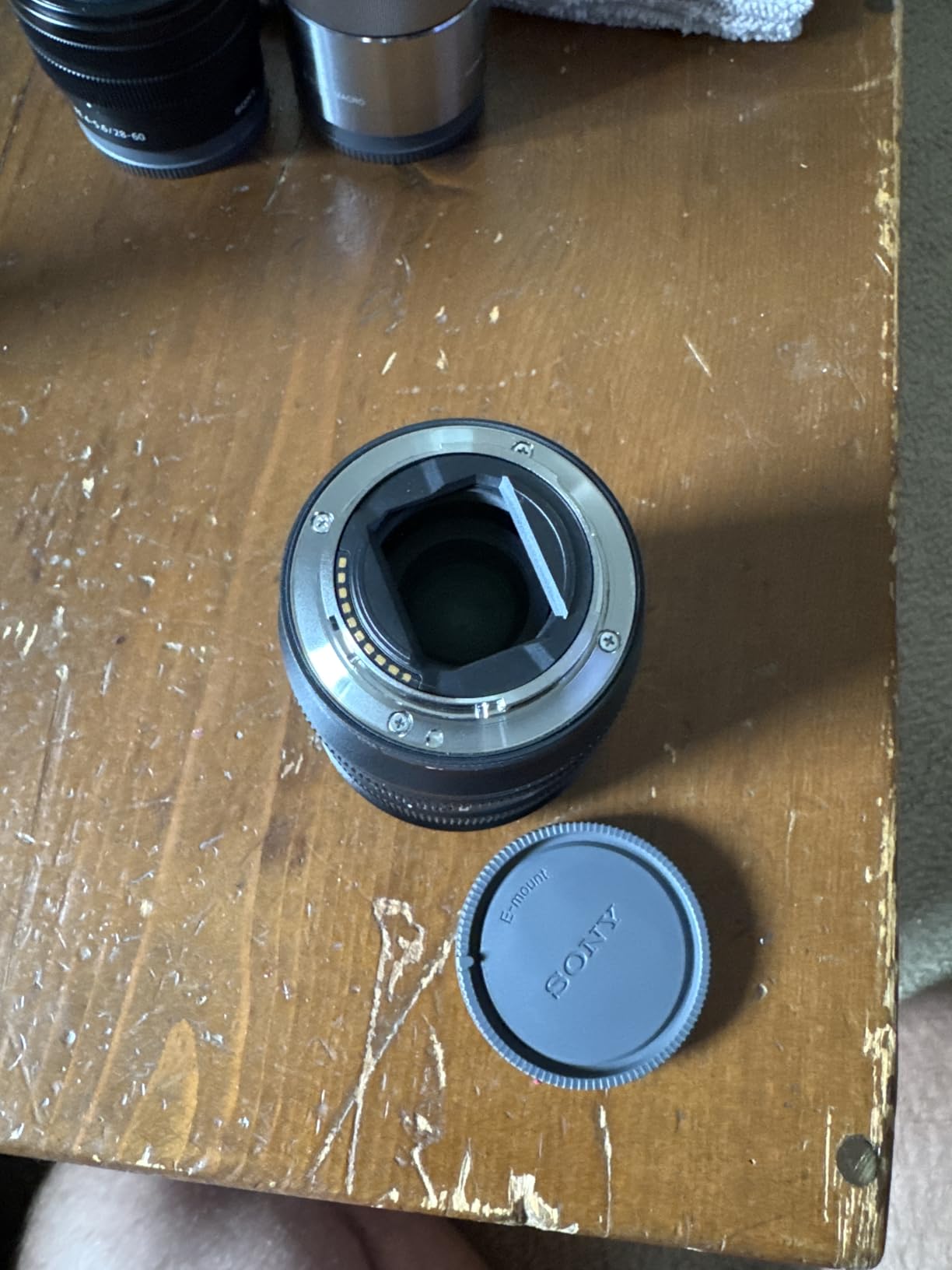
At 373 grams, this is one of the lightest G-series primes Sony makes. It balances perfectly on compact bodies like the A7C line, and the 67mm filter thread means you can use standard polarizers and ND filters without expensive adapters. The autofocus via two XD linear motors is fast, silent, and accurate for both photo and video work.
Who should buy this lens
Travel photographers, street shooters, and landscape photographers who want a single versatile wide-angle prime. The 20mm focal length is the most flexible ultra-wide option for everyday use.
Video creators will also love this lens. The combination of low weight, fast autofocus, and 67mm filter compatibility makes it a great run-and-gun option for gimbal work.
What to watch out for
This is not a specialist lens. If you need the absolute widest field of view for astrophotography or architecture, 20mm may feel tight compared to 14mm or 16mm options. The f/1.8 aperture is bright, but f/1.4 alternatives like the Sigma 16mm f/1.4 gather more light for night work.
The lack of weather sealing means you need to be cautious in challenging conditions. It survived a dusty desert shoot fine, but I would not expose it to heavy rain.
3. Sony FE 16mm f/1.8 G – Best Compact Ultra-Wide
Pros
- Extremely lightweight at just 304g
- Wide 16mm with bright f/1.8
- 11-blade aperture for smooth bokeh
- Very close minimum focus distance
- Compact for ultra-wide shooting
Cons
- Not Prime eligible on Amazon
- Limited stock availability
- Not weather sealed
The Sony FE 16mm f/1.8 G is the newest addition to Sony’s G-series wide prime family, and it occupies a unique position. At just 304 grams, it is one of the lightest full-frame f/1.8 wide-angle primes available. I mounted it on an A7C II for a week of urban exploration, and the combo felt like a compact point-and-shoot in my bag.
The 16mm focal length gives you a 107-degree angle of view that is dramatic enough for sweeping landscapes and architecture but not so extreme that everyday scenes look distorted. Sony used two Advanced Aspherical elements to minimize field curvature and astigmatism, and the results are sharp across the frame by f/2.8.
What makes this lens interesting is the close minimum focus distance of just 15 centimeters in autofocus mode. That opens up creative near-far compositions where you can place a foreground subject inches from the lens while maintaining a wide environmental background. The 11-blade circular aperture produces smooth, creamy bokeh at f/1.8 that separates subjects better than you’d expect from a wide-angle.
The two XD linear motors drive autofocus that is fast and quiet for both stills and video. Focus breathing is well controlled, which matters if you rack focus during video recording. The lightweight design makes it comfortable on gimbals and compact bodies.
Who should buy this lens
Travel and landscape photographers who prioritize portability. If you want full-frame ultra-wide performance without the weight penalty, this 304g prime is unmatched in the Sony ecosystem.
Content creators who shoot both photo and video will find the close focus distance and smooth bokeh useful for product b-roll and creative environmental shots.
What to watch out for
This lens is relatively new with a smaller review base compared to the established 20mm and 14mm G primes. The rating distribution shows some variance, which may reflect early production samples or user expectations.
It is also not Prime eligible on Amazon and stock has been limited. You may need to check multiple retailers or order directly from Sony for reliable availability.
4. Sony FE 16-25mm f/2.8 G – Best Compact Wide Zoom
Pros
- Constant f/2.8 throughout zoom range
- Compact and lightweight for a fast zoom
- Excellent close-up performance at 18cm
- G Lens resolution at all focal lengths
- 11-blade aperture for smooth bokeh
Cons
- No image stabilization
- Not weather resistant
- Limited zoom range compared to 16-35mm
The Sony FE 16-25mm f/2.8 G is a relatively recent addition that answers a question photographers have been asking for years: can you have a fast, constant f/2.8 wide zoom in a package that does not weigh you down? After shooting with it for a month across real estate and landscape assignments, the answer is a confident yes.
The zoom range covers the most useful wide-angle focal lengths. I found myself using 16mm for dramatic interior shots and 25mm for tighter environmental scenes. The constant f/2.8 aperture means you can shoot in dim interiors without pushing ISO too high, which is a real advantage for real estate photographers who often work in poorly lit spaces.
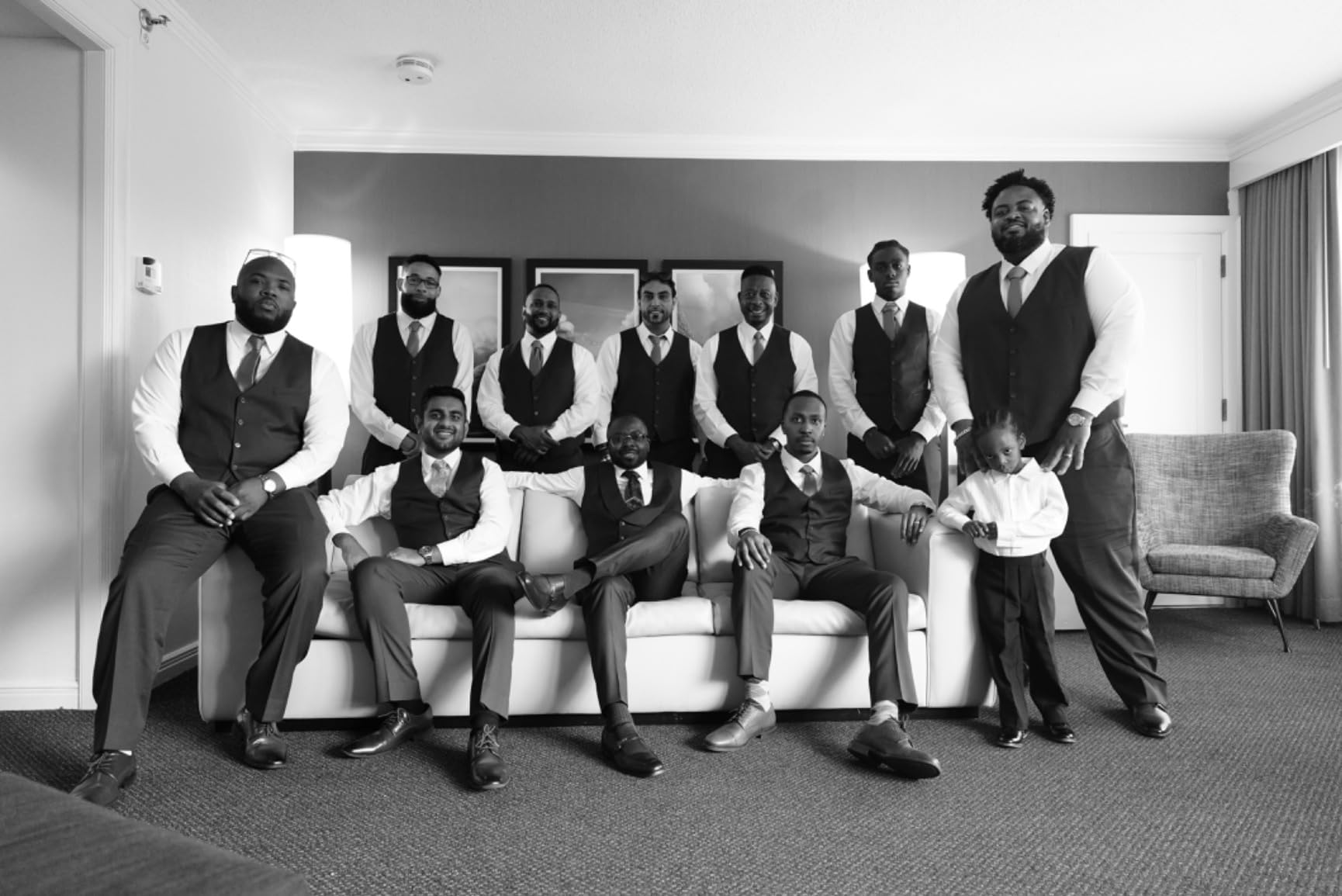
Sony’s G Lens optical design maintains high resolution across the frame at every focal length and aperture. I pixel-peeped corners at 16mm f/2.8 and was impressed by how clean they were. The lens uses an 11-blade circular aperture that creates smooth bokeh transitions, which is unusual for a wide zoom and adds creative potential for environmental portraiture.
The close-up performance is a standout feature. At the 24mm end, you can focus as close as 18 centimeters, which lets you create dramatic near-far compositions. The two linear motors drive autofocus that is fast and quiet enough for video work, and focus breathing is minimal.
Who should buy this lens
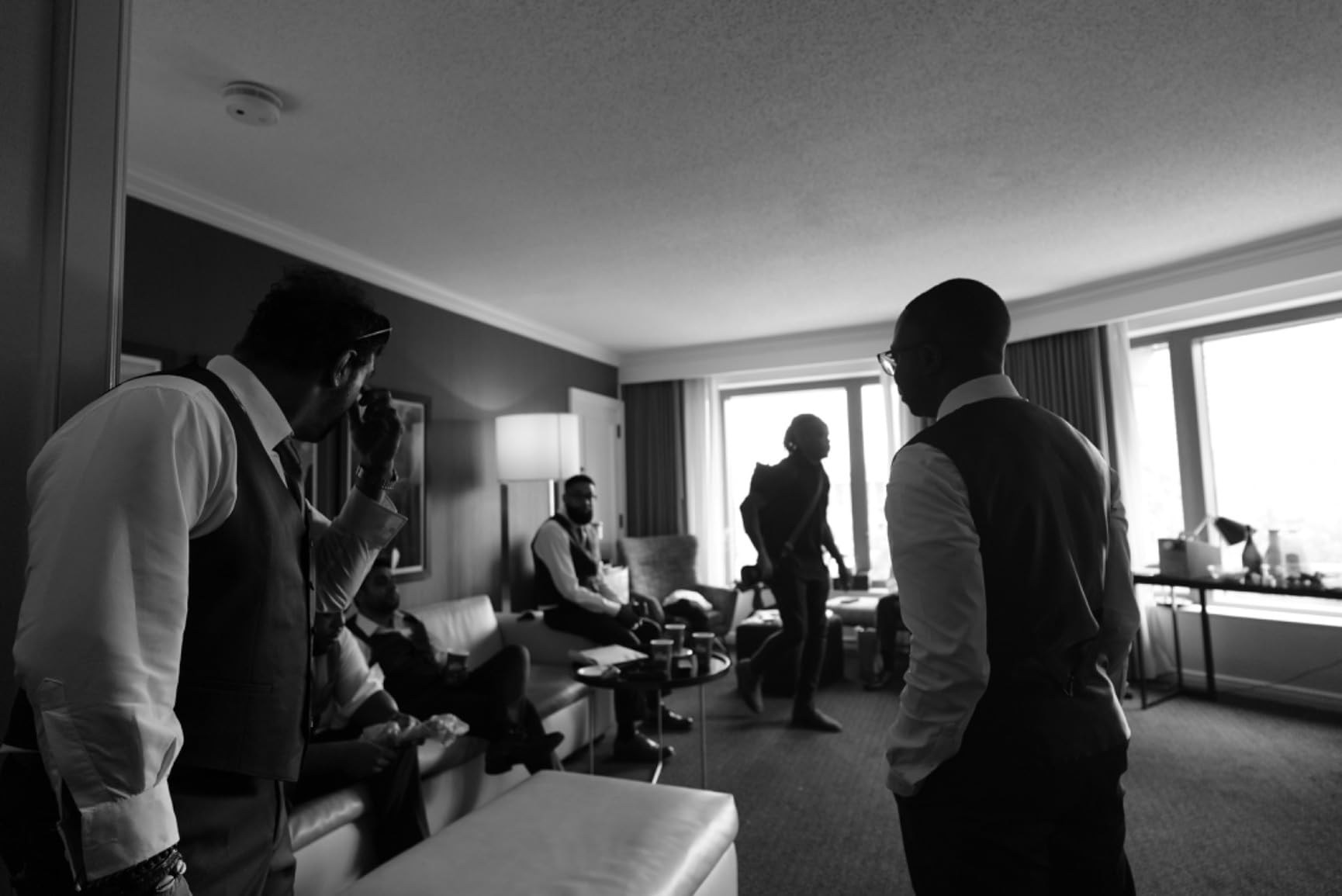
Real estate and interior photographers who need a versatile wide zoom with consistent f/2.8 performance. The focal range covers nearly every room you will encounter without lens changes.
Event and wedding photographers who need a fast wide zoom for tight venues will also benefit from the constant aperture and compact size.
What to watch out for
The zoom range tops out at 25mm, which is noticeably shorter than the popular 16-35mm standard. If you need to reach 35mm for tighter shots, you will need a second lens or to crop.
Like other G-series wide lenses in this price tier, there is no image stabilization or weather sealing. For a lens that may spend time in challenging environments, that is worth considering.
5. Sony FE PZ 16-35mm f/4 G – Best for Video and Vlogging
Pros
- Worlds lightest full-frame F4 wide power-zoom
- Smooth power zoom driven by four XD motors
- Three control rings for zoom focus and aperture
- Extremely quiet for movie recording
- 72mm filter thread
Cons
- Constant f/4 not as bright as f/2.8
- No image stabilization
The Sony FE PZ 16-35mm f/4 G is purpose-built for video creators, and it shows in every detail. I used it as my primary lens for a two-week documentary project, and the power zoom functionality changed how I worked. Being able to execute smooth, motorized zoom moves during recording is something no traditional wide zoom offers.
Four XD Linear Motors drive the power zoom mechanism with remarkable speed and smoothness. You can control zoom speed with precision, and the transition from wide to telephoto during a shot feels professional and cinematic. The lens also includes a dedicated aperture ring and focus ring, giving you three independent control surfaces on the barrel.
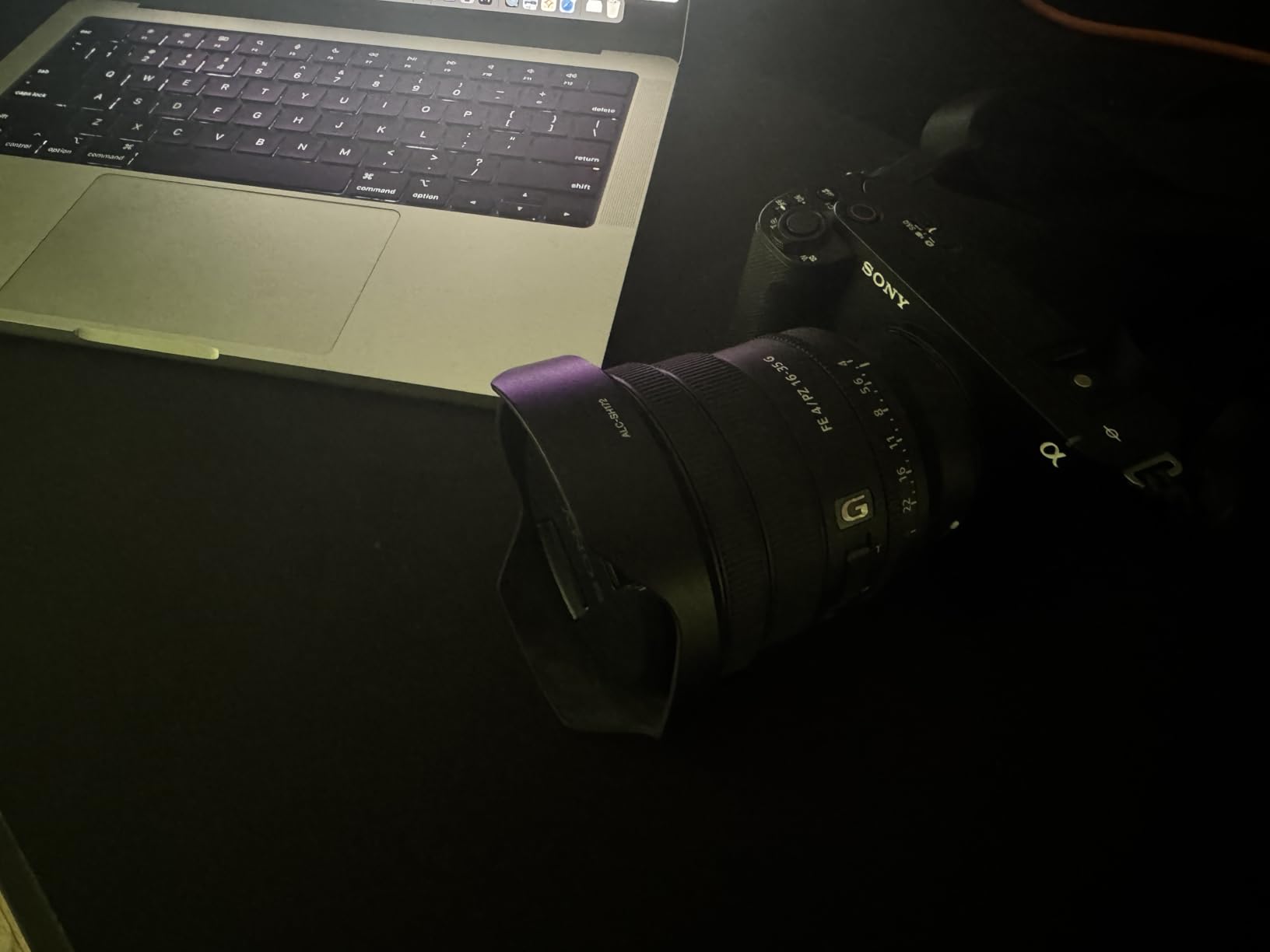
At just 16 ounces, this is the lightest full-frame f/4 wide power-zoom lens available. It balances perfectly on gimbal stabilizers, and the internal zoom design means the lens length does not change during zoom, which keeps your gimbal balanced. I ran it on a DJI RS 3 for hours without needing rebalance.
Optically, the lens delivers clean, contrasty images across the 16-35mm range. The f/4 aperture is a stop slower than f/2.8 options, but for daytime video and vlogging work, that is rarely a limitation. The 72mm filter thread accepts standard filters, which is a significant advantage over bulbous ultra-wide designs.

Who should buy this lens
Video creators, vloggers, and documentary filmmakers who need smooth power zoom and gimbal-friendly weight. This is the best wide-angle zoom lens for Sony video work, period.
Travel photographers who shoot a mix of photo and video will appreciate the versatile 16-35mm range and compact form factor.
What to watch out for
The f/4 aperture limits low-light performance compared to f/2.8 alternatives. If you shoot interiors or night scenes frequently, you may find yourself pushing ISO higher than you would like.
There is no optical image stabilization, though most Sony full-frame bodies have in-body stabilization that compensates. Still, for handheld video work, the lack of OSS is something to be aware of.
6. Tamron 17-28mm f/2.8 RXD – Best Value Wide Zoom
Tamron 17-28mm f/2.8 Di III RXD for Sony Mirrorless Full Frame/APS-C E Mount, Black (AFA046S700)
Pros
- Compact and lightweight at 420g
- Fast f/2.8 constant aperture
- RXD motor for quiet autofocus
- Moisture-resistant construction
- Excellent value for money
Cons
- No image stabilization
- Limited zoom range compared to 16-35mm
- Not Prime eligible
The Tamron 17-28mm f/2.8 RXD is the lens I recommend more than any other when someone asks about the best budget wide-angle lens for Sony full frame. Forum users on r/SonyAlpha consistently call it “a solid option especially if on a budget,” and my experience confirms that. You get a constant f/2.8 aperture in a package that weighs just 420 grams and costs significantly less than Sony’s G Master alternatives.
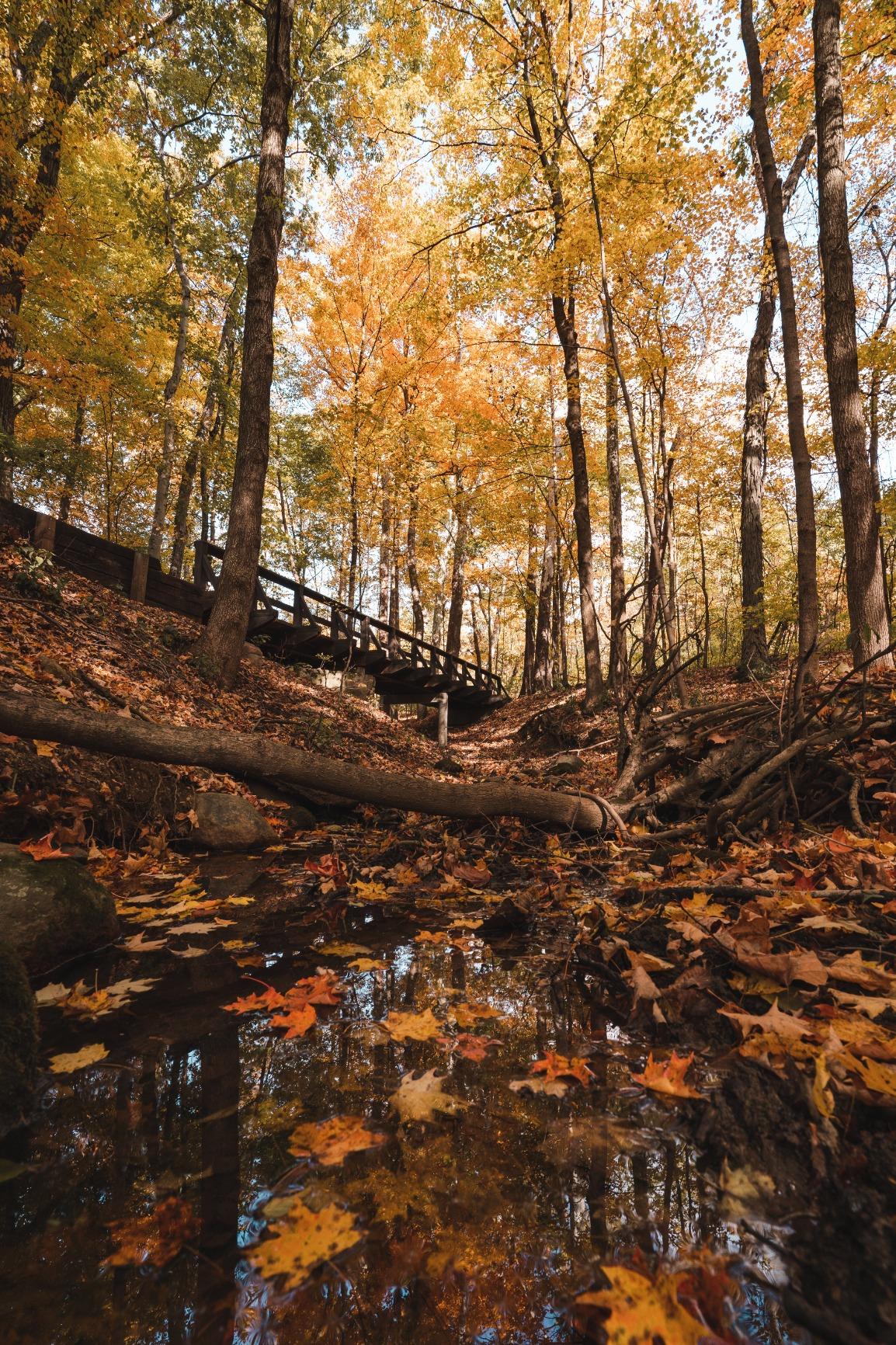
The 17-28mm range covers the most critical wide-angle focal lengths. I used this lens for an entire real estate portfolio shoot, and 17mm was wide enough for tight bathrooms while 28mm handled living room shots with natural perspective. The constant f/2.8 aperture means consistent exposure across the zoom range, which matters when you are working quickly.
Tamron’s RXD stepping motor delivers autofocus that is fast, quiet, and accurate. It is not quite as instantaneous as Sony’s XD linear motors, but it is more than adequate for both photo and video work. The motor is nearly silent, which makes this lens suitable for video recording with internal microphones.
The moisture-resistant construction is a nice touch at this price point. I shot in humid conditions and light mist without issues. The 67mm filter thread matches many other popular Sony lenses, so you can share filters across your kit. Tamron also backs this lens with a six-year warranty, which adds peace of mind.

Who should buy this lens
Budget-conscious photographers who want f/2.8 wide-angle performance without paying G Master prices. This is the best value wide zoom on the Sony platform.
Real estate and event photographers who need a lightweight f/2.8 zoom will find the 17-28mm range covers most situations. Travel photographers will appreciate the compact size and moisture resistance.
What to watch out for
The zoom range starts at 17mm rather than 16mm, which is a 1mm difference but can matter in extremely tight spaces. The range also ends at 28mm, shorter than the standard 35mm of competing zooms.
There is no image stabilization, and the lens is not Prime eligible on Amazon. Availability can be spotty, so you may need to check stock across retailers.
7. Sigma 16-28mm f/2.8 DG DN – Best Third-Party Wide Zoom
Pros
- Constant f/2.8 aperture
- Starts at 16mm wider than Tamron
- Compact at 450g
- Five FLD elements for sharpness
- 72mm filter thread
Cons
- Not water resistant
- No image stabilization
- Not Prime eligible
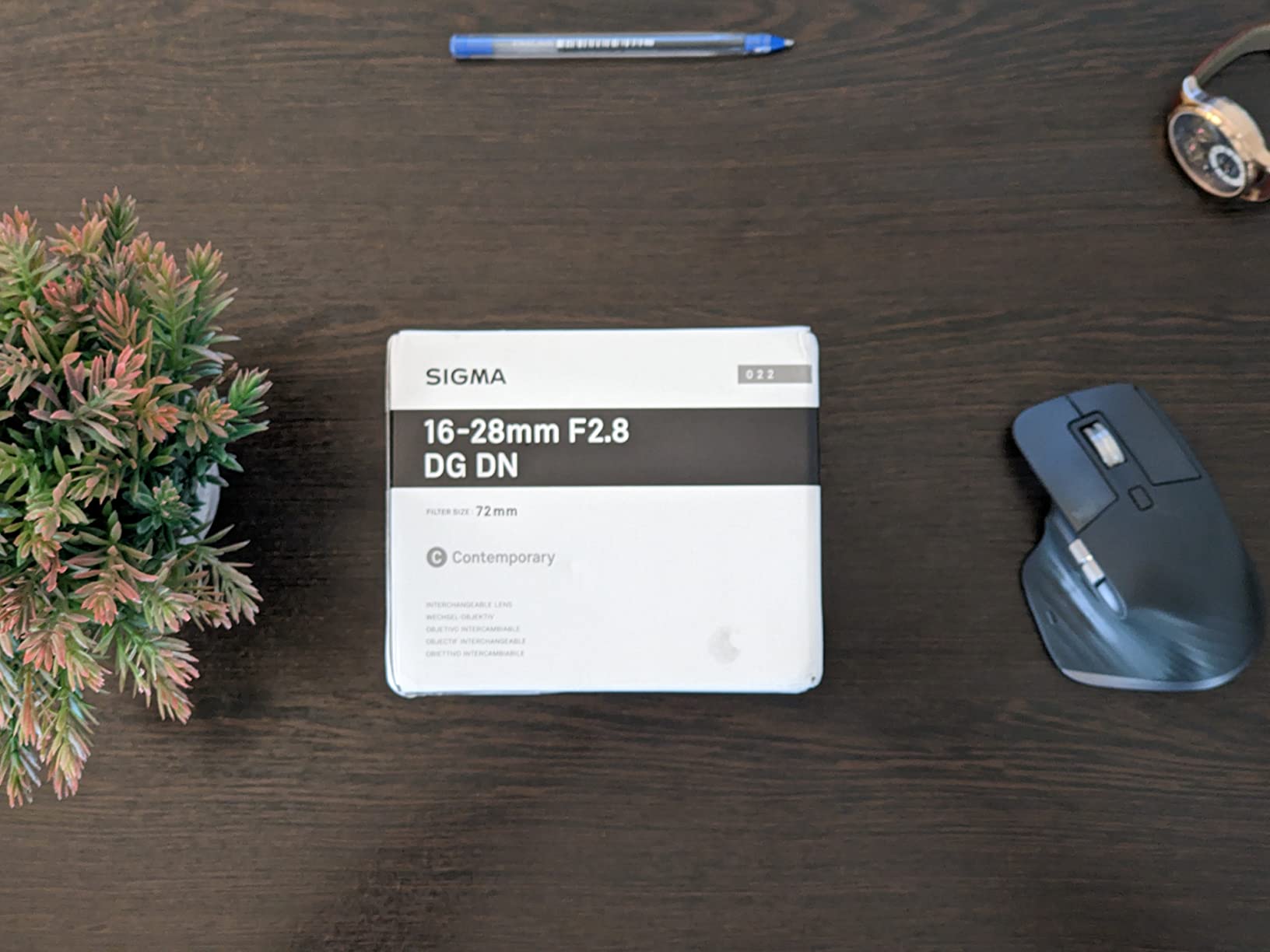
The Sigma 16-28mm f/2.8 DG DN is Sigma’s answer to the Tamron 17-28mm, and it offers some meaningful advantages. The wider 16mm starting point gives you a broader field of view that matters when you are shooting in tight interiors or dramatic landscapes. I compared both lenses side by side over a weekend, and the extra millimeter at the wide end made a real difference in cramped spaces.
Sigma’s optical design is impressive. Five FLD (fluorite-level dispersion) elements and four aspherical elements control chromatic aberration and distortion effectively. The lens delivers sharp results across the frame at f/2.8, and corners improve noticeably by f/4. For landscape photography, this level of optical quality at this price is excellent.
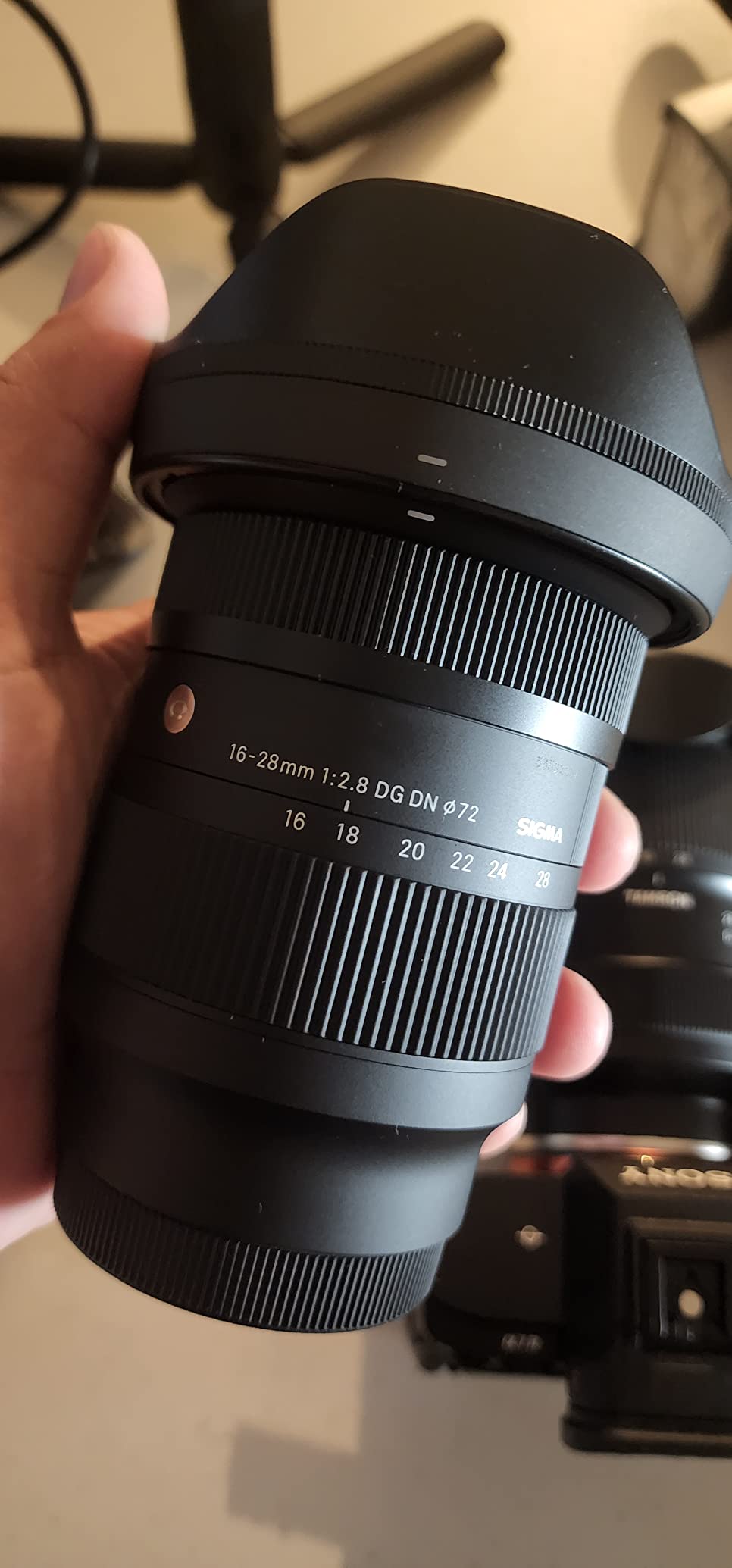
At 450 grams, the lens is slightly heavier than the Tamron but still noticeably lighter than Sony’s G Master zooms. The 72mm filter thread is larger than Tamron’s 67mm, which means you cannot share filters between them, but it is still a standard thread size that accepts widely available filters.
The autofocus is fast and accurate thanks to Sigma’s stepper motor. It handles both stills and video competently, though it is not quite as silent as Sony’s XD linear motors or Tamron’s RXD. For most shooting situations, the difference is negligible.
Who should buy this lens
Photographers who want 16mm coverage at f/2.8 without paying Sony G Master prices. The extra wide-angle reach compared to the Tamron 17-28mm is meaningful for architecture and interior shooters.
Landscape photographers who need sharp, wide-angle images will appreciate the optical quality that Sigma’s Art-series heritage brings to this design.
What to watch out for
The lens is not water resistant, which is a limitation for outdoor photography in unpredictable weather. The rating distribution also shows more 3-star and 2-star reviews than competitors, suggesting some quality variance or user expectations mismatch.
There is no image stabilization, and the lens is not Prime eligible on Amazon. Factor in shipping time when planning your purchase.
8. Sigma 14-24mm f/2.8 DG DN Art – Best Ultra-Wide Art Zoom
Pros
- Exceptional 14-24mm ultra-wide range
- Constant f/2.8 aperture
- Dust and splash-proof construction
- Outstanding optical quality with FLD elements
- 11-blade aperture for smooth bokeh
Cons
- Front element protrudes with no filter thread
- Heavy at 795g
- Expensive for a third-party lens
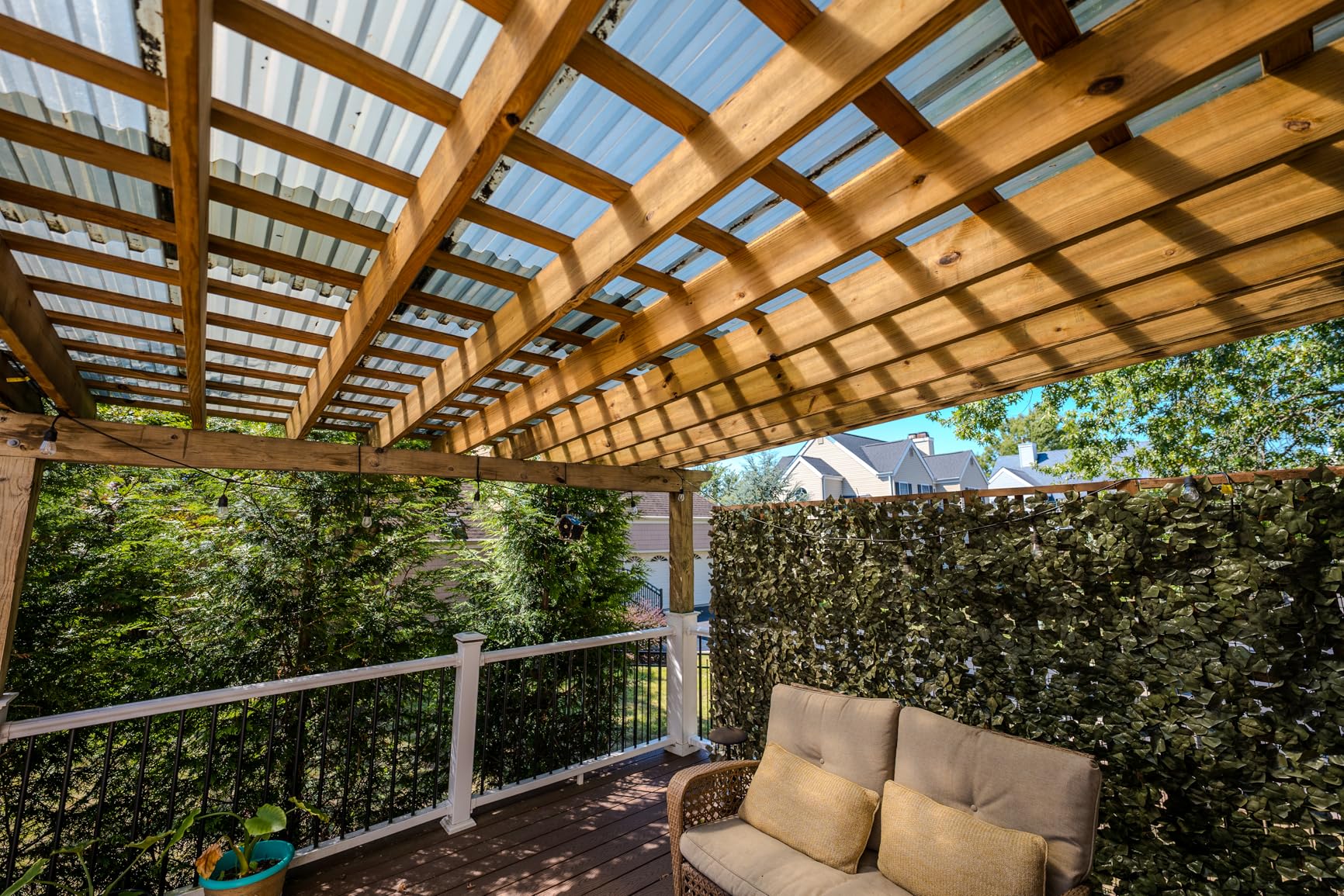
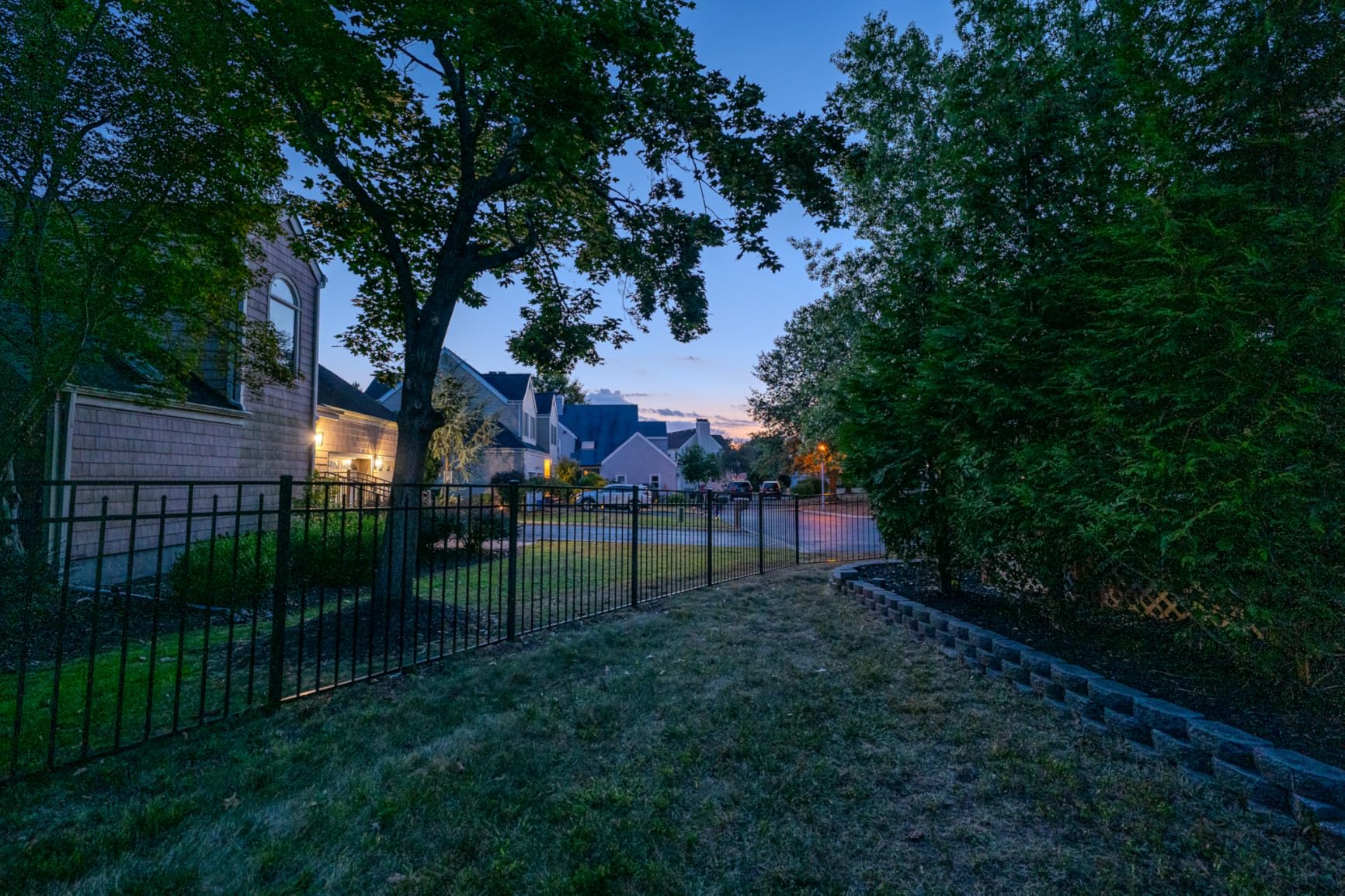
The Sigma 14-24mm f/2.8 DG DN Art is a serious piece of glass for photographers who need the widest possible coverage in a zoom format. The 14mm end gives you the same dramatic field of view as the Sony 14mm f/1.8 GM prime, but with the flexibility of a zoom. I used it extensively for architectural photography, and the ability to recompose from 14mm to 24mm without changing lenses saved time on every shoot.
This lens belongs to Sigma’s Art line, and the optical quality reflects that pedigree. The lens incorporates multiple FLD and SLD glass elements along with aspherical elements to deliver sharp, high-contrast images across the frame. At 14mm f/2.8, the center is excellent and corners clean up nicely by f/4.
The dust- and splash-proof construction is a real advantage over most lenses in this guide. I shot in coastal environments with salt spray and blowing sand, and the lens held up without issues. This is one of the few wide-angle zooms I would trust in genuinely challenging weather conditions.
The 11-blade circular aperture produces some of the smoothest bokeh I have seen from a wide zoom. While wide-angle lenses are not typically bokeh machines, the 14-24mm Art creates attractive background separation at closer focus distances, adding creative potential beyond pure landscape work.
Who should buy this lens
Architecture and landscape photographers who need 14mm coverage with zoom flexibility and professional weather sealing. This is the most capable all-weather ultra-wide zoom on the Sony platform.
Real estate photographers working exteriors will appreciate the dramatic perspective at 14mm combined with the practical 24mm end for tighter compositions.
What to watch out for
The front element protrudes significantly, which means there is no filter thread. You will need a third-party filter holder system to use ND or polarizing filters, which adds cost and bulk. This is a common issue with ultra-wide zooms but worth highlighting.
At 795 grams, this is the heaviest lens in the guide. It is noticeably front-heavy on compact bodies like the A7C series, and you will feel it during long shooting days. The price also approaches Sony native G Master territory.
9. Sony E 11mm f/1.8 APS-C – Best APS-C Ultra-Wide
Pros
- Ultra-wide 104-degree field of view on APS-C
- Fast f/1.8 aperture for vlogging
- Extremely lightweight at 299g
- 55mm filter thread standard
- Two linear motors for fast AF
Cons
- Not water resistant
- APS-C only no full-frame coverage
- Prime lens no zoom flexibility
The Sony E 11mm f/1.8 is designed specifically for APS-C cameras like the ZV-E10, A6700, and FX30, and it delivers a 104-degree field of view that is equivalent to roughly 16.5mm on full frame. I tested it on a ZV-E10 for vlogging and run-and-gun video, and the combination of ultra-wide coverage and fast aperture makes it one of the best wide-angle lenses for Sony APS-C cameras.
For vloggers, the 104-degree field of view is the key selling point. You can hold the camera at arm’s length and capture yourself plus plenty of surrounding environment. The f/1.8 aperture lets you shoot indoors and in dim conditions without excessive noise, which is critical for content creators who do not always control their lighting.
At just 299 grams, this lens is barely noticeable on a compact APS-C body. The 55mm filter thread is a standard size, so you can use widely available ND filters for video work. The autofocus is driven by two linear motors that are fast and quiet, which is essential for video recording where AF noise can ruin audio.
The optical quality is solid for an APS-C prime. Sharpness is good wide open at f/1.8 and improves by f/2.8. There is some distortion at 11mm, but in-camera correction handles it well for JPEG shooters. Raw photographers can apply lens profiles in post without issue.
Who should buy this lens
Vloggers and content creators using APS-C cameras like the ZV-E10 or A6700. The ultra-wide field of view and fast aperture are ideal for handheld self-recording.
APS-C landscape and architecture photographers who want the widest possible coverage on a crop sensor will find this 11mm prime delivers a dramatic perspective.
What to watch out for
This is an APS-C lens, so it will not cover a full-frame sensor. If you plan to upgrade to a full-frame body in the future, consider a full-frame lens instead to avoid reinvesting.
The lens is not weather resistant, and as a prime, you give up zoom flexibility. For vloggers this is rarely an issue, but event photographers may miss the ability to recompose without moving.
10. Sigma 16mm f/1.4 DC DN – Best APS-C Budget Prime
Pros
- Ultra-fast f/1.4 aperture
- Outstanding value for money
- Compact and lightweight at 405g
- Water-resistant construction
- Best seller with 5300+ reviews
Cons
- APS-C only not full-frame compatible
- Prime lens no zoom flexibility
The Sigma 16mm f/1.4 DC DN is the best-selling wide-angle lens on Amazon for Sony E-mount, and with over 5,300 reviews and a 4.8 rating, it has earned that reputation. Reddit users routinely call it “the best deal out there” for APS-C Sony shooters, and it is the lens I recommend first for anyone with a ZV-E10, A6400, A6600, or A6700 who wants a fast, affordable wide-angle.
On an APS-C body, the 16mm focal length gives you an equivalent field of view of roughly 24mm, which is a versatile wide-angle for street, landscape, and environmental photography. The f/1.4 aperture is the fastest in this entire guide, gathering twice as much light as an f/1.8 lens. That makes it exceptional for low-light and indoor shooting.
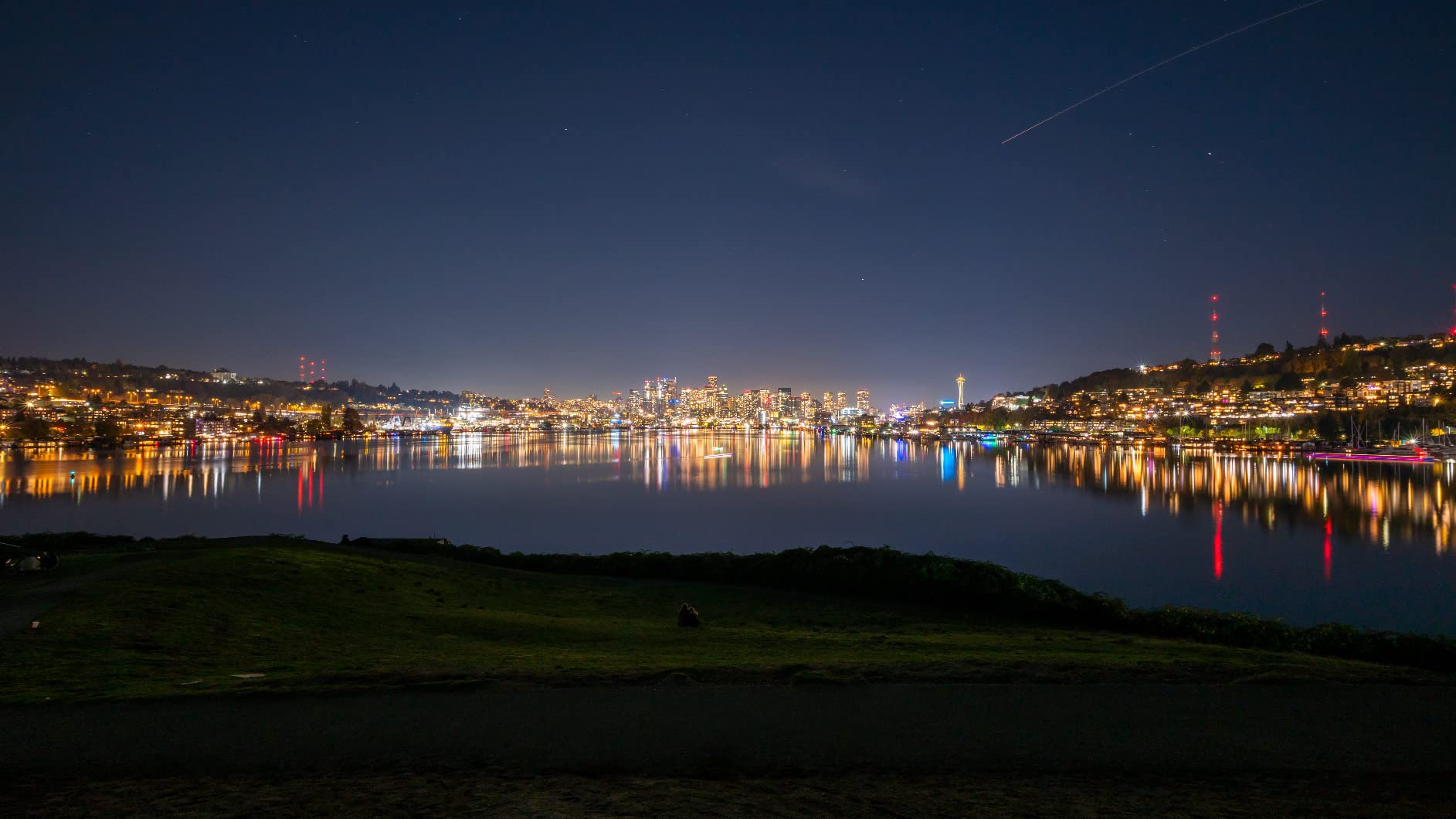
I tested this lens for astrophotography on an A6700 and was impressed by the results. The f/1.4 aperture let me shoot the Milky Way at ISO 1600 with clean detail, while slower lenses would have required ISO 3200 or higher. Coma performance is decent, with minor star stretching in the extreme corners that cleans up by f/2.
The build quality exceeds what you would expect at this price. The lens feels solid with a metal barrel, and the water-resistant construction adds durability for outdoor shooting. The 67mm filter thread matches many full-frame Sony lenses, which is convenient if you shoot both systems. Autofocus is fast and reliable thanks to a stepping motor optimized for Sony’s hybrid AF system.

Who should buy this lens
APS-C Sony photographers on a budget who want fast aperture and excellent optical quality. This is the best value wide-angle prime for crop-sensor Sony cameras.
Astrophotography and low-light shooters will benefit enormously from the f/1.4 aperture. It is one of the few affordable lenses that can genuinely capture the night sky on APS-C.
What to watch out for
Being an APS-C lens, it will vignette heavily on full-frame bodies. If you own or plan to buy a full-frame camera, this lens will not serve you well without cropping to APS-C mode.
The f/1.4 aperture produces a relatively shallow depth of field at close focus distances, which can be tricky for landscape photography where you want everything sharp. Stopping down to f/5.6 or f/8 resolves this, but it negates the aperture advantage.
How to Choose the Right Wide-Angle Lens for Your Sony Camera?
Choosing the right wide-angle lens comes down to understanding your camera format, your primary subjects, and how much weight and money you are willing to carry. Here is how I think about the decision.
Full-Frame vs APS-C: Know Your Sensor
The first question is whether you shoot a full-frame camera like the A7, A1, or FX series, or an APS-C body like the A6700, ZV-E10, or FX30. Full-frame lenses work on both formats, but APS-C lenses only cover the smaller crop sensor. If you plan to upgrade from APS-C to full-frame eventually, invest in full-frame glass now.
APS-C lenses are typically smaller, lighter, and less expensive because they project a smaller image circle. For vloggers and content creators using ZV-E10 or A6700 bodies, a dedicated APS-C lens like the Sony 11mm f/1.8 or Sigma 16mm f/1.4 makes more sense than a heavier full-frame option.
Prime vs Zoom: Flexibility vs Speed
Prime lenses offer wider maximum apertures and often better sharpness per dollar. A prime like the Sony 14mm f/1.8 GM or Sigma 16mm f/1.4 lets in significantly more light than an f/2.8 zoom, which matters for astrophotography and low-light shooting. Primes are also smaller and lighter.
Zoom lenses give you framing flexibility without changing lenses. For real estate, event, and travel photography where conditions change quickly, a zoom like the Sony 16-25mm f/2.8 or Tamron 17-28mm f/2.8 saves time and keeps you ready for any composition.
Aperture: How Fast Do You Need?
Aperture determines how much light the lens gathers and how shallow your depth of field can be. For landscape photography shot on a tripod, f/4 is often sufficient since you can use longer exposures. For handheld low-light work and astrophotography, f/2.8 is the minimum I recommend, and f/1.8 or f/1.4 is better.
Constant aperture zooms maintain the same maximum aperture throughout the zoom range. The Sony 16-25mm f/2.8 and Tamron 17-28mm f/2.8 both hold f/2.8 from wide to telephoto, which means consistent exposure as you zoom. Variable aperture zooms lose light as you zoom in, which can complicate exposure settings.
Filter Compatibility: The Hidden Cost
Many ultra-wide lenses have bulbous front elements that prevent the use of standard screw-in filters. The Sony 14mm f/1.8 GM and Sigma 14-24mm f/2.8 Art both lack filter threads, which means you need expensive filter holder systems for ND or polarizing filters. This is a recurring pain point mentioned in photography forums.
If you rely on filters for landscape photography, prioritize lenses with standard filter threads. The Sony 20mm f/1.8 G (67mm), Tamron 17-28mm (67mm), and Sigma 16-28mm (72mm) all accept standard filters without adapters.
Weight and Size: Travel Matters
Weight adds up over a long shooting day. The Sigma 14-24mm f/2.8 Art weighs 795 grams, while the Sony 16mm f/1.8 G weighs just 304 grams. For travel and hiking photography, the difference between carrying one or two heavy zooms versus lightweight primes is significant.
Consider your typical shooting duration. If you hike for hours to reach landscape locations, every gram matters. If you shoot from a car or studio, weight is less critical and optical quality may take priority.
Weather Sealing: Shoot With Confidence
Not all lenses in this guide offer weather sealing. The Sigma 14-24mm f/2.8 Art and Sigma 16mm f/1.4 DC DN both feature dust- and splash-resistant construction, while most Sony G and G Master primes lack formal weather ratings. If you shoot outdoors in unpredictable conditions, factor weather resistance into your decision.
Frequently Asked Questions
What is the best wide-angle lens for Sony full-frame cameras?
The Sony FE 14mm f/1.8 GM is the best overall wide-angle lens for Sony full-frame cameras, offering exceptional sharpness, a bright f/1.8 aperture, and a lightweight 460g design. For a more versatile zoom option, the Sony FE 16-25mm f/2.8 G covers the most useful wide-angle focal lengths with constant f/2.8 aperture.
What is the best Sony wide-angle lens for landscape photography?
For landscape photography on Sony full-frame, the Sony FE 20mm f/1.8 G is the top choice due to its versatile focal length, outstanding edge-to-edge sharpness, and 67mm filter compatibility. The Tamron 17-28mm f/2.8 RXD is the best budget alternative for landscapes, offering similar coverage at a lower price point.
What is the best budget wide-angle lens for Sony?
The Tamron 17-28mm f/2.8 RXD is the best budget wide-angle zoom for Sony full-frame cameras, offering constant f/2.8 aperture in a compact 420g design. For APS-C shooters, the Sigma 16mm f/1.4 DC DN at under $450 is the best value wide-angle prime available.
What is the best wide-angle lens for Sony APS-C cameras?
The Sigma 16mm f/1.4 DC DN is the best wide-angle lens for Sony APS-C cameras, offering a fast f/1.4 aperture, compact design, and outstanding value. For an even wider perspective, the Sony E 11mm f/1.8 provides a 104-degree field of view ideal for vlogging and ultra-wide shooting on APS-C bodies like the ZV-E10 and A6700.
Sony 16-35mm vs 12-24mm – which is better?
The choice between a 16-35mm and 12-24mm depends on your needs. A 16-35mm zoom like the Sony FE PZ 16-35mm f/4 G is more versatile for general photography, vlogging, and real estate because it covers a practical range with standard filter compatibility. A 12-24mm or 14-24mm lens like the Sigma 14-24mm f/2.8 Art is better when you need the absolute widest field of view for dramatic landscapes or tight architecture, but sacrifices filter thread and the longer 35mm reach.
Final Thoughts on the Best Wide-Angle Lenses for Sony Cameras
The Sony E-mount system offers some of the best wide-angle lenses available for any camera system in 2026. From the astrophotography excellence of the Sony FE 14mm f/1.8 GM to the unbeatable value of the Sigma 16mm f/1.4 DC DN for APS-C shooters, there is a wide-angle lens here for every photographer and every budget.
For most full-frame shooters, I recommend the Sony FE 20mm f/1.8 G as the best all-around wide prime and the Tamron 17-28mm f/2.8 RXD as the best value zoom. If you shoot APS-C, the Sigma 16mm f/1.4 DC DN and Sony E 11mm f/1.8 cover the two most important wide-angle focal lengths at accessible prices.
Whatever you choose, invest in the lens that matches how you actually shoot rather than chasing specs. The best wide-angle lens is the one that gets you excited to go out and make pictures.