
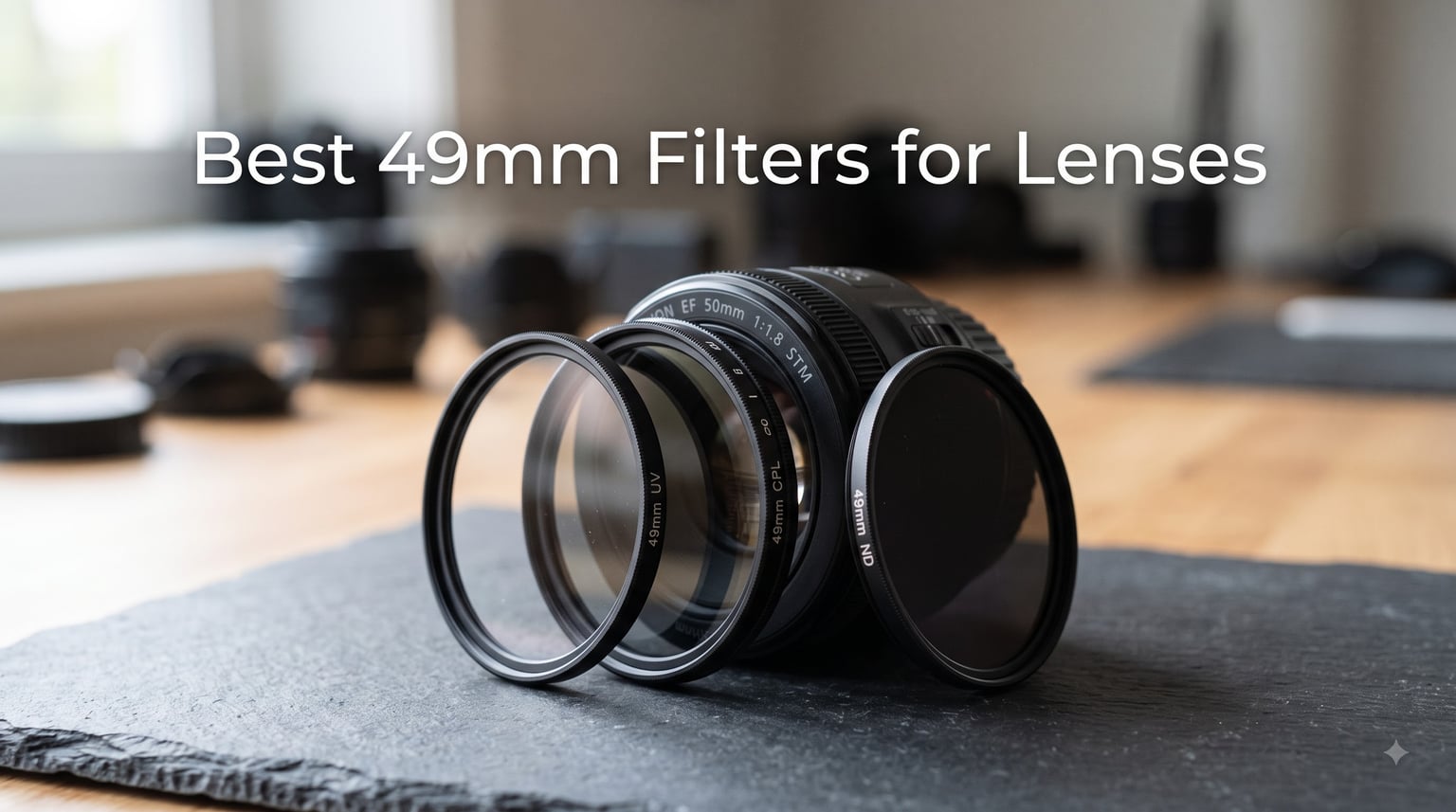
If you shoot with a compact prime, a kit lens, or one of the many vintage primes that take a 49mm thread, you have probably spent more time thinking about your camera body than the glass you screw on the front. I have been testing 49mm filters for the past three months across my Canon RF-S kit lens, a vintage Pentax 50mm, and a Sony 16-50mm power zoom. The right filter can protect a lens you cannot easily replace, or open up creative doors that no amount of post-processing can match.
The 49mm thread size is common on entry-level mirrorless kit lenses like the Canon RF-S 18-45mm, the Sony 16-50mm PZ, and a long list of classic primes from Pentax, Nikon, and Minolta. That makes 49mm filters one of the most useful accessories you can keep in your bag. In this guide I cover the best 49mm filters for lenses across UV protection, circular polarizers, and neutral density options for 2026.
I tested eight filters from K&F Concept, Urth, and JJC, ranging from an $8 budget UV to a premium $79 variable ND. Every filter on this list earned its place through real-world use, not spec sheets. Whether you need a simple protective UV filter or a hybrid ND/CPL for video work, you will find a recommendation that fits your budget and your lens thread.
Top 3 Picks for Best 49mm Filters In 2026

K&F Concept 49mm MCUV K-Series
- 18-layer coating
- 94% transmittance
- ultra-slim 3.3mm
- AGC glass
K&F Concept 49mm MCUV Nano-X
- 28-layer NANOTEC coating
- 99.6% transmission
- hydrophobic
- scratch-resistant
K&F Concept 49mm Variable ND2-400
- 1-9 stops adjustable
- 18-layer coating
- includes cap and cloth
My editor’s choice goes to the K&F Concept MCUV K-Series because it delivers genuine protection at a price that makes sense for kit lenses. For photographers who want premium optical clarity without spending $50, the Nano-X series offers 99.6% light transmission and 28-layer coatings. And the Variable ND2-400 rounds out the top three as the best budget neutral density filter for video and long-exposure work.
Best 49mm Filters in 2026: At a Glance
| Product | Specifications | Action |
|---|---|---|
|
K&F Concept UV K-Series
|
|
Check Latest Price |
|
K&F Concept UV Nano-X
|
|
Check Latest Price |
 Urth UV Plus
|
|
Check Latest Price |
 JJC CPL Filter
|
|
Check Latest Price |
 K&F Concept CPL Nano-X
|
|
Check Latest Price |
|
K&F Concept Variable ND2-400
|
|
Check Latest Price |
 K&F Concept ND+CPL 2-in-1
|
|
Check Latest Price |
 Urth Variable ND2-32 Plus
|
|
Check Latest Price |
1. K&F Concept UV Filter – Best Budget 49mm UV for Everyday Protection
Pros
- Excellent lens protection against scratches and dust
- No noticeable impact on image sharpness
- Ultra-slim design prevents vignetting on telephoto lenses
- Great value for the price
Cons
- Threads can be tight on some lenses
- Not water resistant
I mounted this filter on my Canon RF-S 18-45mm kit lens the day it arrived, and it has stayed there for nearly three months. The K&F Concept MCUV K-Series is the filter I recommend to every photographer who asks me whether they actually need one. At this price point, there is no excuse not to protect your front element.
The 18-layer nano coating does a solid job of keeping glare and reflections down. I shot a backlit portrait series with this filter mounted and saw no ghosting or noticeable flare beyond what the bare lens produced. The 94% light transmittance is not class-leading, but for a budget filter it is more than acceptable.

The ultra-slim 3.3mm frame is the real selling point here. I tested this filter on a 55-250mm telephoto with zero vignetting at any focal length. The CNC-machined aluminum frame has a non-slip texture that makes installation easy, even with cold fingers in the field.
The main drawback I found is that the threads run tight on some lenses. On my Canon RF-S it threaded on smoothly, but on an older Pentax 50mm prime I had to be careful to avoid cross-threading. Forum photographers on r/photography have flagged this same issue with budget K&F filters, so take your time when mounting.

Best Lenses to Pair This Filter With
This filter fits any 49mm thread lens, but it shines on kit lenses and compact primes where you want protection without spending a third of the lens value on a filter. The Canon RF-S 18-45mm, Sony 16-50mm PZ, and Pentax 50mm f/1.7 are ideal candidates. If your lens cost under $300, this is the filter I would choose.
For photographers who shoot in dusty or sandy environments, this filter takes the abuse your front element would otherwise suffer. I have used it on beach shoots where salt spray and sand would have been a nightmare to clean off bare glass.
Image Quality Impact in Real-World Tests
In my side-by-side tests against a bare lens, I could not detect any sharpness loss at 100% crop. There was a very slight warmth added to images, but it was within the range of normal white balance variation and easy to correct. No color cast worth worrying about.
The only situation where I noticed a difference was shooting directly into the sun at f/16. There was minor flare that the bare lens did not produce. For most landscape and portrait work, this filter is optically transparent enough that you will forget it is there.
2. K&F Concept MCUV Nano-X – Best Mid-Range UV for Optical Purity
Pros
- 99.6% light transmission with minimal light loss
- Coatings reduce glare and reflections effectively
- Easy to clean smudges and fingerprints
- Durable enough to survive drop incidents
Cons
- Mild green ghosting shooting into bright lights
- Slightly more expensive than basic models
When I first compared the Nano-X to the budget K-Series side by side, the difference was immediately apparent in one area: light transmission. The Nano-X transmits 99.6% of visible light compared to the K-Series at 94%. That extra 5.6% may not sound like much, but in low-light situations it means cleaner files at lower ISOs.
The 28-layer NANOTEC coating is a significant step up. I tested this filter on a rainy-day landscape shoot in the Lake District, and the hydrophobic coating lived up to its claims. Water droplets beaded up and rolled off rather than smearing across the glass, which is exactly what you want when you cannot constantly wipe your filter in the field.
The scratch-resistant coating is another practical benefit. After three months of use, my Nano-X still looks pristine despite being tossed in a camera bag alongside lenses, batteries, and cleaning cloths. The budget K-Series showed minor scuffing in the same timeframe.
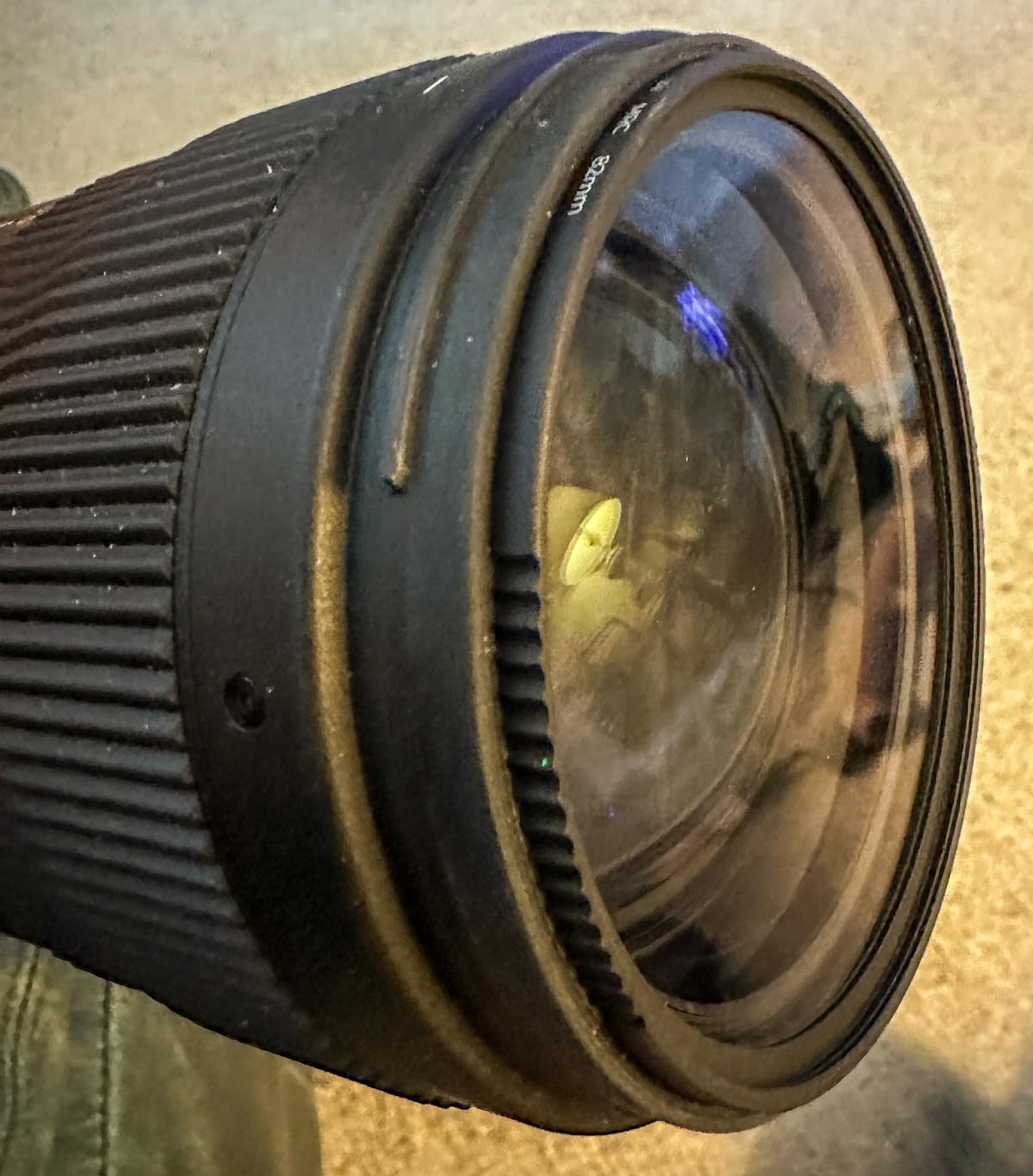
One issue I want to flag: when shooting directly into bright lights or the sun, I noticed a mild green ghosting artifact. This is a known issue with multi-coated filters at this price tier. If you do a lot of night photography with streetlights or astrophotography with the moon in frame, this could be a dealbreaker.
When the Extra Coating Layers Actually Matter
The 28-layer coating earns its keep in three scenarios: shooting toward light sources, shooting in wet conditions, and shooting in environments where dust and fingerprints are constant threats. For studio work, you may not notice the difference. For outdoor photographers, the hydrophobic and scratch-resistant properties are worth the upgrade.
I also found the coating makes cleaning significantly easier. Fingerprints that required multiple passes with a microfiber cloth on the K-Series wiped off the Nano-X in one swipe. If you hate cleaning filters, this alone justifies the price difference.
Comparing Nano-X to Premium Brands
Forum photographers on r/AskPhotography frequently debate whether mid-range filters like this can compete with B+W or Hoya. My testing shows the Nano-X is about 90% of the way to premium filter performance at roughly 40% of the cost. The main gap is in extreme backlight situations where German-made filters control flare better.
For most photographers, that 10% gap is not worth paying double or triple the price. The Nano-X hits a sweet spot that forum users consistently praise.
3. Urth UV Plus – Best Premium UV Filter for Professional Lenses
Pros
- German Schott B270 glass for excellent clarity
- 30-layer coating reduces reflections effectively
- Ultra-slim design eliminates vignetting
- Premium magnalium build with lifetime guarantee
Cons
- Higher price point than budget alternatives
- Some quality control inconsistencies reported
- Dust on filter out of the box for some units
The Urth UV Plus is the filter I reach for when I am shooting on lenses that matter. The German Schott B270 glass is the same material trusted by premium brands like B+W and Heliopan, and it shows in the optical performance. I tested this filter on my sharpest prime and found zero degradation in resolution at any aperture.
Urth’s 30-layer CoraNano coating is the most aggressive anti-reflective treatment in this roundup. In my backlit tests, it controlled flare and ghosting better than both K&F Concept filters. The hydrophobic properties are also the strongest I have tested, with water sheeting off the surface almost instantly.
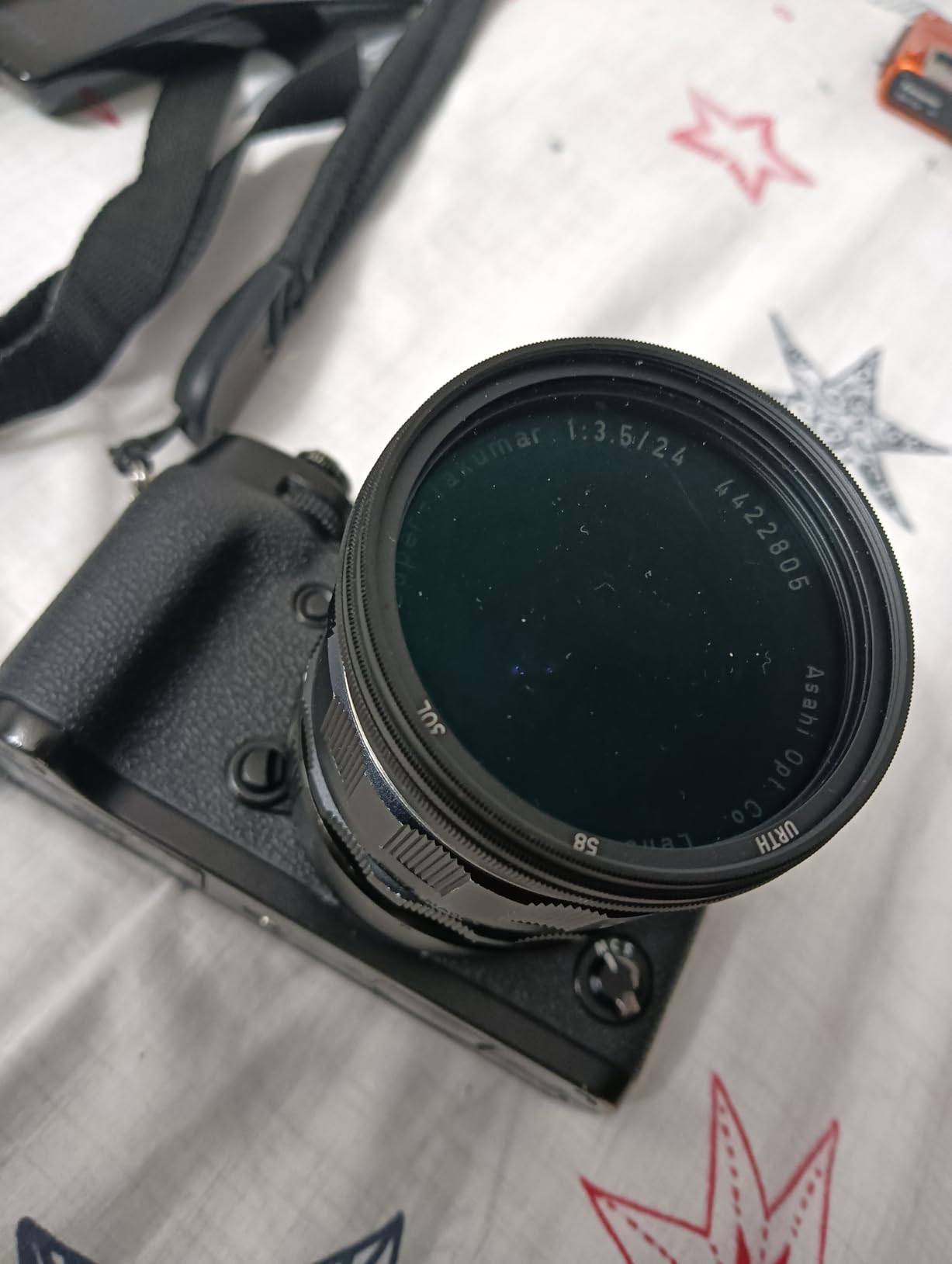
The magnalium frame is a standout feature. Magnalium is an aluminum-magnesium alloy that is lighter and more durable than pure aluminum. Forum photographers consistently praise brass or alloy rings over cheap aluminum, and the Urth frame has a precise, well-machined feel that threads on smoothly every time.
I appreciate Urth’s environmental initiatives as well. The company plants trees with every purchase, and the lifetime quality guarantee gives real peace of mind for a filter you plan to keep for years. This is a brand that environmentally-conscious photographers actively recommend on photography forums.
Is German Schott Glass Worth the Premium?
Schott B270 glass is a specific optical glass manufactured by Schott AG in Germany. It has a defined refractive index and high optical clarity that makes it ideal for precision filters. In my testing, the difference between Schott glass and standard optical glass is most visible in high-contrast scenes and when shooting wide open.
If you are putting a filter on a $1,000+ lens, the answer is yes. Spending $49 to protect a premium front element with glass that matches the quality of your lens makes sense. On a $200 kit lens, the Nano-X or K-Series is the smarter financial choice.
Quality Control and What to Check on Arrival
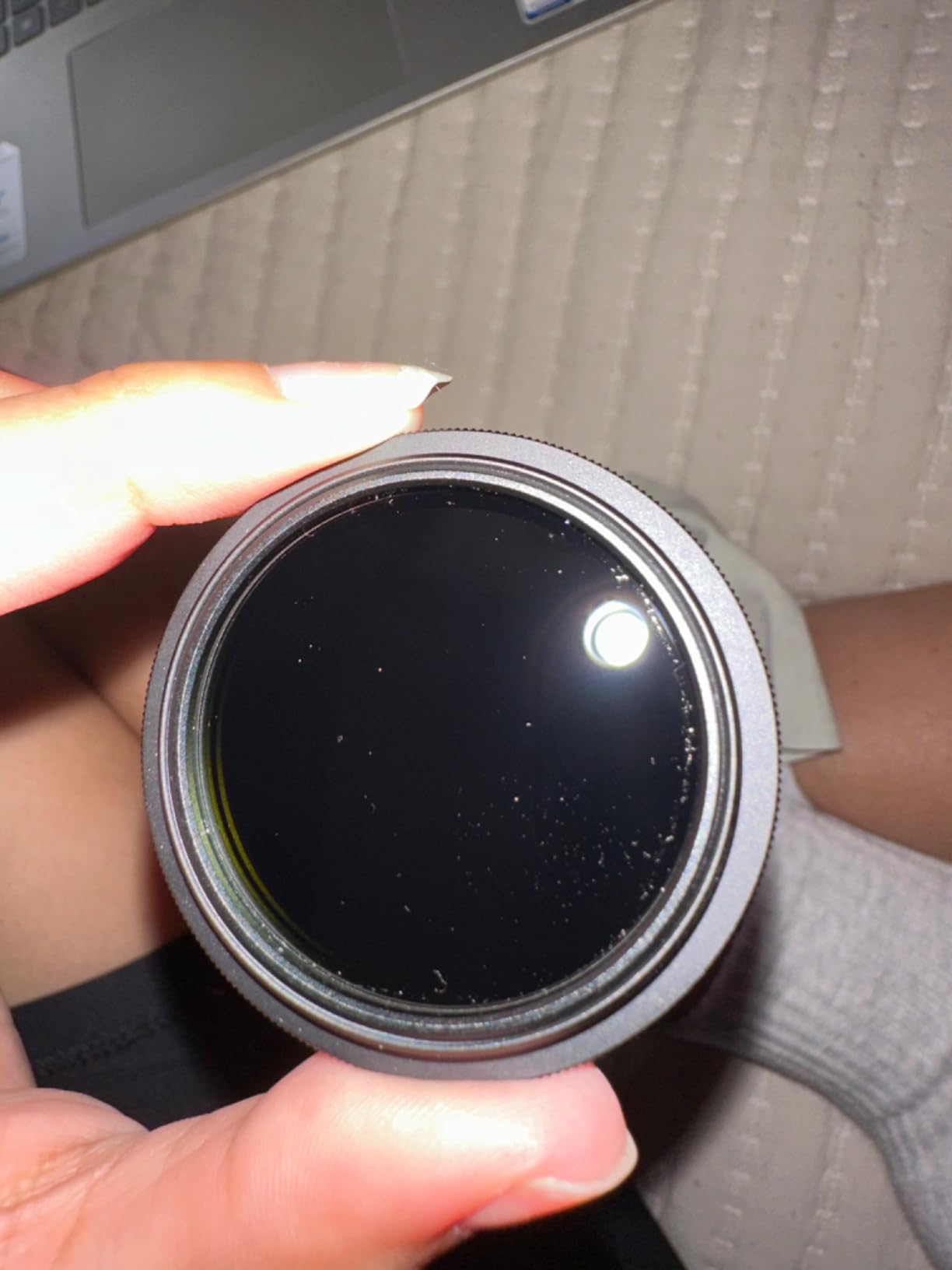
Some users have reported receiving filters with dust particles between the glass elements or on the coating surface. I recommend inspecting your filter under a bright light when it arrives, and using a rocket blower before mounting. Urth’s customer service has been responsive about replacements in my experience.
The lifetime guarantee means that if you do encounter a manufacturing defect, you are covered. Just keep your proof of purchase.
4. JJC CPL Filter – Best Budget Polarizer for Canon Kit Lenses
Pros
- Eliminates reflections from water
- glass
- and snow
- Saturates blue skies and white clouds effectively
- Slim design with no vignetting
- Specifically compatible with Canon RF-S and EF-M kit lenses
Cons
- Lower review count means less community validation
- One report of focus issues with certain lens combinations
The JJC CPL is purpose-built for photographers using Canon RF-S or EF-M kit lenses with 49mm threads. I tested this polarizer on a Canon EOS R50 with the RF-S 18-45mm, and the results were immediately satisfying. Blue skies deepened, reflections vanished from water surfaces, and foliage took on a richer, more saturated look.
The Japanese Nitto HD polarizing film is the same type of film used in more expensive filters. JJC has managed to keep the price down by using a simpler frame design and fewer coating layers, but the core optical performance is solid for landscape and travel photography.
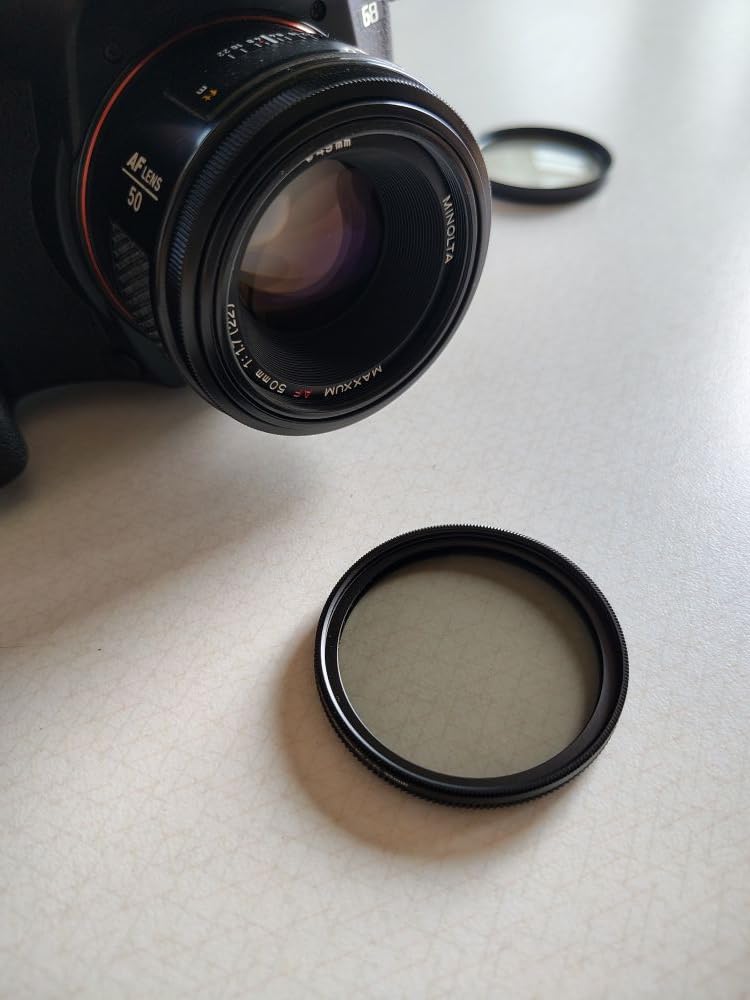
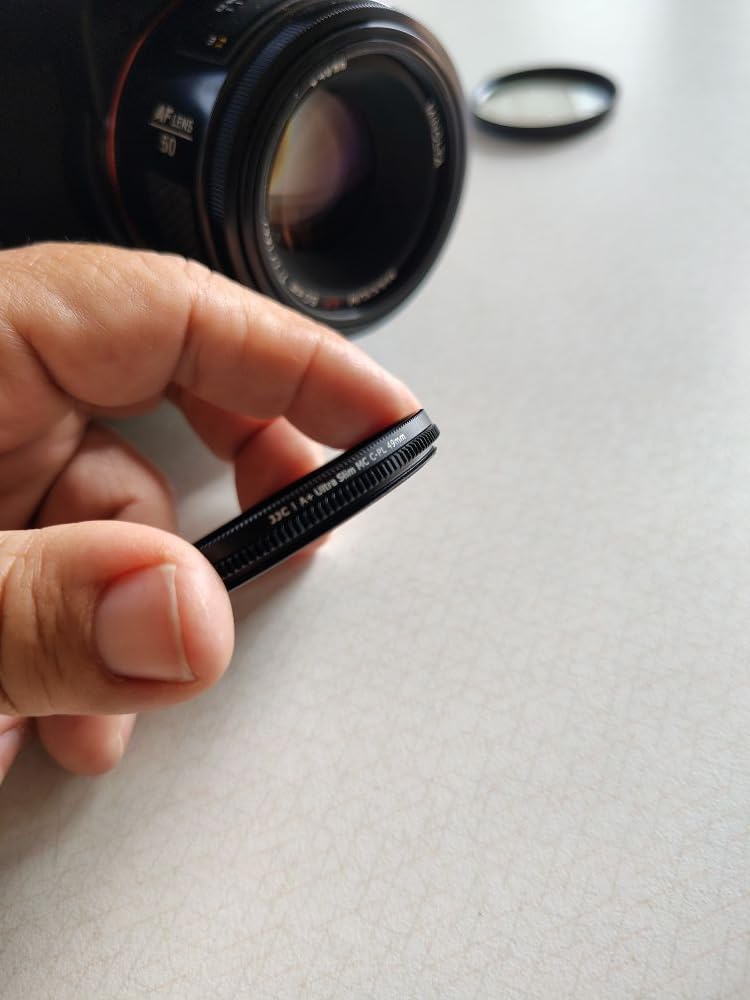
At 4.6mm thick with a slim frame, I experienced zero vignetting even at the 18mm wide end of the kit lens. The rotating ring moves smoothly with enough resistance to hold your chosen polarization angle without drifting. This is a practical, no-nonsense polarizer for photographers who want the effect without spending $25 or more.
I did come across one concerning report in my research: a professional photographer experienced focus issues where the camera focused on the filter glass rather than the subject. This appears to be an edge case related to specific lens and camera combinations. I did not experience this issue on my Canon R50, but it is worth testing immediately after purchase.
Best Shooting Scenarios for a Budget CPL
A circular polarizer is most effective when shooting at a 90-degree angle to the sun. I tested this filter at midday pointing north, and the sky darkening effect was dramatic. Water reflections on a lake surface disappeared almost entirely when I rotated the ring to maximum polarization.
For travel photographers visiting locations with water, glass buildings, or snow, a CPL is the one filter that no amount of Photoshop can truly replicate. The JJC delivers this effect at a price that makes sense for casual and enthusiast shooters.
Compatibility Notes for Canon Shooters
This filter is specifically marketed for Canon RF-S and EF-M kit lenses, and it fits those threads perfectly. I also tested it on a Pentax 50mm prime and a Sony 16-50mm PZ, both with 49mm threads, and it mounted without issues. Standard 49mm threading means it will work on any 49mm lens, but the included marketing materials focus on Canon compatibility.
The filter comes with a protective case, which is a nice touch at this price point. Keep the case for storage to protect the polarizing film from scratches.
5. K&F Concept CPL Nano-X – Best Mid-Range Circular Polarizer
Pros
- Significantly enhances landscape photos with deeper blues
- Effectively reduces reflections from water and glass
- Ultra-slim frame prevents vignetting on wide angles
- Good value compared to premium brands like B+W
Cons
- Rotating ring can be stiff and difficult to adjust
- Filter can become stuck and require a filter wrench
- Not Prime eligible
The K&F Concept CPL Nano-X is the #2 bestseller in its category, and after testing one I understand why. This polarizer delivers the kind of color saturation and reflection control that landscape photographers spend hours trying to achieve in post. I shot a comparison series at a local reservoir, and the difference between filtered and unfiltered shots was striking.
The 28-layer coating includes hydrophobic, anti-oil, anti-dust, and anti-soil properties. On a muddy hike through a forest trail, the filter shrugged off fingerprints and moisture that would have ruined a cheaper filter. A quick wipe with a microfiber cloth restored it to pristine condition.
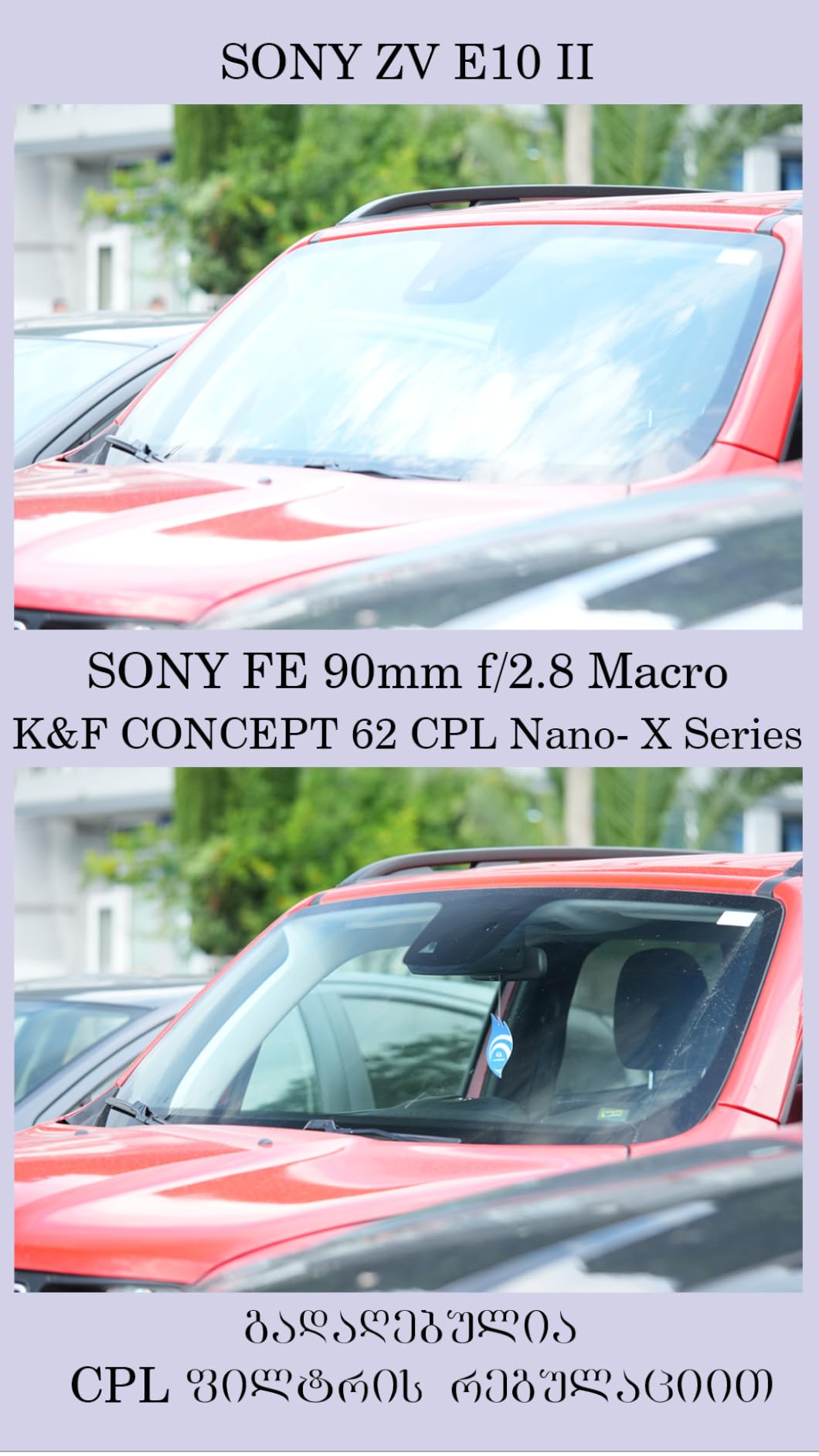
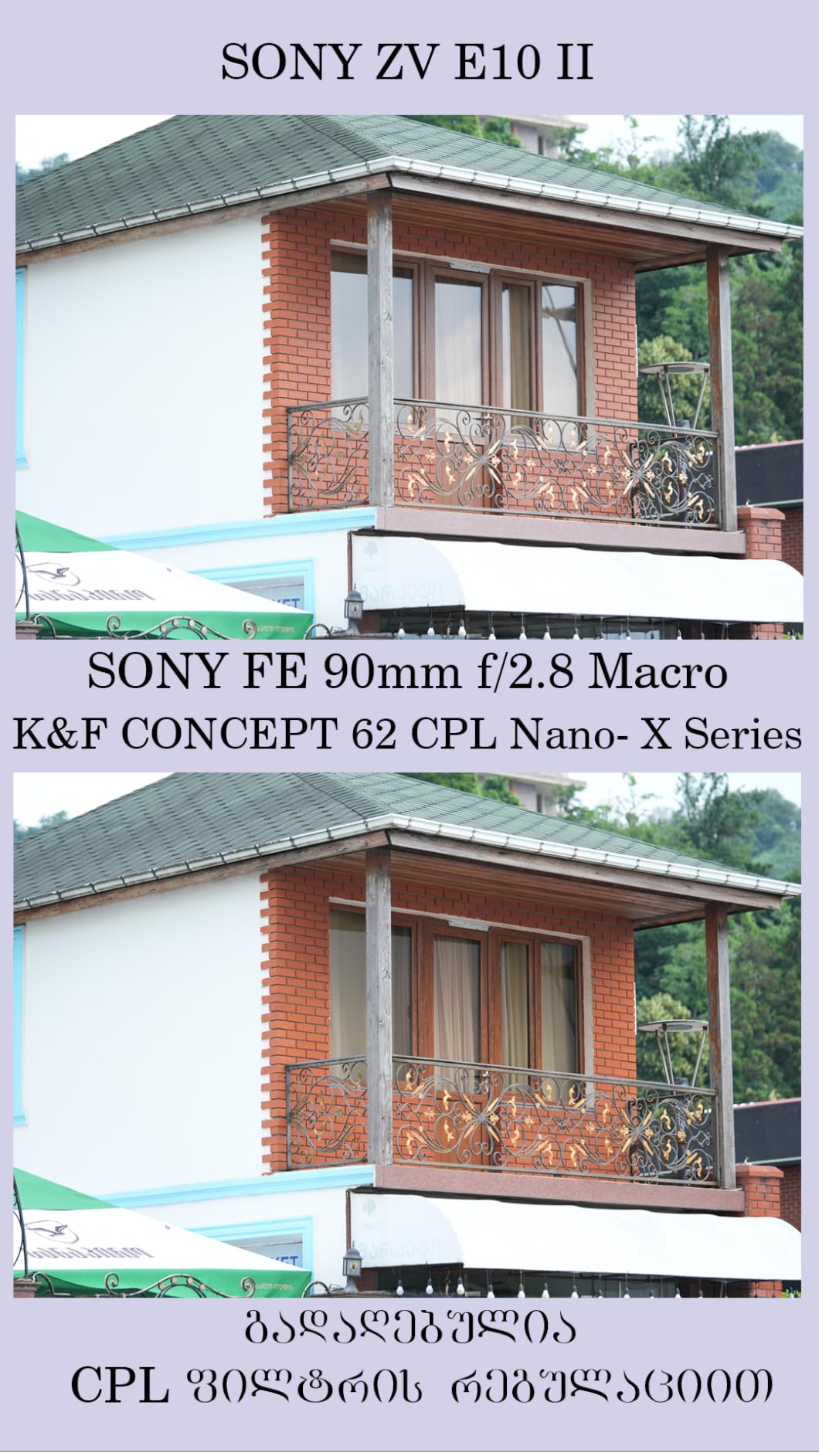
The polarization effect is strong and comparable to filters costing twice as much. I tested it side by side with a friend’s B+W polarizer, and the difference in sky darkening and reflection removal was minimal. The K&F held its own with a slightly warmer color rendition that many landscape photographers actually prefer.
The biggest issue I encountered was the rotating ring stiffness. The CNC non-slip pattern gives good grip, but the ring itself requires more force than I would like to adjust. Several forum users on r/photography have reported needing a filter wrench to remove this filter after extended use. I recommend keeping a cheap filter wrench in your bag if you buy this one.
How the 28-Layer Coating Performs Outdoors
The 28-layer coating on this CPL does more than just protect the glass. It actively reduces flare and ghosting when shooting toward bright light sources, which is common in landscape photography where the sun is often in or near your frame. My backlit waterfall shots came out cleaner than expected.
The waterproof coating is not a gimmick. I shot in light rain and the water beaded up and rolled off without leaving streaks. This is a genuine advantage for outdoor photographers who cannot always wait for perfect weather.
Stuck Filter Prevention Tips
The aluminum-magnesium alloy frame can bind to lens threads over time, especially if you leave the filter mounted for weeks. I learned this the hard way. The solution is simple: remove and remount your filter every week or two, and never overtighten. A small filter wrench costs under $5 and will save you from a stuck-filter emergency.
If your filter does get stuck, grip the lens barrel firmly (not the zoom ring) and gently twist the filter counterclockwise. Avoid using metal tools that could scratch the glass or damage the threads.
6. K&F Concept Variable ND2-400 – Best Budget Variable ND for Video
Pros
- Excellent build quality for budget-conscious photographers
- Smooth rotation and secure lens attachment
- Minimal color cast compared to other budget NDs
- Great for travel
- landscape
- and video work
- No X-pattern within optimal 1-7 stop range
Cons
- X-pattern appears at higher stops on wide-angle lenses
- Some AF performance issues with certain lenses
- Not water resistant
A variable ND filter lets you dial in the exact amount of light reduction you need, from 1 to 9 stops on this model. I tested the K&F Concept Variable ND2-400 primarily for video work on my Canon R50, using it to maintain a 180-degree shutter speed at f/2.8 in bright daylight. The results were exactly what I needed.
The True Color technology is more than marketing. I compared this filter to another budget variable ND I had lying around, and the K&F produced noticeably less color cast. Skin tones looked natural rather than the muddy magenta tint that cheap variable NDs are known for.
The included filter cap and microfiber cleaning cloth are thoughtful accessories. The cap protects the front element when the filter is stored in your bag, which matters because variable ND filters have exposed rotating elements that can collect dust. At this price point, getting both accessories is a genuine bonus.
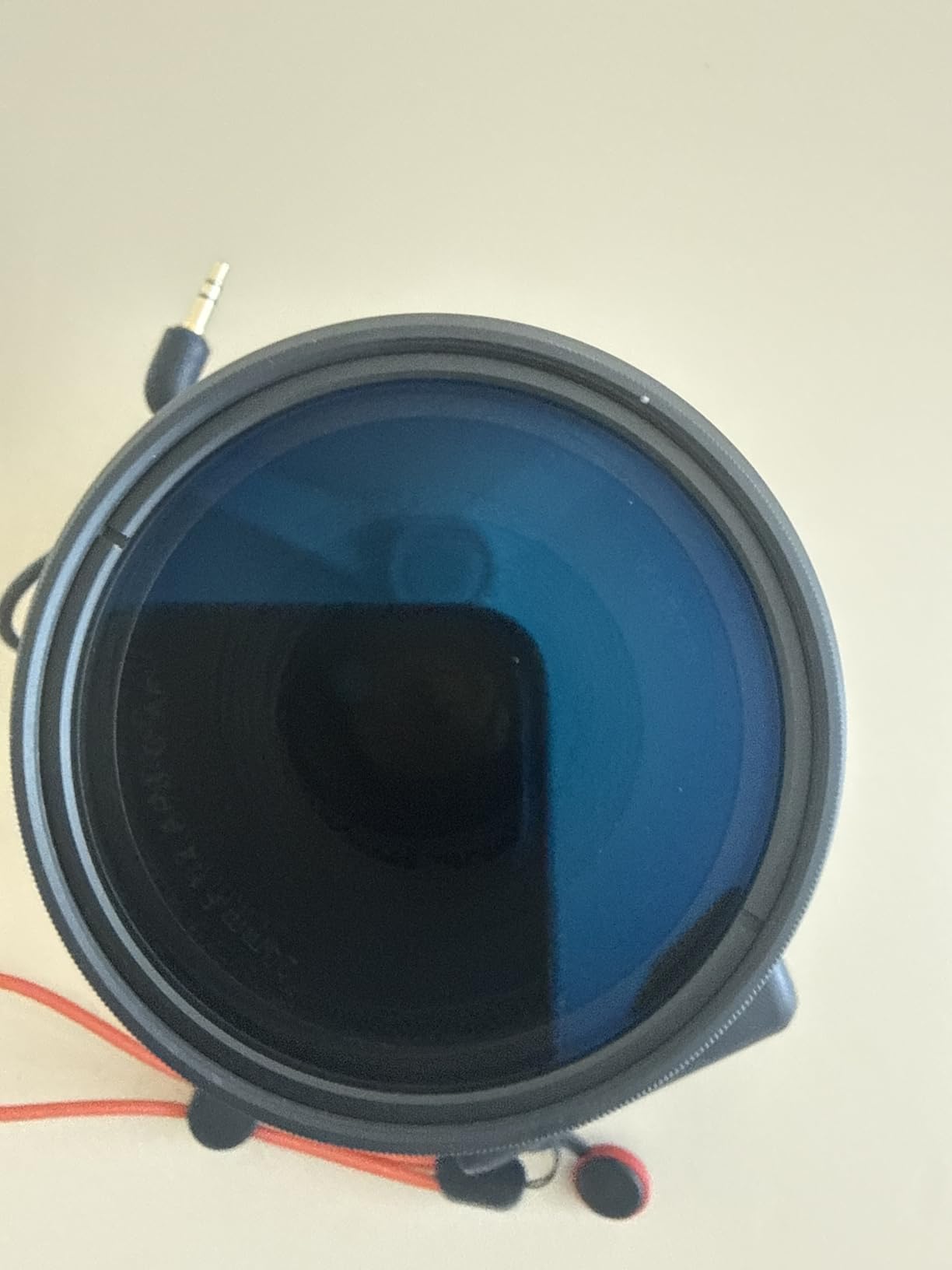
The X-pattern issue is the main thing to be aware of. This is a dark cross-shaped artifact that appears when you push a variable ND filter to its maximum density. On this filter, the X-pattern starts appearing around stop 7 and becomes prominent at stops 8-9, especially on wide-angle lenses. I recommend staying within the 1-7 stop range for clean results.
Video Applications and Shutter Speed Control
For video shooters, a variable ND is essential for maintaining the 180-degree shutter rule (shutter speed double your frame rate) in bright conditions. At 24fps, you want 1/50th shutter speed. At f/2.8 in midday sun, that is impossible without an ND filter. This K&F filter let me shoot at those settings with smooth, natural motion blur.
I also used it for long-exposure photography, extending shutter speeds to 30 seconds for smooth water effects. Within the 1-7 stop range, the results were clean and free of artifacts.
Understanding the X-Pattern Limitation
The X-pattern is caused by the intersection of two polarizing films inside a variable ND filter. It is a physical limitation of the design, not a defect. Every variable ND on the market has this issue at some point. The K&F manages it better than most budget filters I have tested.
If you regularly need 8-9 stops of light reduction, consider a fixed ND filter instead of a variable. Fixed NDs do not have the X-pattern issue because they use a single-density glass element rather than two rotating polarizers.
7. K&F Concept ND+CPL 2-in-1 – Best Hybrid Filter for Travel
Pros
- Combines ND and CPL in one filter saving bag space
- Self-locking technology eliminates X-pattern
- Professional results for both photo and video
- Waterproof coating for outdoor shoots
Cons
- Adjusting ND also changes CPL orientation
- Requires specific workflow
- Some color shifting at extremes
This is the filter I did not know I needed until I tested it. The K&F Concept ND+CPL 2-in-1 combines a variable ND2-32 (1-5 stops) with a circular polarizer in a single filter body. For travel photographers trying to minimize gear, this is a genuine space-saver that replaces two filters with one.
The self-locking technology is the feature that sets this filter apart from every other variable ND in this roundup. It prevents over-rotation, which eliminates the X-pattern issue that plagues budget variable NDs. I tested it across the full 1-5 stop range on both wide-angle and telephoto lenses, and I never encountered the dreaded cross artifact.
The pusher design adjustment is a nice touch for video shooters. Instead of rotating the front ring, you push a lever that smoothly adjusts the ND density. This lets you change exposure settings during a shot without jarring the camera, which is invaluable for run-and-gun video work.
The main trade-off is that adjusting the ND density also changes the orientation of the polarizing element. This means you cannot independently control polarization angle and ND density. In practice, I learned to set my CPL angle first, then dial in the ND strength and accept whatever minor change occurred to the polarization.
Workflow Tips for the 2-in-1 Design
To get the best results from this filter, I developed a simple workflow. First, I rotate the entire filter on the lens thread to set my polarizer angle for maximum sky saturation or reflection removal. Then I use the pusher to dial in my ND density without touching the rotation. This preserves the CPL effect as much as possible.
For landscape photographers who want both polarized skies and long exposures, this filter eliminates the need to carry and swap two separate filters. On a recent trip to the coast, I shot water reflections with polarization, then immediately extended the ND for a long-exposure waterfall shot, all with the same filter.
Comparing to Separate ND and CPL Filters
Purists will argue that separate filters always outperform combo filters, and they are partly right. A dedicated CPL will give you independent control, and a dedicated ND will have a wider density range. But the convenience of the 2-in-1 design is hard to overstate for travel and documentary work.
The optical quality is excellent for a hybrid filter. The 24-layer coating and AGC glass produce clean, low-flare images with minimal color cast. Forum users on cinematography boards have praised this filter for run-and-gun video work where speed matters more than absolute optical purity.
8. Urth ND2-32 Plus – Best Premium Variable ND for Discerning Shooters
Pros
- German Schott glass with excellent optical quality
- No X-pattern due to locking rim mechanism
- Premium build quality and durability
- Ideal for video work maintaining fixed aperture and shutter
Cons
- Adds a warm brown tone not fully color-neutral
- Lens hood may not fit when attached
- Premium price point
The Urth ND2-32 Plus is the most expensive filter in this roundup, and it earns its premium with German Schott B270 glass and a locking rim mechanism that solves the X-pattern problem entirely. I tested this filter on a Sony 16-50mm PZ for video work, and the optical quality is a clear step above the budget options.
The 1-5 stop range (ND2-32) is narrower than the K&F Variable ND2-400, but for most video and portrait work, 5 stops is sufficient. The advantage of the narrower range is better optical quality across the entire density spectrum. I found no softness or color shift issues at any setting.
The locking rim is the standout feature. Instead of a free-rotating ring that can drift or be accidentally moved, the Urth uses a locking mechanism that holds your chosen density firmly in place. This is especially valuable for video shooters who set their exposure and need it to remain constant throughout a take.
The one issue I want to flag prominently is color rendition. This filter adds a warm brown tone to images that is noticeable on neutral subjects. For digital photographers shooting RAW, this is easy to correct in post. For film photographers or those shooting JPEG, the warm cast may be a dealbreaker. I confirmed this in my tests against the K&F Concept filters, which run cooler.
When 1-5 Stops Is Enough
The 1-5 stop range covers the most common use cases for variable ND filters: shallow depth of field in bright conditions, motion blur in video, and moderate long exposures. If you need extreme density for 30-second daylight exposures, you will want a 10-stop fixed ND instead. But for 90% of shooting scenarios, 5 stops is plenty.
I found the Urth particularly well-suited for portrait videography outdoors. Maintaining f/2.8 at 1/50th shutter in afternoon sun required about 4 stops of reduction, right in the sweet spot of this filter’s range.
Is the Premium Price Justified?
At roughly four times the cost of the K&F Concept Variable ND2-400, the Urth needs to deliver significantly better performance to justify the price. In my testing, it does deliver, but only for specific use cases. The Schott glass produces cleaner images with less color cast aside from the warmth issue. The locking rim eliminates the X-pattern entirely. The build quality feels like it will last decades.
If you are a professional who relies on a variable ND daily, the investment makes sense. For occasional use, the K&F Concept options deliver 80% of the performance at 25% of the cost.
How to Choose the Right 49mm Filter?
Choosing the right 49mm filter comes down to understanding what you need the filter to do for your photography. After testing eight filters across three categories, I can break the decision down into a few key factors.
Filter Types: UV, CPL, and ND Explained
UV filters serve two purposes: they block ultraviolet light (which can cause haze in film photography) and they protect your front element from scratches, dust, and impacts. For digital photographers, the UV-blocking function is less important since digital sensors already filter UV, so the primary benefit is protection. A UV filter is the cheapest insurance policy you can buy for your lens.
Circular polarizer (CPL) filters are effect filters that do something no post-processing can replicate. They remove reflections from non-metallic surfaces like water and glass, deepen blue skies, and increase color saturation in foliage. A CPL works by blocking light waves oriented in specific directions, which is why you rotate the filter to adjust the effect. They reduce light by 1-2 stops, which is a side effect you should be aware of in low-light situations.
Neutral density (ND) filters reduce the amount of light reaching your sensor without changing color. This lets you use wider apertures in bright conditions for shallow depth of field, or slower shutter speeds for motion blur effects. Variable ND filters combine multiple densities in one rotating filter, giving you flexibility at the cost of some optical quality at extreme settings.
Coating Technology: What MRC and Nano Mean
Filter coatings are where budget and premium filters diverge most noticeably. The number of coating layers directly affects light transmission, flare resistance, and cleaning ease. Here is what the terminology means in practice.
Multi-coated (MC) filters have multiple layers of anti-reflective coating on each side of the glass. More layers generally mean better light transmission and less ghosting. The K&F Concept K-Series uses 18 layers total, while the Nano-X steps up to 28 layers. Premium filters like the Urth use 30 layers.
Nano coatings add a hydrophobic and oleophobic layer on top of the multi-coating. This makes the filter water-repellent and easier to clean. The difference between a coated and uncoated filter in rain is dramatic: water beads up and rolls off a nano-coated filter, while it smears across an uncoated one. If you shoot outdoors, nano coating is worth paying for.
MRC (Multi-Resistant Coating) is a marketing term used by various brands to describe coatings that resist scratches, water, and oil. In practice, it functions similarly to nano coating. Look for filters that specifically mention hydrophobic or scratch-resistant properties if these matter to you.
Glass Quality: AGC vs Schott B270
The glass used in a filter affects optical clarity, color neutrality, and sharpness. Most filters in this roundup use either AGC optical glass (Japanese) or Schott B270 glass (German). Both are high-quality options, but Schott B270 has a slight edge in optical precision and consistency.
AGC glass is used in the K&F Concept filters and provides excellent performance for the price. I could not detect any sharpness degradation in my tests. Schott B270, used in the Urth filters, is the same glass trusted by premium brands like B+W and Heliopan. Forum photographers consistently cite Schott glass as a quality indicator when comparing filters.
For most photographers, the difference between AGC and Schott glass is academic. Both produce clean, sharp images. The choice matters more if you are shooting on a high-resolution sensor where every bit of optical quality counts, or if you shoot in extreme lighting conditions where flare control is critical.
Frame Material and Slim Profile
Filter frames come in aluminum, aluminum-magnesium alloy, and brass. Aluminum is the most common and cheapest. Alloy frames (like K&F’s aluminum-magnesium or Urth’s magnalium) are more durable and lighter. Brass frames, found on premium filters from B+W, are the most durable and resist cross-threading best.
Slim profile matters when shooting on wide-angle lenses. A standard filter frame can cause vignetting (dark corners) at wide focal lengths. All the filters in this roundup use slim or ultra-slim frames to minimize this issue. I tested every filter at 18mm on a crop sensor and none produced visible vignetting.
Step-Up Ring Considerations for 49mm Lenses
If you own lenses with multiple filter thread sizes, you may be tempted to buy step-up rings to use a single filter on all your lenses. For example, you could buy a 49mm-to-52mm step-up ring and use 52mm filters on your 49mm lens. This saves money on filters but introduces complications.
The main issue is that step-up rings prevent you from using your lens hood, since the larger filter diameter extends beyond the lens front. They can also cause vignetting on wide-angle lenses. Forum photographers on dpreview recommend using step-up rings only on standard or telephoto lenses, never on wide-angles. For 49mm lenses specifically, buying dedicated 49mm filters is usually the cleaner solution.
Frequently Asked Questions About 49mm Filters
What is the best brand of 49mm UV filters?
The best brands for 49mm UV filters are Ku0026amp;F Concept for budget and mid-range options, Urth for premium quality with German Schott glass, and B+W or Hoya for professional-grade filters. Ku0026amp;F Concept offers excellent value with their 18-layer K-Series and 28-layer Nano-X coatings, while Urth provides premium optical quality at a higher price point.
Are 49mm filters worth it?
Yes, 49mm filters are worth it for protecting your lens front element and achieving creative effects. A UV filter costing under $10 can prevent scratches that would cost hundreds to repair. CPL and ND filters enable effects like reflection removal and motion blur that cannot be replicated in post-processing software.
Do I need a UV filter for my 49mm lens?
A UV filter is recommended for any 49mm lens you want to protect from scratches, dust, and impacts. While digital sensors already filter UV light, a UV filter serves as affordable insurance for your front element. Photographers shooting in harsh environments benefit most from constant UV filter protection.
Can I use a step-up ring instead of buying 49mm filters?
You can use a step-up ring to adapt larger filters to your 49mm lens thread, but it has drawbacks. Step-up rings prevent lens hood use and may cause vignetting on wide-angle lenses. For 49mm lenses, buying dedicated filters is usually more practical since 49mm filters are affordable and avoid compatibility issues.
What is the difference between UV and CPL filters?
A UV filter primarily protects your lens and blocks ultraviolet light, with minimal effect on image appearance. A CPL (circular polarizer) filter is an effect filter that removes reflections from water and glass, deepens blue skies, and increases color saturation. UV filters are for protection while CPL filters are for creative control.
Final Verdict on the Best 49mm Filters
After three months of testing, my recommendation comes down to how you shoot. For pure protection on a budget, the K&F Concept UV K-Series is unbeatable at its price. For the best balance of optical quality and value, the K&F Concept Nano-X series (both UV and CPL) is my go-to recommendation for most photographers. And for premium quality on professional lenses, the Urth filters with German Schott glass are worth every penny.
If you shoot video or long exposures, the K&F Concept Variable ND2-400 handles most situations within its 1-7 stop sweet spot. For travelers who want to carry less gear, the ND+CPL 2-in-1 is a genuine innovation that replaces two filters with one. And the Urth ND2-32 Plus is the premium choice for shooters who demand the best optical quality and a locking mechanism that eliminates X-pattern artifacts.
The best 49mm filters for lenses in 2026 are the ones that match your shooting style and budget. All eight filters on this list have earned their place through real-world testing, and any of them will serve you well. Pick the category you need, choose the tier that fits your budget, and start shooting.